
Turbulence ahead for airline sector


Play
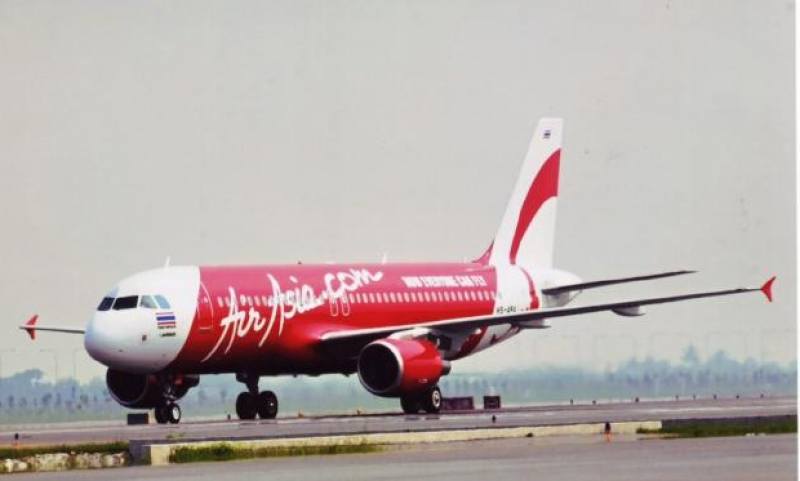
KUALA LUMPUR - The fortunes of AirAsia Bhd seems to be ever changing.
Nearly a year go things were different after a report raised a few questions about the airline’s viability and that in turn had contributed to AirAsia’s share price plummeting. But now, after announcing a six-fold rise in profits, it appears that its fortunes have reversed.
AirAsia share price rose 12 per cent or 28 sen yesterday to close at 2.40 ringgit a piece.
It was as low as 78 sen on August 26 last year.
According to current Bloomberg data, out of the 25 analysts tracking the stock, 17 have a “buy” call, five a “hold”, while there aren’t any “sell” call.
Bloomberg’s consensus 12 month target price for AirAsia is 2.65 ringgit a share.
This is a marked difference from before, when the research company GMT Research wrote that AirAsia had needed 1.6 billion ringgit in re-capitalisation.
To some experts though, the report was a wake-up call for the major owners of AirAsia and that incident had brought them back to getting more involved in the running of the airline.
AirAsia group turned in 876 million ringgit in net profit for its first quarter ended March 31, from 149 million ringgit previously.
This was driven by higher passenger loads, a 2 per cent drop in unit cost, better yields, favourable currency movements and an extremely low fuel environment.
“We continue to be positive about AirAsia group’s improving fundamentals in 2016, especially at its previously loss-making associate airline as cheaper fuel supported their turnaround efforts,” says AffinDBS Research.
Even AirAsia X, a sister company that had been bleeding for the longest time, turned the corner but analysts are still cautious, as they want to wait and see a while longer.
Several analysts describe AirAsia’s group results as “stunning and above expectation.”
Malaysia Airlines Bhd (MAS) also this week announced that its cost is down by 32.9 per cent year-on-year.
That is a huge difference from previously but a lot also had to do with the 6,000 job cuts, low-cost fuel environment, and other improvements that are aimed at setting the airline on a path to sustainable profits.
The airline did not announce how much money it made, but Christoph Mueller, its group CEO did say earlier to employees that they made 16 million ringgit for the first quarter of 2016.
In MAS’ quarterly report, it said that the headcount reduction and improved work efficiency had also resulted in payroll savings (before exceptional items) of 40.5 per cent year-on-year. At the same time, Mueller warned of a tough second quarter.
But observers say more needs to be done. “It needs to bring its cost down more as the future industry outlook will not be as rosy as the recent past,” says an analyst.
Solid profits
At the moment, the aviation industry is enjoying a stellar time, with demand outstripping supply in most markets and carriers recording solid profits due to lower jet fuel prices.
But higher fuel prices could be in the offing.
This week Brent crude oil prices touched the US$50 a barrel mark and jet fuel prices were also higher at $56 a barrel from $55 a barrel on May 13.
“Demand is still holding up well in this region, but we have to be realistic. The year 2015 was great for the industry, so will 2016 be. But expect some tapering in 2017-2018 as the global economic outlook is not so good. The party also cannot last forever, but many airlines have learnt lessons in the past to be better prepared for the future,” Maybank Investment Bank Bhd senior analyst Mohshin Aziz says.
The Interactional Air Transport Association also warned that “we are perhaps coming towards the end of the biggest stimulus to traffic from lower oil prices, and the bigger picture is that the wider economic backdrop remains subdued.”
Andrew Herdman, director-general of the Association of Asia Pacific Airlines added that while Asian carriers are encouraged by the sustained growth in passenger demand, they continue to face a challenging operating environment characterised by intense competition, cost pressures and volatile currency markets.
This is further emphasised by Schroder Investment Management (Singapore) Ltd chief economist and strategist Keith Wade who says that while the global economic outlook is brighter than it was earlier in the year, in the longer-term it is likely to remain tough.
The question is will airlines begin raising fares if oil prices rise again?
“When jet fuel prices reach the $70 to $80 a barrel level, the industry will start re-balancing itself. The airlines will adjust fares and capacity. They will do counter balancing before deployment of new capacity,” Mohshin adds.
But for now Mohshin says “at $50 a barrel, airlines should not complain, it is still at its lowest since 2004 and it is strong days.”
According to AirAsia’s group CEO Tony Fernandes the rise of Brent to $50 a barrel had “no major impact. (It is) still much lower than what it used to be. We are hedged.”
Airlines globally have hedged about 40 per cent of their fuel requirements at about $55 to $56 a barrel.
As for AirAsia, CIMB Research says the group is 75 per cent hedged for the remaining quarters of FY16 at an average jet fuel strike price of $54/bbl.
“AirAsia will not be taking further hedges for this year but has opted to extend its hedges into next year, currently at 30 per cent of 1Q17’s and 20 per cent of 2Q17’s requirements with an average strike of $57-58/bbl. This position will be built up further and will give AirAsia excellent cost protection at record low oil prices,” the house says.
Even at $56 a barrel, jet fuel prices are still at a level that is considered lower on a historic basis, adds Maybank’s Mohshin.
Consolidate or unite
The challenges ahead for airlines are to manage supply and demand better, handle the increasing competition and know how to deal with higher fuel prices.
The regional industry has also reached a certain scale and maturity that allows them to either unite and collaborate as it is impossible to remain a sole player in a competitive environment.
MAS is a clear example of an airline that has found a partner to fly beyond Asia because it does not make sense for the carrier to continue to serve routes that are loss making. Last year it found Emirates as its partner.
Notes Maybank’s Mohshin: “We are also getting into a stage where the region is getting inclusive. Does an airline need operations in each South-East Asian country?
He adds that the Asean open skies, an agreement which has finally been ratified by all parties, is yet another opportunity for airlines to take advantage of but they need to ensure their unit cost is low to be able to compete better.
Recently, eight airlines formed a alliance known as Value Alliance in the hope to operate as one big platform where a customer can view, select and book flights and purchase ancillary services all in one transaction.
It is convenient for the passenger provided all the parties are able to work together and open their networks to each other.
Value Alliance comprises of Singapore Airlines’ Scoot and Tigerair, ANA’s Vanilla Air Inc, Tiger Airways Australia, Nok Airlines, NokScoot, Cebu Pacific Air and Jeju Air Co Ltd.
This alliance will have a combined fleet size of 176 aircraft, 16 hubs, 160 destinations and a catchment area equalling to one third of the world. It is the second largest next to AirAsia Group, which has 199 aircraft to its name, Mohshin wrote in his report.
AirAsia is not part of that alliance but Fernandes did hint that consolidating all the operations into one holding company could be the way to go but it has its own legal implications because AirAsia operates in several countries.
Separately, Singapore Airlines has also created a new holding company, Budget Aviation Holdings for its two budget carriers, Scoot and Tigerair. The new group structure allows for the two airlines to integrate and share functions such as sales, marketing, IT, planning and operations.
MAS has also been reorganised and now has a holding company, Malaysia Airlines Group (MAG), which will have four units – air transportation services, ground services (ground handling and engineering), talent development and aircraft leasing.
MAS, Firefly, MAS Kargo and MAS Wings will be part of the air transportation services unit within MAG, owned entirely by Khazanah Nasional Bhd. The aim to create MAG was to have greater transparency, ensure better efficiency, customer satisfaction and profitability.
But says one analyst, “it is more cosmetic in nature. The lines are drawn clearer but the day-to-day operations remain the same. The efforts to demarcate the different segments could also lead to a new level of bureaucracy.”
When all is said and done, the airlines will have to brace for tougher times ahead if fuel cost goes up as they will have to be selective about adding more capacity and whether the roaring earnings will be sustainable.
