
Thinking Outside the Musical Box
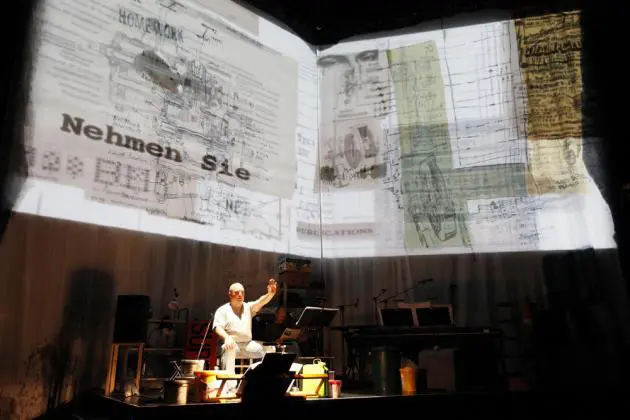


Music Theatre Now nurtures ideas and experiments
Last month, while some of my students were excited about Broadway’s longest-running musical making its much-awaited debut in Bangkok, I was attending Music Theatre Now in Sweden, billed as “a competition and a meeting dedicated to worldwide exchange in new opera and music theatre”.
The Music Theatre Committee and the German Centre of the International Theatre Institute organised the event as part of the Swedish Biennial for Performing Arts.
Last year they had a truly open call for “contemporary music theatre”. Any kind was welcome if it reflected fresh developments in the art form, in score, text or staging. The aim was to answer the question, “What is music theatre now?” Five experts watched several hundred DVD excerpts and selected 18
finalists to invite to the recent meeting in Jonkoping.
Each group had 30 minutes to make a presentation onscreen and orally. An audience of peers, critics, scholars and casual viewers could then pose questions.
Music Theatre Now artistic director Laura Berman explained that musical theatre in the West only came into its own in the 1990s. No longer was it tied to the opera houses, dependent on professional producers or dominated by spoken dialogue rather than the music. “Since then there’s been major growth” in the Benelux countries and Germany, she said, “and it’s now a global trend. A large number of young, independent music artists, without classical background, now want to write their own operas.”
Among the most captivating works presented – which I hope to see in full versions some day – was “In the Solitude of Cotton Fields” by Poland’s Stefan Zeromski Theatre. Within the action, a play of the same title is sung to rock music, complete with live band. In “Flyway” by Elizabeth Dunn from Australia, viewers use binoculars and headphones to watch and listen to migratory birds.
“Red Shoes” by America’s Degenerate Art Ensemble has Hans Christian Andersen’s tale of a girl dancing herself to death staged in various public spaces. Dancers atop platforms connected to pianos create the music in “Maschinenhalle #1” by an art collective in Germany.
“Homework” by the Ictus Emsemble from Belgium divides the stage in three with music created by instruments and ordinary human actions. And “War Sum Up” by Denmark’s Hotel Pro Forma puts traditional Japanese theatre text to song accompanied by chamber pop and electronic music, while manga imagery is projected.
As you can see, the wide range of possibilities in music theatre was evident.
Submissions from outside the West were welcome, but there were few, and only one – “Three Haunted Souls” by Zhou Long, a master of the classical Chinese opera known as xiqu – was among the finalists. After all 18 had been presented, Tadashi Uchino, who teaches cultural studies at the University of Tokyo, also offered an excerpt from a concert by Japan’s virtual idol Hatsune Miku.
There are numerous music-theatre activities in Asia, both adapted from centuries of tradition and created afresh. It’s just that we haven’t fully connected to Europe and the US in this realm. Not all Asian artists and audiences are crazy about “Madama Butterfly” and “Mamma Mia!”, of course.
Returning to my office, I gave the programme from Sweden to a musical-theatre colleague, hoping she would raise some of the ideas in her class and inspire new works that don’t limit the students’ creativity.
The next Music Theatre Now meeting will be in 2016, in Rotterdam. That gives Thai artists ample time to think outside the frame of Broadway and instead exercise their creativity more freely and submit their works to the competition. For more details, see www.MTNow.ITI-Germany.de.
The writer’s trip was partly supported by the Teaterunionen and Spira/Smalands Musik and Teater.
