
Getting to know more about you


Play
Clever programming allows festival audiences to enjoy a wider spectrum of a top choreographer's works
Major dance companies from Europe and the US do not travel to this region very often and when they do, we usually only get to see a tiny segment of their vast repertory of works. It means too that we never have the time to see the development of any particular choreographer and his or her dancers through the decades.
Audiences at the recently ended 42nd Hong Kong Arts Festival were thus delighted to be offered two quadruple-bill programmes from the 44-year-old New York-based Trisha Brown Dance Company that were not totally identical plus another two free-admission programmes on the following day, featured eight early works from the company’s first five years.
I chose to watch Programme B as the works were lined up chronologically and covered two signature works from the ’80s and ’90s along with Brown’s last works from 2011, when her health forced her to retire.
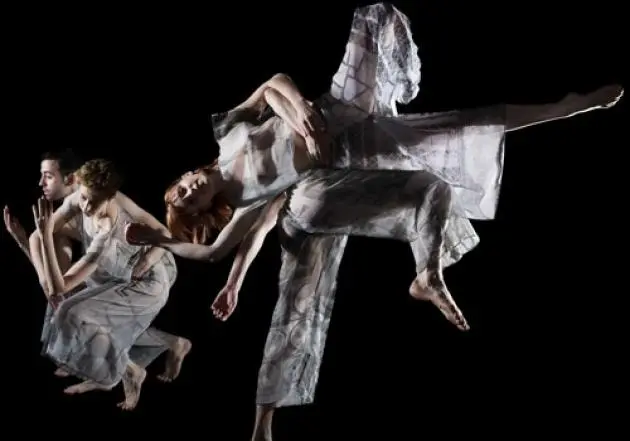
The fluidity of the frequently geometrical movements and interconnectedness between the seven dancers and between their moving limbs were key to “Set and Reset”, and were enhanced by Laurie Anderson’s composition “Long Time No See”, Robert Rauschenberg’s flowing patterned white costumes and supportive set and lighting designs. This 28-minute piece, which had its world premiere at Festival d’Avignon in 1982, didn’t once show its age.
“If you couldn’t see me” provided a sharp contrast, with solo dancer Cecily Campbell – Brown herself performed in the 1994 premiere –facing upstage throughout the captivating 10-minute duration. My full attention was focused on the open back of Campbell’s torso and her limbs and yet somehow it looked and felt like she was full-fronting me. And apart from the simple yet alluring costume and set, Rauschenberg himself provided the seductive sound score. Coupled with and compared to “Set and Reset”, the audience could clearly see the progress in the working relationship between the choreographer and the designer as well as their diversity.
The tone shifted and the spectacle changed again with the 2011 work “Les yeux et l’ame” (“the eyes and the soul”), an excerpt from an evening-length work “Pygmalion”, which Brown created to music by Jean-Philippe Rameau a year earlier. Eight dancers in grey outfits frequent partnered with and supported one another with their limbs as well as their torsos to correspond with Brown’s line drawings on the backdrops and for 15 minutes the moving image filled our eyes and touched our souls.
With three works setting the bar that high, the audience was expecting a rapturous finale. We weren’t disappointed: “I’m going to toss my arms – if you catch them they’re yours” was the most complex work of the four, both musically and choreographically. The work’s title was taken from Brown’s direction during the rehearsal and the piece was set to the highly textured “Toss and Find” composed by Alvin Curran. Set designer Burt Barr stripped the stage bare except for several industrial fans, which were left to blow towards the entire company of nine dancers who gradually removed their Tyvek tops and white pants, revealing colourful swimsuits. With the high ensemble energy and varying tones, it was a different kind of aesthetic beauty and a stark contrast to “Set and Reset” and a fitting farewell by the legendary American choreographer.
The five-week long Hong Kong Arts Festival concluded, not so surprisingly, with many impressive numbers: 94 per cent of tickets sold, and, out of 135 ticketed performances, 92 were packed to full capacity. On top of 108,000 general spectators, it’s also noteworthy that the festival’s year-long high school and university development programme, “Young Friends”, brought in another 15,134 enthusiastic viewers. Of course, many of these, once they become working professionals, will become ticket buyers. And that’s a strategy that Thai producers should consider – not just student discounts.
The writer thanks Hong Kong Arts Festival Society’s Alexia Chow for all assistance.
On the Web:
www.HK.ArtsFestival.org
www.TrishaBrownDanceCompany.org
