
Where Buddhism bloomed


Play
Little known today, the Pyu cities were the region's largest and, in many ways, most influential
Myanmar looks set to garner its first Unesco World Heritage Site listing this month, but the site is likely to be the one you’ve never heard of.
In a series of meetings held in Doha continuing through Wednesday, the World Heritage Committee is discussing the eligibility of 40 sites worldwide, and one of them is Myanmar’s nominee – a group of Pyu city-states. After the Pyu ancient cities, Pagan is waiting to be listed as a World Heritage Site next year.
The tentative listing is the result of close collaboration between Unesco and Myanmar. Unesco launched the “Capacity Building for Safeguarding Cultural Heritage in Myanmar” project in Myanmar in 2012 thanks to a grant worth US$533,000 from the Italian government. The project aimed to help the government with all the formalities needed to nominate the Pyu ancient cities for World Heritage status.
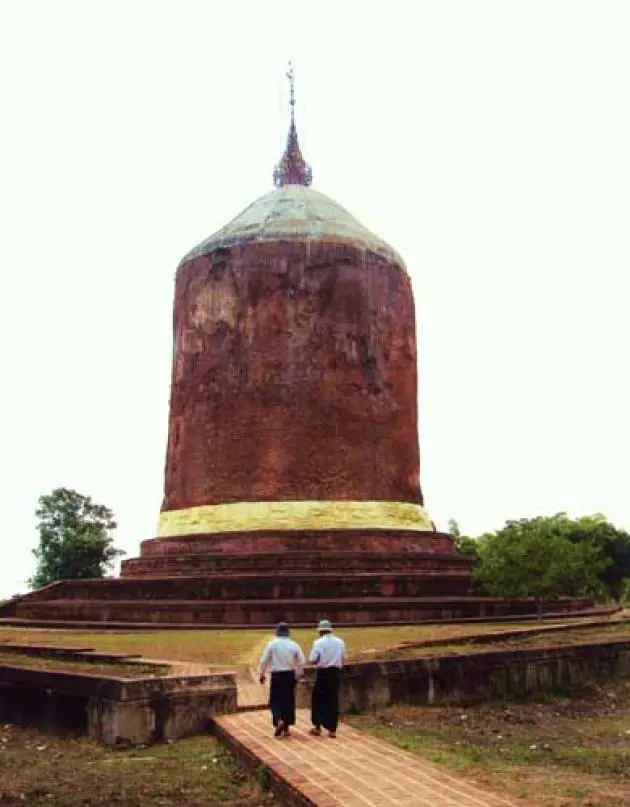
The nominated site comprises the three cities of Halin, Beikthano and Sri Ksetra. T
Over a prolonged period of interaction between indigenous societies with Indic cultures to the west starting after the 2nd century BCE, Buddhism achieved its first permanent foothold in Southeast Asia among the Pyu cities, where it was embraced by all classes of society.
The development of Pyu Buddhist urban culture had widespread and enduring impact, following the onward transmission of Buddhist teaching and monastic practice into other parts of mainland Southeast Asia.
The Pyu cities marked the emergence of the first historically documented Buddhist urban civilisation in Southeast Asia. The establishment of literate Buddhist monastic communities arose in tandem with the reorganisation of agricultural production, the specialised production of manufactured goods, the construction of religious monuments in brick, and the development of unique mortuary practices.
Technological innovations in resource management, hydraulic engineering, agriculture and manufacturing of brick and iron at the Pyu cities created the preconditions leading to significant advances in city planning and construction, resulting in the creation of urban prototypes that later proved critically influential for later city formation in Southeast Asia.
The World Heritage status of the Pyu ancient cities will save the Pyu civilisation from cultural oblivion and thrust it into the mainstream of cultural tourism and protection in the country.
The Pyu civilisation developed and flourished over a period of more than 1,000 years between 200 BCE and 900 CE in the Dry Zone of the middle Ayeyarwady (Irrawaddy) River basin.
The mostly intact moated and walled urban settlements lie within a vast irrigated landscape and contain the remains of monumental brick Buddhist stupas (reliquaries), other ritual structures, palace-citadels, burial grounds, water-management facilitis and early industrial-production sites.
The three city-states were founded during the southward migration of the Tibeto-Burman-speaking Pyu people, the earliest inhabitants of Burma.
The cities were the gateway to Southeast Asia for the eastward spread of Theravada Buddhism from India. As the earliest Buddhist city-states, they played a seminal role in transmitting the literary, architectural and ritual traditions of Pali-based Buddhism to other societies in the sub-region.
They hosted the first, largest and longest-lived urbanised settlements of the region until the ninth century. Sri Ksetra, the closest Pyu site to Yangon, in its heyday was Southeast Asia’s largest city-state.
The Pyu civilisation collapsed in 832, falling to invaders from southern China. They re-emerged in altered form in 849 when founding members of the Bagan dynasty united 18 Pyu cities with their Burman neighbours.
These days the Pyu ancient cities continue to be sites of pilgrimage for devout Buddhists from all over the country.
