
Snacks for all your tomorrows


Play
Perhaps expat Deryck Whittaker is saying "cheese" to keep us smiling through his ingenious short stories
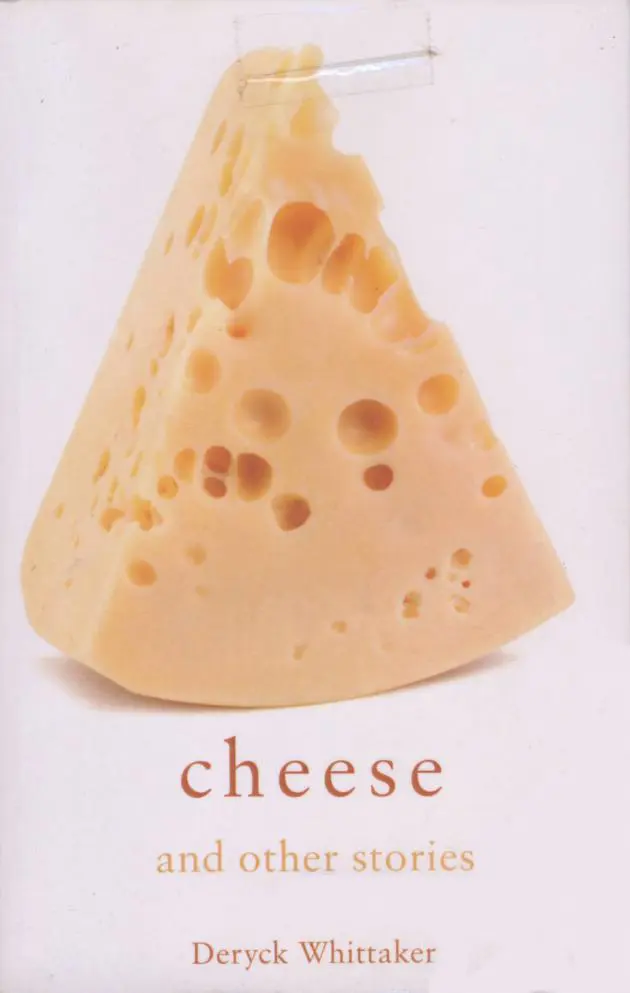
Inevitably, like Monty Python’s “Cheese Shop” sketch, there at first doesn’t appear to be any actual cheese at all in “Cheese”, Deryck Whittaker’s collection of short stories, apart from the gorgeous slab pictured tauntingly on the cover, so realistic you can almost smell it.
Realism, at least, is certainly in abundance in these wonderfully told tales. Comedy there is too, but barely enough to distil the sombre mood.
Regardless, surely there’s some yummy Wensleydale in here somewhere? Whittaker, an expatriate living in Thailand, hails from good old England.
No, sorry, sir, but there is “Distant Voices”, an utterly unnerving portrait of family dysfunction spread between remote points of the globe. In fact, it’s family dysfunction, involving man and wife, parent and child, that in most of these extraordinary stories curdles the milk that makes the cheese.
Fine, well, what about some gorgonzola, then? Nope, gorgonzola’s all out, I’m afraid. But, if it’s quirkiness that appeals, why not try “Close Encounters of the Engineered Kind”, in which a loner carefully plots a “chance” meeting with a woman according to the way in which restaurant tables are assigned each night. Diagrams are even provided!
Possibly. Still, I’m much in the mood for – let’s say a nice, runny camembert. Any hope on the horizon?
Just checking, sir. Ahhhh, no, no camembert, but there’s nothing runnier than “Cross Purposes”, in which an antique Christian cross smuggled out of a construction site has a miraculous effect on a wayward daughter, and then another miracle is needed when the theft is discovered.
“Cheese” might well be the best book of expatriate fiction to come out of Thailand since “A Woman of Bangkok”, the 1956 novel by Jack Reynolds that really started the whole sub-genre rolling. Whittaker is a master of stylish language, agile in both dialogue and descriptive settings. The stories are dazzlingly constructed and marbled with memorable passages, to which is often added a clever use of typography, and even riddles.
Why then, I frequently wondered, does a completely wrong or misspelled word turn up every few pages, falling from an otherwise meticulously neat paragraph like a dish slipping from a shelf and crashing to the floor? Why are so many hyphens found helpless in entirely the wrong places? A good editor could have cracked the whip and got everything in the proper order, but then, of course, the editor would have had to sit back anyway and watch Whittaker imbibe the praise he truly deserves regardless, all flaws forgiven.
The yarn titled “Mulberry Arbour” is about two couples meeting up in the south of France and chatting through the narrator’s nibbles of revelations about their shared past. Something’s amiss in their camaraderie, he muses, Puck-like, but what’s the cause? The sheen is gone from one of the six sides of the cube they form, and he examines them in turn.
“Chris being Chris you loved him from the beginning, in the way that you would be immediately attracted to the sun and a tropical beach. Whereas Andy’s qualities were layered into a sterner landscape, their exposure a process of time, a relationship developed on a flatter curve. No, at that time theirs was the tightest cord in the cat’s cradle of all their relationships.”
“Mulberry Arbour” revisits a scene from another of the stories, “Stolen Time”, in which Angela’s affair in Paris ends in ghastly fashion when her lover dies on her. The reader soon enough starts picking up on the echoes in the book. Glen Gould reappears with his Goldberg Variations. Brighton is back on the itinerary. In “Tunnel Vision”, a woman tourist gets embarrassingly stuck in one of Vietnam’s wartime Cu Chi Tunnels, only for romance to bloom in an English railway tunnel in the very next story, “Growth Factor”.
“Growth Factor” is a sleight-of-hand stunner, pulsing with enviable prose.
“Richard had had a particularly shitty day at work (Monday being the day upon which your having made the wrong career decision is confirmed to you, the day upon which the sun shines and the sky is blue after a precious weekend of uninterrupted downpour, or the day upon which you start your week off under an uninterrupted downpour, after the idyllic weekend. Mondays simply can’t win), stopped off at a pub on his way to the house. Richard never does that. Why did he? It’s going to upset the course of his life. You can see it coming. He meets a woman, they drink far too much ...”
And there I must stop lest too much is revealed.
“Gridlocked”, the manic next-to-last story, contains dozens of imaginative ciphers, culminating in a different puzzle for each and every word in Macbeth’s “Tomorrow and tomorrow” speech, the ultimate ode to mortality. This is virtuoso wordplay that Shakespeare himself would appreciate. And the book ends in a crescendo, “Jump Start”, an eye-moistening affirmation of life’s vast potential, beyond all the hurt.
I’ve been kidding all along about the dearth of cheese in “Cheese”. The story so titled is pocked with smiley faces (and frowns) as we ponder the true identity of the woman who posed with that cheesy smirk as “the Mona Lisa” and the use and misuse of smiles in both the future and the past. Like everything else about this book, it’s Leonardo da Vinci-ingenious.
Cheese and Other Stories
By Deryck Whittaker
Published by Matador, 2013
Available at Kinokuniya Books, Bt614
Reviewed by Paul Dorsey
