
One good turn deserves a great one


Play
Fans of Nikon's D7100 should prepare for an upgrade - the D7200 packs in a whole lot more features
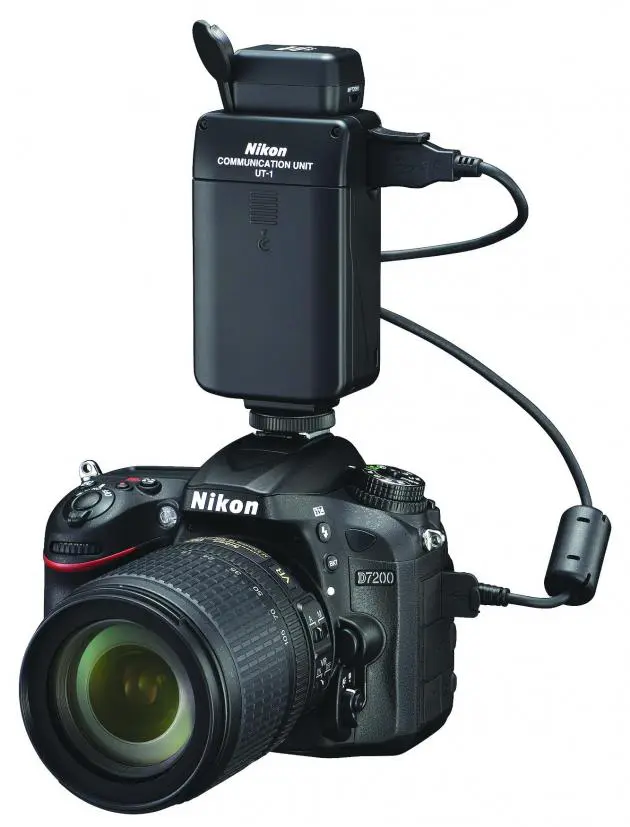
THE NUMBER IS climbing in Nikon’s D series of DX-format digital SLR cameras, and so is the performance thanks to several improvements that make the new D7200 a big step up from its predecessor, the D7100. You get a faster imaging processor, higher resolution and sensitivity and better video quality too.
For social networkers there’s now built-in Wi-Fi connectivity and the NFC function, which ensures fast links to your smartphone and fast sharing online.
The D7200 uses the 24.2-million-pixel APS-C sensor (DX format in Nikon terminology), up from 24.1MP resolution in the 7100, and an Expeed 4 imaging processor, evolved from the Expeed 3.
There’s also a better auto-focus module called Multi-Cam 3500DX II, and an ISO range extended to 102,400, doubling the 51,200 of its predecessor. With greater buffer depth, the D7200 can buffer up to 18 Raw or 100 JPEG photos, a significant jump from the six Raw and 50 JPEG files of the D7100.
This is quite a compact body for a DSLR – 136x107x76mm and 675 grams – a perfect match for the Nikkor 18-140mm ED lens I used for this review. The DX sensor’s size enables a 1.5x crop factor, giving that lens a focal length equivalent to 27 to 210mm in 35mm photography.
The body is sturdy with magnesium alloy at the top and rear, everything sealed against dust and moisture.
Together, the DX sensor, image processer and autofocus sensor translate into top performance and image quality. You consistently get great colour and detail in both landscapes and portraits.
The autofocus sensor module enhances low-light capability, with the AF-detection range reaching as low as minus-3EV. There are 51 focus points overall, covering all of the frame area in DX format, and another 15 crosshair-type sensors in the centre of the lens boast higher detection strength.
All 51 points are responsive at f/5.6, while one centre point can operate at f/8 for better focusing even when using teleconverters, so this is a camera made for telephoto shots as well.
The autofocus module also comes with variety of AF-area modes selectable to match your subject, which is ideal when you want precise focusing on a particular part of your subject.
And moving subjects don’t get away from you, either, thanks to the dynamic-area AF function. Select one of the 51 points as a priority focus, and if the subject moves, however briefly, the focus will switch to the surrounding points. You can choose nine, 21 or all 51 points depending on the situation, such as how well you can predict the movement.
The Expeed 4 image processor boosts the ISO to 25,600, which is two full stops higher than the D7100, while at the same time reducing noise. It will help preserve sharpness and texture even at relatively high ISO settings. The range is expandable even further, to Hi BW1 and Hi BW2 (ISO 51,200 and 102,400 equivalents, respectively) in monochrome, thus opening up far more shooting possibilities. And you can shoot clear video at night without needing additional lights.
A new option in the picture control system is called Flat, which collects more information from shadows to highlights, so there’s less likelihood of colour saturation. Instead you get beautiful colour gradation and contrast. The other control options are Standard, Neutral, Vivid, Monochrome, Portrait and Landscape.
The viewfinder affords brighter images with more accurate hues, along with that 100-per cent frame coverage in DX format. The read-out below the image in the viewfinder is also bright and high-contrast regardless of difficult back-lit situations, even though power consumption is low.
The alternative view is the high-resolution, 1,229k-dot, 3.2-inch LCD display with RGBW alignment to frame your shots. The monitor is really good for reviewing what you’ve just taken.
All these professional-type functions might seem intimidating to beginners but, once familiarised with the controls, using the camera becomes quite intuitive. The control buttons include a mode dial, drive mode selector ring, white-balance button, quality button, ISO button, multi-selector and main command dial.
The mode dial lets you choose among Programmed Auto, Shutter and Aperture Priority, Scenes, Effects, non-flash operation, full Automatic mode and two user-setting options. There’s a lock to prevent accidental turning of the dial.
The main command dial is just as easy and convenient for changing parameters depending on the shooting mode and options relevant to the control buttons. You press and hold the ISO button and turn the command dial to change the ISO value, for example.
Full auto mode is of course the easiest way to capture good-quality shots, but more advanced users will get a kick out of the variety of controls and options in the other modes.
The Scene selection dial proffers 16 choices, accessed via the main command dial if you prefer. These include Blossom, Pet Portrait, Sunset, Party/Indoor and Night Landscape. The seven fun Effects include Night Vision, Colour Sketch, Miniature and Silhouette.
I was thoroughly impressed with the D7200. Using the test lens, I got sharp, detailed landscapes in vivid colours (especially with the “Vivid” picture-control option) and gorgeous portraits with the background dissolved for a truly professional result.
At Wat Hua Lamphong the camera was utterly faithful in capturing the golden Buddha statues, lush trees and multi-tiered umbrellas against the wonderful blue sky. It took just 0.3 second to start up, ready for shooting. The autofocus took half a second in bright light, a little more time in dim settings. In burst mode I got six frames per second in JPG mode, though I did notice some shutter lag.
The battery life is solid – about 1,110 shots per full charge. Two SD-card slots ensure ample storage.
The Nikon D7200 with an AF-S Nikkor 18-140mm f/3.5-5.6G ED lens retails for Bt49,900. The body alone sells for Bt41,900.
Type: Single-lens reflex digital camera
Lens mount: Nikon F mount
Image sensor: 25.5x15.6mm CMOS sensor with 24.2 million effective pixels and 1.5x cropping factor
Shutter type: Electronically-controlled vertical-travel |focal-plane shutter
Shutter speed: 1/8000|to 30s in steps of 1/3 or 1/2 EV, bulb, time
Metering system: TTL exposure metering using |2016-pixel RGB sensor
ISO sensitivity: ISO 100 to 25,600, ISO 102400 equivalent
Autofocus system: Multi-Cam 3500 II autofocus sensor module with TTL phase detection, |fine-tuning, 51 focus points
Autofocus: Contrast-detect AF anywhere in frame
Viewfinder: Eye-level pentaprism single-lens reflex viewfinder with 24x16 image area, 100 per cent horizontal |and vertical
Monitor: 3.2-inch TFT monitor with 640x480 pixels
Connectors: USB 2.0, Type-C HDMI, 3.5mm stereo jack
Wireless connection: Wi-Fi 802.11 b/g with NFC
Video: 1920x1080; 60p H.264/MPEG-4
Media: SD, SDHC (UHS-I compliant), SDXC (UHS-I compliant) with two card slots
Dimensions: 135.5x106.5x76mm
Weight: 675g body only
