
A call to save our seas
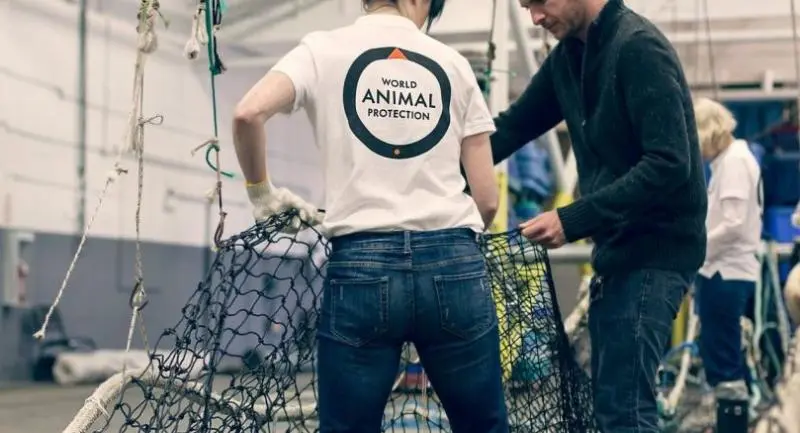


Lost and discarded fishing nets bigger than football pitches are lurking in our oceans, posing a deadly threat to marine life
EVERY year more than 100,000 whales, dolphins, seals and turtles are caught in “ghost gear” –abandoned, lost and discarded fishing nets, lines and traps which can take up to 600 years to decompose. The vast majority of this gear is made of plastics that take centuries to degrade. Animals caught in this incredibly durable fishing gear then suffer a prolonged and painful death, usually suffocating or starving to death over a number of months.
So reads a recent report published by World Animal Protection, an international non-profit animal welfare organisation that has been in operation for over 30 years.
The statistics and information contained in the report should be of concern to us all.
A staggering 640,000 tonnes of fishing equipment is left in our oceans each year – the equivalent of 52,000 London double decker buses – and more than 817 species of marine life are affected by this marine litter.
This ghost gear eventually breaks down into microplastics and can enter the human body through the fish we consume. More than a quarter of fish sold at markets in Indonesia and California now contain plastic from different sources most likely also including ghost gear.
The level of ghost gear has increased in recent years and is likely to grow further as fishing efforts intensify, creating wide-ranging problems for the marine environment and costing governments millions of dollars in clean-up expenses.

World Animal Protection staff work to clear the oceans of “ghost” fishing nets./Courtesy of World Animal Protection
Early in June, industry and political leaders gathered at two key international summits – the UN Ocean Conference and the SeaWeb Seafood Summit – and World Animal Protection again called on participants to recognise the urgent need to rid our oceans of ghost gear death traps and join the Global Ghost Gear Initiative.
“Effective solutions are being found locally and nationally, yet a global approach is needed for the problem of ghost gear to be monitored and solved at scale. Governments and industry are part of this solution,” notes Ingrid Giskes, head of World Animal Protection’s Sea Change campaign.
“Our Global Ghost Gear Initiative (GGGI) has more than 80 industry participants who are driving innovative solutions from removing gear from our oceans to converting recycled nets to skateboards and swimwear. What we’d like to see is the GGGI taken to the next level by governments and industry – a sustainable global network of members committed to real change globally and practical solutions at scale.”
Giskes adds that the GGGI also presents a way for governments to deliver UN Sustainable Development Goal 14 targets to reduce marine litter: “We hope as many industry and government representatives as possible will join our effort to eliminate ghost gear and create safer, cleaner oceans. It’s bringing together partners to stop fishing gear being lost and abandoned, supporting new ways to prevent gear from being lost in the first place and promoting best practice when removing ghost gear from the seas, helping protect marine animals from harm and safeguarding human health and livelihoods,” she says.
“Our alliance already includes representatives from the fishing industry, the private sector, academia, governments, intergovernmental and non-governmental organisations. Every participant has a critical role to play to mitigate ghost gear locally, regionally and globally. That’s also a lot of expertise and passion to draw from.
“What we’d like to see is retail companies, fast food restaurants and fishing industries coming on-board, along with governments. While a fast food restaurant doesn't seem like an obvious target, when you take into consideration restaurants' iconic fish meals and burgers, many chains have a strong link to fishing and the capacity to help reduce marine litter.”

Some of the creatures who die a horrible death after being caught up in abandoned nets/courtesy of World Animal Protection
Research has revealed a correlation between illegal fishing activity and ghost gear. It has been suggested that when fishing activities are illegal, enforcement pressure leads fishermen to sometimes abandon their fishing gear to evade capture by authorities or to avoid being denied entry to port.
Hotspot areas for IUU fishing can lead to a greater prevalence of ghost gear, which has led to key organisations including the United Nations Environment Programme and the Food and Agricultural Organisation of the United Nations, to formally acknowledge the link between ghost gear and this illegal activity.
“Our oceans are vast. One of the biggest challenges we face is getting an accurate global picture of where ghost gear is lost, hotspot areas and trends where we can target our efforts. However, more importantly we need to prevent further gear from getting there in the first place. That’s why |we are also urging governments |to address IUU fishing as an additional measure to tackle the problem of ghost gear, ensuring natural resources are conserved and guaranteeing the future of the industry,” Giske says.
