
Thais dispute repeated Cambodian cultural claims in 2026


Miss Universe Cambodia 2026 renews Thai criticism over cultural claims, following disputes involving traditional dress, Khon, Muay Thai and Songkran.
- A Miss Universe Cambodia 2026 costume controversy has renewed disputes, with Thais accusing Cambodian organizers and commentators of misrepresenting Thai traditional dress and historical photographs as their own.
- The cultural conflict is ongoing and includes repeated claims over the origins of the Khon masked dance, the Muay Thai martial art (which Cambodia calls Kun Khmer), and the Songkran New Year festival.
- Disputes have also extended to claims over the national identity of Thai celebrities like singer Lisa and boxer Buakaw Banchamek, as well as Thai literary works and food.
- Thailand's Ministry of Culture is actively involved, refuting some claims and expressing concern over Cambodia's 2026 election to a UNESCO committee ahead of Thailand's own cultural nominations.
Thai social-media users have again expressed outrage over Cambodian pageant organisers and online commentators presenting Thai culture as their own. The Miss Universe Cambodia 2026 costume controversy has renewed disputes over traditions ranging from national dress and Khon to Muay Thai and Songkran.
Thai criticism has extended to historical photographs, literary works, food and the identities of Thai celebrities. There is no official database establishing how many alleged instances of Cambodian claims to Thai traditional dress have occurred.
Thailand’s Ministry of Culture has, however, rejected one online allegation that Thai dress had been inserted into Cambodia’s wedding-ceremony submission.
Cambodian pageants put Thai dress back in dispute

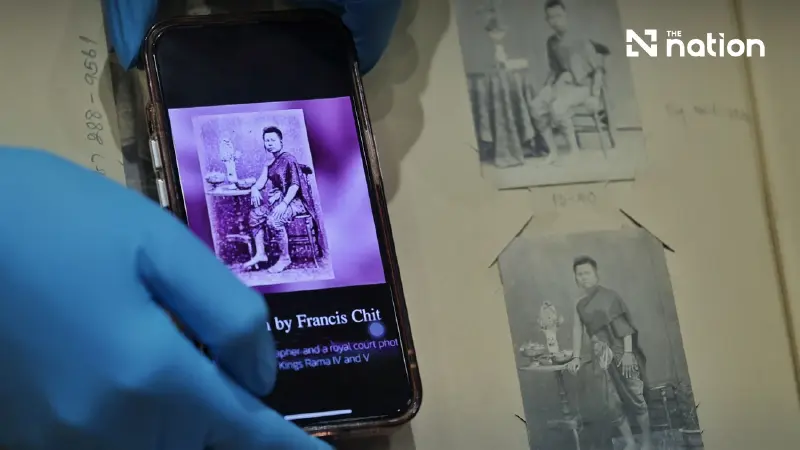
The Miss Universe Cambodia 2026 dispute centres on accusations that the pageant presented Thai clothing as Cambodian and misrepresented glass-plate photographs from Thailand dating from King Rama V’s reign. Thailand’s Ministry of Culture regarded the alleged misuse as a matter it could not ignore.
Thai-style clothing became more visible in Cambodia around 2018, when the Thai period drama Love Destiny, or Buppesannivas, was enjoying widespread popularity. Disputes over claims to Thai dress attracted greater attention from 2022 onwards, particularly at Cambodian beauty pageants.

Miss International Cambodia 2022 drew criticism after an outfit resembling Thai traditional dress was described in social-media posts as Cambodia’s national costume. The clothing also appeared in a video submitted for the competition in Japan, and the controversy became part of a wider nationalist debate.
Cambodian beauty pageants have faced further accusations over national costumes. Thai critics have also accused Cambodian influencers and some media outlets of altering or reposting images of Thai dress and dance, spreading misleading cultural information to create a lasting digital record and repeatedly editing Wikipedia entries.
Khon, Muay Thai and Songkran become recurring flashpoints

Khon and classical dance have repeatedly featured in Thai-Cambodian cultural arguments, reflecting the countries’ historical connections within Southeast Asia. Some Cambodian social-media users argue that their own masked performances such as Lkhon Khol derive entirely from ancient Khmer civilisation and that Thailand’s Khon developed from those traditions.
Some Cambodian users have gone further, claiming that Thailand copied Khon and using the hashtag #itiscombodiaculture to assert Cambodian ownership.

The United Nations Educational, Scientific and Cultural Organization (UNESCO) inscribed “Khon, masked dance drama in Thailand” on the Representative List of the Intangible Cultural Heritage of Humanity in 2018.
Muay Thai became another point of contention at the 2023 Southeast Asian Games, when Cambodia, as host, chose the name Kun Khmer rather than Muay Thai for the event. Cambodian proponents also argued that Muay Thai originated from Kun Khmer.
Thailand withdrew from the Kun Khmer event at the 2023 Southeast Asian Games, objecting to what it considered a unilateral name change and citing the absence of recognition by the relevant international sports federation. Five other countries were also reported not to have sent athletes to the competition.

Thai boxer Buakaw Banchamek was drawn into the wider argument after online claims described him as Cambodian. Buakaw publicly reaffirmed that he was Thai.
Songkran has generated recurring arguments over origins and ownership, particularly around the Thai New Year. Thai critics have questioned Cambodia’s use of Moha Sankranta in tourism promotion after traditionally calling its New Year festival Chaul Chnam Thmey, and challenged claims that the word “Songkran” had been discovered by scraping ancient temple walls.
UNESCO inscribed “Songkran in Thailand, traditional Thai New Year festival” on the Representative List of the Intangible Cultural Heritage of Humanity in 2023.
Lisa, literature and food are drawn into the arguments

Thai singer Lalisa Manobal, known as Lisa, became the subject of nationality claims after releasing her first solo single in 2021. Some Cambodian social-media users attributed her global success to alleged Cambodian ancestry rather than her Thai identity.
Lisa’s use of Thai cultural imagery has also drawn competing claims online. Some Cambodian commenters have described her contemporary Thai-style outfits and dance movements as Cambodian, with claims extending even to the Thai-flag designs on her clothing.
On July 14, 2025, social-media posts alleged that Cambodia had secured UNESCO recognition for 22 Thai literary works without Thailand objecting. The posts claimed that works by Thai authors had been presented under “Cultural heritage of Cambodia” for use in performances by the Royal Ballet of Cambodia.
Social-media claims about the 22 literary works also said they had been revived between 1979 and 2002, linking them to Phra Thong–Nang Nak, a folk drama said to have been written in 1930 during King Sisowath Monivong’s reign. Thailand’s Ministry of Culture submitted evidence to UNESCO and requested an examination of the issue.
Thai critics have extended accusations of cultural appropriation to mango sticky rice, Pad Thai and hor mok, as well as the film Mae Nak Phra Khanong. The repeated disputes have prompted some Thai social-media users to use the mocking nickname “Claimbodia”, combining “claim” and “Cambodia”.
Thai ministry rejects wedding allegation as other disputes continue

Thailand’s Ministry of Culture found no evidence that Thai traditional dress had been inserted into or falsely claimed in Cambodia’s wedding-ceremony submission in the manner alleged online.
The wedding controversy arose while Thailand was pursuing UNESCO recognition for Chud Thai. Online allegations described Cambodia’s proposal as a “Tentative List” submission and accused Cambodia of incorporating Thai dress into the ceremony to claim it as Cambodian; the ministry’s examination did not substantiate that allegation.
Cambodia’s election in June 2026 to UNESCO’s Intergovernmental Committee for the Safeguarding of the Intangible Cultural Heritage, for the 2026–2030 term under the 2003 convention, also prompted concern in Thailand about nominations involving Chud Thai and Muay Thai. Cambodia’s committee term is confirmed by its state news agency.

Culture Minister Sabeeda Thaised has already said Cambodia’s committee membership would not affect Thailand’s nomination rights. Sabeeda said Thailand had supplied all required information and that UNESCO follows internationally recognised procedures, with decisions made collectively by 24 member states rather than by any one country acting alone.
Sabeeda said no single country could decide, revoke or cancel an inscription unilaterally, and expressed confidence that Thailand would receive positive news about Chud Thai in December 2026.
Cultural disputes have unfolded alongside longstanding territorial disagreements over border sites. Following clashes around Ta Kwai Temple, the Ta Muen Thom temple complex and other archaeological sites in 2026, Thailand’s Ministry of Culture plans to pursue heritage registration once restoration work is completed.
Source: Nation TV Online
