
Thai fruit inspires dance at IMF–World Bank meetings in Bangkok on October 14
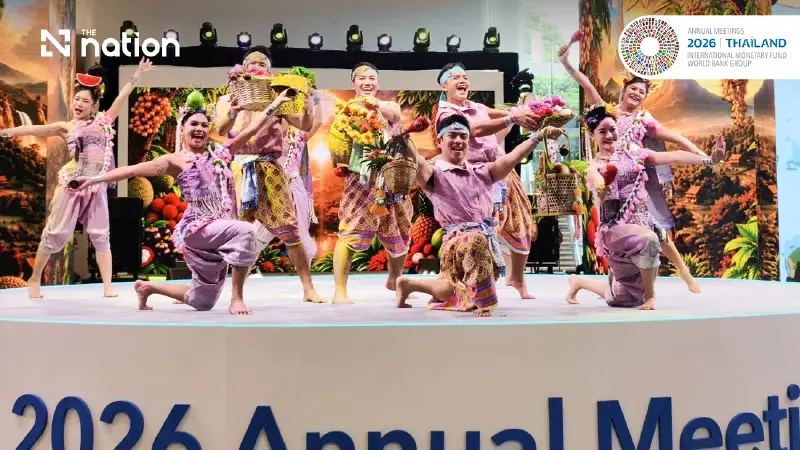


The Land of Prosperity mixes Thai dance and music with fresh fruit shared with IMF–World Bank delegates in Bangkok to showcase local culture
- A dance performance titled "The Land of Prosperity" was staged at the IMF–World Bank meetings in Bangkok on October 14.
- The show was inspired by Thai fruit, using longkong and mangosteen as central elements to introduce them to an international audience.
- Performers brought baskets of fresh fruit onto the stage and distributed them directly to audience members during the show.
- The production combined traditional Thai dance and music with contemporary styles to present an accessible vision of Thai culture and "soft power".
Contemporary Thai dance, music and fresh fruit came together in “The Land of Prosperity”, a performance staged at the International Monetary Fund (IMF)–World Bank Group Annual Meetings in Bangkok on October 14, 2026.
Created by Bangkok troupe Phetch Jaras Saeng, the production portrayed Thailand as Suvarnabhumi, drawing on the abundance of its nature, culture and land to tell a story of prosperity and happiness.
The show combined adapted Thai music with international musical styles and modern melodies. Multimedia images formed the stage backdrop, helping audiences follow the story through movement, rhythm and visual storytelling.

Fresh fruit becomes part of the performance
Worawut Saengsawat, a representative of Phetch Jaras Saeng, told Bangkok Biznews that the team wanted international visitors to become more familiar with Thai fruit.
Longkong and mangosteen, which some foreign visitors might not recognise, became central elements of the performance. The artists brought baskets of fresh fruit onto the stage and distributed fruit to audience members during the show, encouraging them to discover its flavour as well as its appearance.
“We want foreign visitors to taste Thai fruit. For the movements, we combine actions from traditional Thai games with lively dance steps so the audience can take part,” Worawut explained.
Traditional games also provided a way to introduce unfamiliar aspects of Thai culture through an enjoyable shared experience. Dance, accessible rhythms and interactions between performers helped communicate elements of everyday Thai life without lengthy explanations.

Traditional movement for different generations
Kanthika Panin, another troupe representative, described the principle guiding its productions as “older generations can enjoy it, and younger ones can connect with it”.
The approach adapts Thai cultural stories for contemporary audiences while retaining their foundations. Traditional dance movements are adjusted to suit the subject and musical rhythm, with Thai and international musical elements combined to appeal to different groups of spectators.
Members contribute ideas under a choreographer’s supervision, drawing on years of performance experience to create a coherent and engaging show.
Worawut explained that rehearsals for “The Land of Prosperity” were relatively brief because the performers already had the necessary training and experience. Their preparation focused on developing movements, selecting rhythms and refining details to support the production’s central idea.
Phetch Jaras Saeng brings together artists working in Thai music, dance and productions involving lighting and sound. Its members include graduates of the College of Dramatic Arts in Bangkok and independent performers, united by an interest in presenting Thai culture in an accessible, contemporary form.

Seven days of changing cultural performances
The troupe’s programme for the meetings spans seven days, with three performances daily, in the morning, at midday and in the evening. Different productions give delegates opportunities to experience a range of Thai cultural traditions.
Nora and khon performances during the meetings’ first two days had already attracted interest from international audiences. Muay Thai and krabi krabong, Thailand’s traditional weapons-based martial art, were scheduled for October 15, following “The Land of Prosperity”.
The cultural programme complements the Thai food, desserts and fruit bearing geographical indications served at the meetings, extending the host country’s presentation of its identity beyond the conference discussions.
For Phetch Jaras Saeng, cultural communication includes the props, clothing and costumes used on stage, as well as the music, dance and stories expressed through movement. The aim is to let audiences experience the different elements of Thai identity directly.
“This event brings together participants from around the world. What we want to present is Thai identity and soft power, including Thai dance, props and clothing. We want everyone to see the different elements of Thai identity,” a troupe representative was quoted as saying.


Source: Bangkokbiznews
