
Thailand launches street-food app and certification scheme
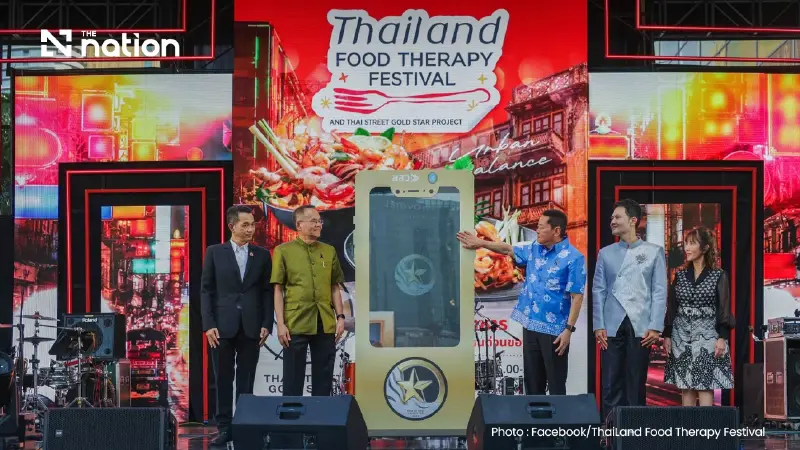


The Thai Street Gold Star app will list certified vendors in Bangkok, Pattaya and Chiang Mai while helping SMEs reach Thai and foreign customers.
Thailand has launched a digital application that allows diners to find certified street-food vendors, forming part of a government programme to raise operating standards and expand market opportunities for small businesses.
The Thai Street Gold Star app lists participating outlets alongside recommended dishes, locations and travel information. It is being introduced initially in Bangkok, Pattaya in Chonburi and Chiang Mai.
Deputy government spokesperson Lalida Persvivatana said the scheme would help Thai street-food operators reach more domestic and international customers while supporting efforts to bring the sector up to international standards.

Napintorn Srisunpang, Minister attached to the Prime Minister’s Office, launched the application during the Thailand Food Therapy Festival & Thai Street Gold Star roadshow.
The project is being carried out by the Office of Small and Medium Enterprises Promotion, Suan Dusit University and partner organisations.
Certification covers safety, identity and service
Street-food vendors seeking certification must meet requirements in three areas: Safety, covering food hygiene and sanitation; Signature, assessing the identity and distinctiveness of their dishes; and Service, measuring the quality of customer care.

The certification is intended to give customers greater confidence in participating outlets and help vendors compete more effectively in Thailand’s tourism market.
Through the application, users can search for approved vendors, view their recommended menus, locate their premises and obtain travel directions.
For small operators, the platform will serve as a marketing channel connecting them with Thai customers and foreign tourists who may otherwise find it difficult to identify vendors meeting recognised standards.


Roadshows give operators access to tourists
Businesses joining the programme will receive training in business planning, digital marketing, food sanitation and the use of artificial intelligence.
Vendors that meet the required standards will be selected to participate in roadshows in Bangkok, Pattaya and Chiang Mai.
The events will allow operators to test their products in the market, meet consumers and establish links with tourists, giving them opportunities to expand sales and generate additional income.

Lalida said the programme formed part of the government’s policy to improve the capabilities of small and medium-sized enterprises and increase Thailand’s competitiveness.
The government aims to use the popularity of Thai street food to create economic value, raise incomes among grassroots businesses and reinforce Thai cuisine as a national strength.
It has also set a target of increasing SMEs’ contribution to gross domestic product to 40% within five years.
Thai street-food market valued above 261 billion baht
Thailand’s street-food market is valued at more than 261 billion baht and continues to expand, according to figures cited by the government.
Officials regard the sector as an important source of income for small businesses and a significant part of the country’s tourism industry.
Lalida pointed to international recognition of Thailand’s food scene. Time Out ranked Bangkok as the world’s second-best city for food in 2025, up from sixth place a year earlier.

Banthat Thong Road in Bangkok was also named among the world’s best streets, reflecting its popularity as a food destination among both residents and international visitors.
The government wants to build on that recognition by positioning Thailand as a global destination for gastronomy and wellness tourism.
“Thai cuisine and Thai street food are important strengths for the country,” Lalida said.
“Raising standards alongside the use of digital technology will improve operators’ competitiveness, generate income for SMEs, stimulate tourism and help establish Thailand sustainably as a global gastronomy and wellness-tourism destination.”
