
Click for clarity


Play
The Roo Su Flood video animations have been a whale of success, filling a breach in communications with facts
Nearly as bad as the threat of flooding for residents of Bangkok was the flood of conflicting information about why, when and how much. You needed a lot of sandbags to keep out the contradictions – and the panic of not knowing for sure.
And then along came some clever, charming videos that explained a whole lot. Young animators led by Kriangkrai Vachiratamporn, Sukhapat Lohwacharin and Thawatchai Saengthamchai – calling themselves Roo Su Flood (Know, Fight, Flood) – made the infographic-style clips that appeared on YouTube and swiftly made the rounds of the social media.
Within a week they released four episodes of five minutes each, in Thai with English subtitles. The first came out on October 24 and was watched 700,000 times overnight. Their fan page on Facebook currently has more than 75,000 followers.
“We’re competing with time to provide helpful information and flood-relief tips before it’s too late,” says Kriangkrai, who directed the movie “Pearn Mai Kao” that came out last May.
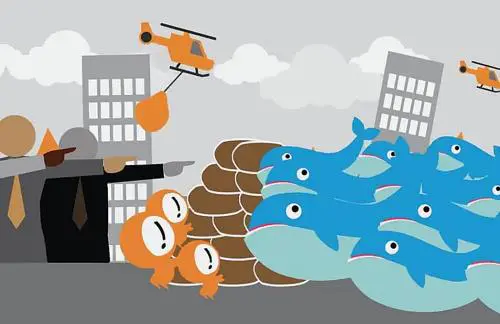
The first Roo Su Flood video featured 50 million blue whales – an instantly riveting way of representing the 10 billion cubic metres of water that “swam” downstream from the North only to get blockaded on the upper edge of Bangkok. There they pile up dangerously against dykes and urban development.
“The blue whale helps people visualise a mass of water,” says Sukhapat, who’s normally writing sitcoms. “If the whale gets in their house, they immediately understand how big the problem is.
“But our aim is to help people stay calm, so the whales seem friendly, not scary. They’re just trying to find their way to the sea.”
Kriangkrai says they got the idea from similar videos produced in Japan after last spring’s double disaster to explain radiation and the effort to bring the damaged nuclear plants back under control. “We could see that infographics with easy-to-understand pictures were the most effective way to explain a complex issue.”
So the group’s first video explained why we had this flood catastrophe. The second addressed the three questions people are asking most. The third was about being prepared. The fourth – released on Sunday – explains how people still in their flooded homes can cope.
The next clip, coming soon, will offer advice on whether you should stay in your house or evacuate.
Is all this information reliable? Thawatchai first cleared the scripts with various experts and Thai PBS. “We present the facts without any attitude,” he emphasises.
“What we offer is the core information and tips. We don’t have all the information – viewers need to find out the rest by themselves, such as how high their house is above sea level, so they can assess their own situation. That’s why we include useful links for further research.”
Kriangkrai points out that the video sequence was based on what the group “instinctively” wanted to know first. The questions answered in the second clip were the basics: Will my house be flooded? If so, how high will the water be? And how long will the flooding last?
“It’s essential to know how high you are above sea level,” he too stresses. “We’ve all heard the term ‘sea level’, but until now we never thought it had anything to do with us.”
Kriangkrai, Sukhapat and Thawatchai graduated in communication arts from Chulalongkorn University and that’s what they decided to utilise when the floodwaters reached Don Muang district last week.
“We’d all volunteered to fill sandbags, but we realised we could do something better with our knowledge,” says Kriangkrai. “We could help out amid the communication failure between government officials and the public.
“People today consume information at a fast speed and in large quantities, but not in depth. They make judgements on a fast track without thinking carefully. And they share and re-tweet the wrong information with every careless click.”
The trio initially had about 10 Chulalongkorn animators working on their project but within a week there were more than 20 volunteers, age 20 to 30, from various institutes.
Their compact studio is in a production house on Soi Ladprao 68 that belongs to one of the members’ parents. The group works day and night to produce the videos because of the urgency of the flood crisis. Each of the clips takes about a day and a half to make.
“We keep the characters simple to save time,” says animator Nottapon Boonprakob. “The main character – representing all of us – first shows up with an exclamation mark on his face, but by the second clip it’s replaced with the word sati – mindfulness – to emphasise the need to stay calm.”
Kriangkrai isn’t about to blame any authorities for mishandling communication, saying only, “We believe a crisis makes people stronger.”
So far the videos have been about why the flood happened and dealing with it. The group plans to focus next on how to become a volunteer and help others, on the after-effects of the disaster, and on long-term solutions.
On the web
_ They’re easy to find on Facebook and YouTube – just search for “RooSuFlood”.
