
Food that floats
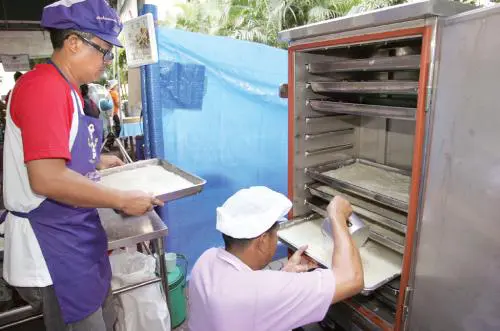


Volunteers and generous corporate sponsors keep the Red Cross' mobile kitchens cooking in a crisis
Sticky rice, fried meat and chilli dip make a decent meal when you’re sitting in the big puddle, as 5,000 Bangkok citizens a day are finding out thanks to the Thai Red Cross Society’s mobile kitchens.
The Red Cross’ Relief and Community Health Bureau started delivering meals in emergencies like this in 2006, when floodwaters engulfed Chantaburi.
The idea came from Her Majesty the Queen, and from the beginning it relied on volunteers. It still does – in a big way.
“We have only 10 staff members and we have to prepare about 5,000 boxes of fresh-cooked food a day for flood victims in Bangkok and the surrounding area. Without the volunteers, the mobile kitchen simply wouldn’t happen,” says Wallapa Suksirimuch.
The assistant head nurse, a 26-year veteran who’s in charge of the kitchen operations, is bowled over that there are always more volunteers than they need.
The country has five mobile kitchens, one for each region and the fifth at the Health Bureau on Bangkok’s Henry Dunant Road.
At each location and in every crisis, Wallapa says, the priorities, in order, are good-quality and nutritious ingredients, hygiene in the preparation, and keeping open the distribution channels.
“Our main concern is that the food reaches the flood victims as fast as possible after we finish cooking and packaging so that it doesn’t go bad. We never send out food cooked the night before.”
Before the flood began seeping into Bangkok, her team was feeding the folks in Nakhon Sawan and neighbouring provinces.
They get started every day at 5am and have 200 meal boxes ready to go at 6.30 with the squads of doctors and nurses dispatched to relief centres to conduct check-ups. By 9am there are at least another 500 meals ready to accompany shipments of relief packages.
At 10am the kitchen sends 500 more meals to the Bangkok Metropolitan Administration and Bhumibol Adulyadej Hospital. Officials in affected districts, such as Sai Mai, then begin arriving to collect food as requested in advance. That’s at least another 500 boxes again.
On recent afternoons, still more meals have been going to the Red Cross in Thonburi for Bangplat residents, to Pasri Chareon district and, finally, at around 4pm, Red Cross staff who are themselves flood victims get a share.
Tally it up to 5,000 boxes, “but we’re aiming for 6,000”, Wallapa says. “Then at the end of every day we have a meeting to plan for the next day.”
The kitchen steams 600 kilograms of rice and makes 200 to 250kg of sticky rice per day. Chicken and eggs round out the meal.
“We fry or boil the eggs to go with khao pad kaprao kai, and sometimes we cook pad chai peau [fried with salted turnip] or kai pa lo [boiled with Chinese herbs], but for that we need around 1,500 eggs!”
A Health Bureau manual lists a handful of menus and recipes along with nutrition tips provided by Chulalongkorn Hospital.
The ingredients are either donated by food suppliers or bought with money given to the Red Cross. “If we need something quick we just go to the Klong Toey fresh market,” says Wallapa, adding that the staff is always aware if it’s feeding a Muslim community, where there are dietary restrictions.
The Coca-Cola Foundation Thailand helps the mobile kitchens through a flood-relief programme called Reunited to Relieve and Rebuilt Thailand. It’s already contributed Bt6 million, Namthip bottled water and volunteers.
Foundation director Jorge Garduno says the soft-drinks company plans to donate more money from its advertising budget and from the parent foundation in the US, for a total of Bt30 million. And it will partner with Habitat for Humanity Thailand to rebuild communities in Ayutthaya, Bangkok and elsewhere.
“Food and clean drinking water,” says Health Bureau director Lt General Dr Amnat Barlee, “are vital for all flood victims in all affected areas, so support from Coca-Cola helps us complete our mission.
“That amount of money will keep us going into early December,” he says. “The fresh-cooked meals cost about Bt30 each, so we need Bt100,000 to Bt150,000 per day.”
Several celebrities turned out to help on Tuesday when the Coca-Cola Foundation presented part of its donation. Actor Charlie Trairat admitted he didn’t know how to cook but was willing to try.
He’d already helped rescue dogs and cats that were abandoned in Rangsit and urged everyone who has to evacuate their home to take their pets with them. Also, he pleaded, don’t keep wild or dangerous animals as pets – there’s always a chance they’ll get loose in such unforeseen circumstances.
Charlie’s fellow actor Danai Charuchimta said he wished flood victims would be more united – and less selfish. He’d distributed meals and some people wanted more than their share.
“Maybe they were afraid they’d soon be starving,” Danai said, “but this is fresh food and it would go bad quickly, so it’s better to share it around to as many people as possible.”
Amnat pointed out that the mobile kitchens have been effective from the outset five years ago.
“I think our country needs people to actually step in and act, not just blame each other. Too many people talk too much, whether it’s politicians, academics or even the media.”
The crisis isn’t a TV soap opera, the bureau director said. “Putting out sensational news without taking its impact into account only creates more suffering. We need to really get at the trouble people are enduring and offer our help.
“In normal times, one of our duties ever since the tsunami has been to educate people about how to prevent, prepare for and cope with worst-case scenarios. I believe that’s the way to help cut back on the losses.”
YOU CAN HELP
Feel like sending some cash? Donate to the account “The Thai Red Cross Society”, 023-6-06799-0 at the KTB’s Surawongse branch.
Find out how you can help with Coca-Cola’s Reunite to Relieve and Rebuild Thailand programme at (02) 576 5888, www.iCoke.co.|th or the “LivePositivelyThailand” page on Facebook.
