
A nod to noodles
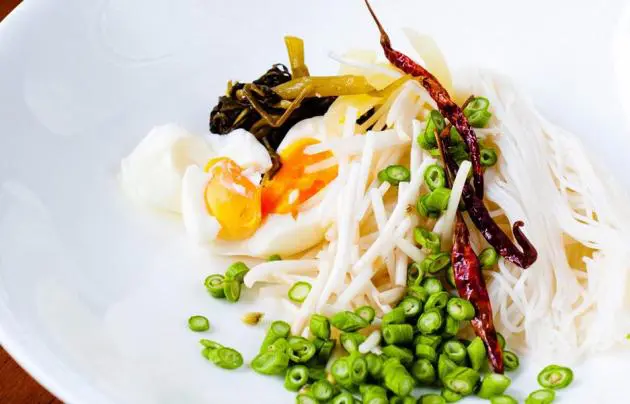


Khanom jeen are served according to ancient and traditional recipes at Nahm. Expect to pay more than Bt30 a dish though
Khanom jeen, Thai pasta or rice noodles with spicy curry soup, can be found relatively easily all over Thailand. The noodles with a soup-like sauce cost no more than Bt30 a dish in most open-air markets on the outskirts of the city. So would you pay Bt500 for a plate of khanom jeen for lunch in downtown Bangkok? David Thompson and his team at Nahm, the Thai restaurant at the Metropolitan Bangkok, are confident that some people are willing to pay that much to try something different.
Having toyed with the idea of launching khanom jeen for lunch for quite some time (Nahm usually only serves dinner), the team has decided that there’s no time like the present, especially given the high number of offices in Sathorn area and the lifestyle of professionals there who enjoy a quick, informal and filling lunch.
So from Monday, Nahm is serving up not the everyday khanom jeen we can find at street stalls, but traditional khanom jeen based on yesteryear’s recipes and which are made from top quality ingredients and a few rare herbs found only in the forests of Southern Thailand.
On a recent visit just before the launch, I found Thompson’s khanom jeen high on the bill but low on the fiery scale – though a fellow Thai diner at the tasting disagreed. But my comments on spiciness are rather subjective, and people’s tolerance of spiciness varies. There are a few kinds of khanom jeen in Thailand, and only some of them are hot and spicy while others are designed to be sweet or salty but not hot.
Much to the delight of any serial hard-core khanom jeen lover, Nahm serves up to five versions: namya gai, gaeng kati goong sup, gaeng tai plaa, namya boran and gaeng khiew wan look chin plaa. You get a big plate of noodles adorned with all sorts of fresh vegetables, served alongside a bowl of one of the five gaengs and curries – if you order a la carte. The portion is big, and there’s plenty of green leaves that help chill the mouth, balance out the flavours and lighten the meal.
These five gaengs and curries come in full flavours and colours. The five versions are served for tasting all at once and all are pleasantly thick.
I sampled the namya gai (chicken and wild ginger sauce with lemon basil, green beans and eggs; Bt510) first. Thick and reddish, it’s pleasantly salty, but the fresh vegetables balance out the flavours.
The spiciest is supposed to be gaeng tai plaa (spicy smoked fish curry with prawns, chicken livers, cockles, chillies and black pepper; Bt520). This is a crunchy wonder with the whirling aroma of black pepper. If you’re a Westerner, you get a gold medal if you finish the plate, which is quite spicy and hot by Thai standards, though not by mine. However, a fellow Thai diner complained it was too hot proving it really is a question of taste.
Next came gaeng kati goong sup with a splash of coconut milk on top. This coconut and turmeric curry of minced prawns with banana blossoms and Asian pennywort goes for Bt580 and is pleasantly sweet and creamy and it won my vote as the best of the five. It’s ideal for those who want to avoid the hot stuff.
Meanwhile namya boran (grilled catfish with yellow eggplant and southern ginger; Bt420) is moderately spicy though some will find it too hot. The dish contains special forest ingredients like nor pood and the galangal-like hua krathue from southern Thailand, which are not available in Bangkok.
The khanom jeen with gaeng khiew wan (Bt570), - green curry of fish dumplings with salted beef – is mouth watering. The fish balls in the green curry make the dish a truly filling experience.
Probably the best way of enjoying the khanom jeen lunch is to order the set menu priced at Bt800 plus service and VAT. For that you get southern grilled mussels and spicy pork with mint, peanuts and crunchy rice on betel leaves as appetisers, a choice of khanom jeen plus a Thai dessert.
And yes, even with the high-quality ingredients, the cost of these noodles is on the high side. But then if you want special khanom jeen from an ancient recipe and tasting authentic to boot, then that’s the price you have to pay. At least you won’t go away feeling that your Thai lunch has been prepared by a farang chef.
