
Careful with that trigger finger


Thailand's most updated English news website, newspaper english, breaking news : The Nation
You don’t need to be a gun enthusiast – or even want to use one – to be afflicted by “trigger finger”.
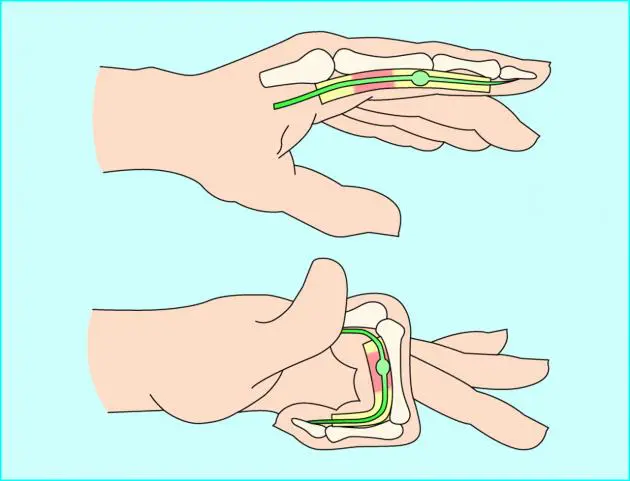
Trigger finger is a common disability caused by the overuse of any finger. Friction against the tendon sheath hinders the movement of the tendon.
The symptoms vary in intensity depending on the severity of the inflammation. You might have simple pain in the fingers, a clicking or popping sensation when bending or straightening a finger, or find a finger locked in a bent position.
Phase 1 for sufferers involves a painful inflammation of the tendon. Phase 2 is the popping sensation, but the finger can still be stretched. Phase 3 is the locked finger, which must be forced back into a straight position.
Trigger finger afflicts 2.6 per cent of the general population, mostly middle-aged people. It’s two to six times more common among women than among men.
Your thumb is most likely to be affected, followed in descending order of incidence by the ring finger, middle finger, pinky and index finger. Non-surgical treatment includes rest and observation while the sufferer avoids manual work, such as gardening, sewing and holding scissors.
Oral medication might be prescribed to relieve the inflammation, and possibly injections of steroids into the tendon sheath. This approach is common in the early stages and multiple injections could be required.
A brace or splint can be applied to the affected finger for three to nine weeks, especially for anyone who experiences trigger finger in the morning when they wake up. The fixture allows them to sleep better and more safely. It is not recommended, though, for people suffering from multiple locked or stiff fingers.
If the condition doesn’t improve or recurs, surgery can solve the problem. The surgeon will make an incision of about 1 to 1.5cm long in the palm of the hand under local anaesthetic so that the thickened tendon sheath can be cut.
After surgery the patient can resume normal use of the hand. The wound will heal within 10 to 14 days and the stitches will be removed. There might be a surgical scar that will initially swell, but it gradually fades away.
