
PSORIASIS NEEDN'T BE FEARED


Play
If it's more common than you think, you need to learn more
You don’t hear much about psoriasis, even though there are probably psoriasis sufferers around you. People tend to avoid them, thinking the disease is contagious. It’s not – it’s inherited.
Believe it or not, two out of every 100 Thais live with psoriasis. That’s around a million people.
Sufferers are usually encouraged to continue living normally while adjusting as necessary. They must be more careful about exposure to sunlight, eat specific foods while avoiding others, and see a doctor regularly.
Outbreaks begin with a rash and red, inflamed skin, usually around age 22 or age 55, although all adults age 27 to 60 years are susceptible, as are children age eight to 15.
Red and white rashes can appear on the scalp, face, arms, hands, fingers, back and soles of the feet, and those afflicted tend to take great pains to cover these areas from view. Privately, though, they suffer mentally, and this can affect their career.
Some patients have acute rashes that vanish. Others have chronic recurring conditions. They might also suffer from arthritis, painful joints and abnormal fingernails.
There can also be follow-up complications involving diseases of the metabolic system like hypertension, cardiovascular disease and a high blood-sugar level, which can lead to diabetes.
Once cured, psoriasis leaves no lesions, although some patients might initially have darkened skin.
Psoriasis is regarded as an auto-immune disorder. The immune system allows the skin cells to grow too rapidly, so new cells replace old ones every other day. This result in red, raised areas of inflamed skin covered with itchy silvery-white scales.
These skin “plaques” take various forms, the most common being erythematous. The plaques can be round or curved, tiny in size or larger than the palm. The condition in which raised areas of inflamed skin with small scales spread throughout the body is called guttate psoriasis and is usually short-lived and found in children recovering from respiratory infection. It can recur, though.
Chronic stationary psoriasis, also called psoriasis vulgaris, occurs in areas that are routinely rubbed, such as the elbows, knees, hip and scalp. The plaques are quite large and require treatment.
There are many types of psoriasis plaques, such as smooth inflamed patches around skin folds (psoriasis inversus), raised bumps filled with non-infectious pustules (pustular psoriasis), and widespread inflammation and fiery redness of the skin over most of the body surface (psoriasis erythroderma).
There are dedicated teams of dermatologists at many general hospitals and institutes, including the following:
Ministry of Public Health’s Department of Medical Services, Institute of Dermatology
- Siriraj Hospital
- Ramathibodhi Hospital
- King Chulalongkorn Memorial Hospital
- Phramongkutklao Hospital
- Chiangmai University Faculty of Medicine
- Prince of Songkhla University Faculty of Medicine
The Dermatological Society of Thailand is sharing information about psoriasis and its treatment – including the use of alternative medicine – with the support of LEO Pharma.
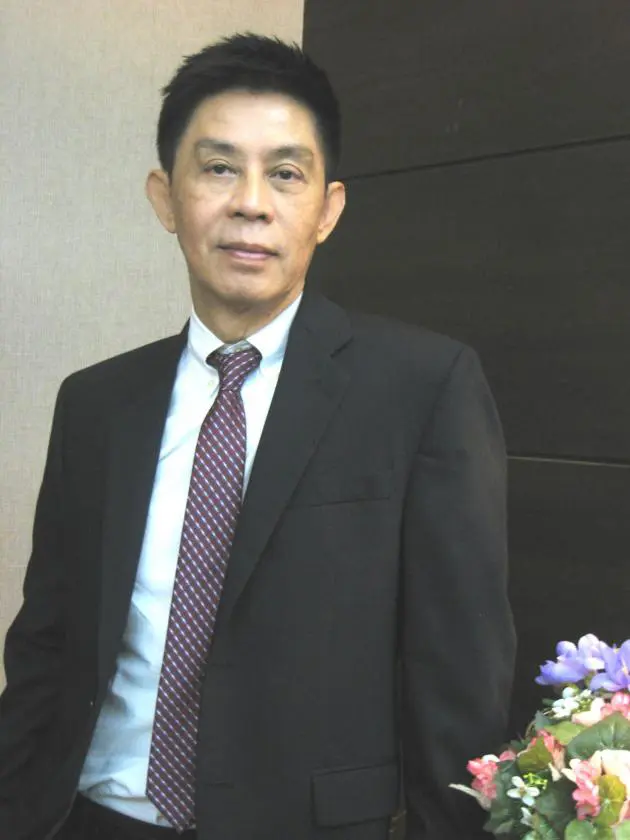
Associate Professor Nopadon Noppakun, MD, is a former president of the Dermatological Society of Thailand and head of dermatology
at Chulalongkorn University.
