
Epic tale of a flawed titan
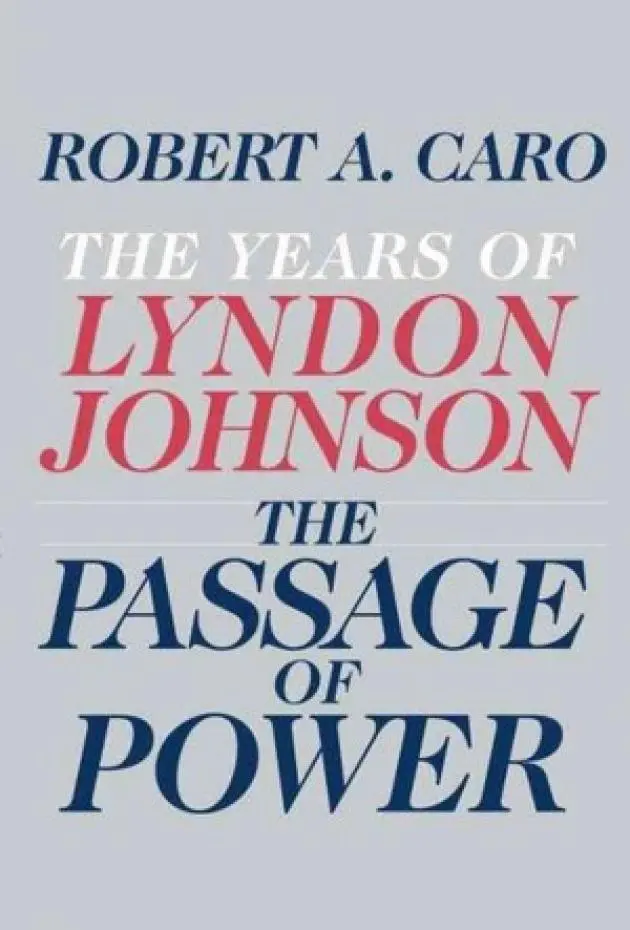


Forty years in the making, the Lyndon Johnson biography |is still being written, each volume keenly awaited
Lyndon Johnson, the 36th American president, was tall with huge hands, nose and ears. He could be powerfully intimidating in one-to-one conversations, and this enabled him to bend Congress to his will. He was hugely flawed as well, his passion for power and fear of humiliation leading him into the disaster of the Vietnam War.
But he was also a moral giant, equally passionate in defence of the poor and powerless. He rammed through Congress the historic Civil Rights Act of 1964, which banned segregation, and the Voting Rights Act, which enfranchised southern blacks. He knew it would cost his Democratic Party political control of the South. But he did it anyway.
He deserved an epic biography, and he has one. Historian Robert Caro has won just about every literary award there is. His debut biography in 1974 was “The Power Broker: Robert Moses and the Fall of New York”, about an urban planner who changed the city’s face while never holding elected office.
Now we have a story of raw political power. Caro has been working on this five-volume biography for nearly 40 years, under the overall title “The Years of Lyndon Johnson”.
The fourth volume is “The Passage of Power” and covers 1958 to 1964, ranging from Johnson’s six years as Democratic majority leader – during which time he wielded unprecedented power as master of the Senate – to his powerless humiliation as vice president and ultimate triumph as president.
His constant ambition was to be president, one that he originally pronounced as a boy. He was also deathly afraid of humiliation, of becoming the failure that his father was, and this prevented him from contesting the 1960 primaries that saw John Kennedy advance to the Democratic nomination.
To win Texas and other southern states, Kennedy tapped Johnson as his running mate. Liberals, labour chiefs, civil-rights leaders and, most of all, Robert Kennedy were appalled. Bobby made no less than three trips to Johnson’s hotel room to dissuade him from accepting the offer. He hated Johnson.
Yet Johnson was not merely a master politician, capable of stealing an election when necessary. He was also a sincere believer in the cause of fighting poverty and promoting civil rights. Robert Kennedy’s character was no less complex.
“Bobby Kennedy’s behaviour during the Cuban Missile Crisis had not been the first indication that, behind the Torquemada glower, the prosecutor’s jabbing fist, the insistence that all surrenders be unconditional that made the adjective ‘ruthless’ an apt description no matter how deeply he resented it, beneath an idealisation of his father, the need to attain his approbation, which seemed to be a constant motivation in his life – that beneath all this, there was something more, something quite different, within Robert Francis Kennedy.”
The above sentence is typical of Caro, the lofty Augustan tone, the orotund and serpentine sentences. It’s a kind of writing that has largely gone out of style in English prose and can be a delight to read. Caro’s prose is, however, overwrought and repetitious, and all of his books would benefit from editorial pruning. However, he has attained such a lofty literary eminence that no one seems to have the temerity to try.
Caro details exhaustively how Attorney General Robert Kennedy tormented Johnson the vice president. Then came John Kennedy’s assassination. Johnson showed impeccable leadership in the chaotic transition, including a tour-de-force speech before the joint houses of Congress. He was now back as master of the Senate and began pushing through all the long-stalled Kennedy programmes for tax cuts, education and, most of all, civil rights. Johnson’s Voting Rights Act enfranchised American blacks and changed the face of political power forever. Johnson bestrode Congress like a titan, until his downfall in 1969 over the Vietnam War.
This volume concludes after seven weeks of Johnson’s presidency, with his State of the Union address, in which he laid out his plans for civil-rights legislation. He outwitted senior southern senators to bring his rights bill to law. When advisers cautioned him about the political cost, he retorted, “Well, what the hell’s the presidency for?”
Caro is 77. Each of his Johnson books has taken around a decade to write. Let’s hope he’s around at 87 to present the final volume of Johnson’s presidential years.
The Passage of Power: The Years of Lyndon Johnson
BY ROBERT A CARO
Published by Alfred A Knopf, 2012
Available at Asia Books
Review by James Eckardt
