
Acupuncture for |dysmenorrhea


Play
The first time a woman experiences dysmenorrhea is when she has her first menstrual period, usually around the age of 12. About 50 per cent of young women have mild stomach aches, while another 40 per cent experience severe cramping.
About 10 per cent suffer from such abnormalities as tumours, scar tissue in the uterus, endometriosis, and cancer.
Although menstrual pain is not a serious problem for women, it is irritating and, for some, causes great anguish. It is believed that the causes of the symptoms are the change in menstrual hormones, which lead to the congestion of blood in the uterus, the ovary, and pelvic walls.
Individuals with dysmenorrhea feel a pain in the lower abdomen which can spread to the lumbar region. The pain begins a couple days before the menstrual cycle and continues through the course of the cycle before gradually fading at the end of the period. Women with dysmenorrhea are likely to be inflicted with headaches, dizziness, queasiness and vomiting. The intensity of pain varies but in some cases can be so intense that the individual is unable to work.
Warming the lower abdomen and taking painkillers can relieve recurring pain. In serious cases, hormonal contraceptives are recommended. However, once the effects of the hormonal contraceptives have worn off, the pain returns. Side effects may also occur.
In the circle of alternative medicine, acupuncture is recognized as a viable method of relieving dysmenorrhea because it is effective in correcting and balancing hormones. In addition, it helps improve the circulation of blood around the pelvis, alleviates the congestion of blood, and relaxes the muscles of the pelvic walls and the ovary.
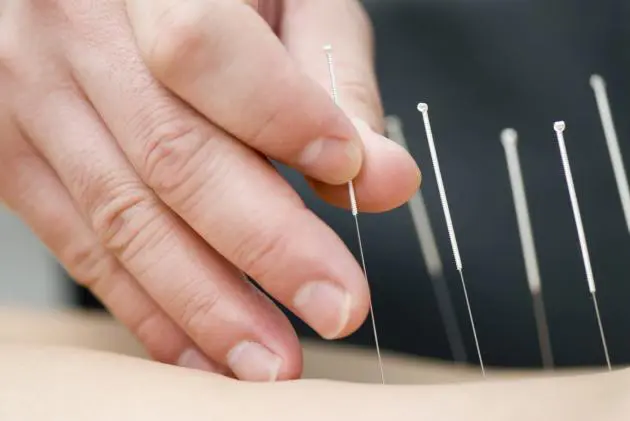
In an acupuncture session, the acupuncturist applies needles for 30 minutes to stimulate the neurotic system, which is located in several areas, including the arms, legs, and lower abdomen. Generally, the doctor will make an appointment two weeks in advance of the menstrual cycle and acupuncture is then performed twice a week in order to prevent or relieve the pain. However, the numbers of needles and the frequency is dependent on the severity of pain. In mild cases, a few appointments are sufficient but or women with severe dysmenorrheal, hormone adjusters or laparoscopy may be the best option.
Before acupuncture, women should eat moderately and get enough sleep. During the procedure, tenderness may be felt in the areas where the acupuncture is being applied while the needles are still inserted. Electrical currents may also be felt circulating the meridians, as the acupuncturist inserts needles next to a nerve. To achieve maximum results, the needles should stay inserted for 20–30 minutes. During the procedure, patients are advised to flex the muscles where the needles are inserted because the needles may get caught in the muscles. Although this is not dangerous, it may cause some pain and bleeding when the needles are removed. After this, the patient is allowed to move her body slightly and is advised to relax her muscles. The patient should inform the acupuncturist immediately if she experiences any dizziness, wooziness, chest ache, or breathing difficulty.
After the acupuncture session, the patient should drink warm water, avoid taking a bath for at least two hours and rest for the day.
Acupuncture may not be suitable for pregnant women with dysmenorrhea, patients with cancer who have not been treated with modern medicine or patients with blood disease and blood clotting abnormalities.
Theerawat Tangaramvong is attached to the Traditional Chinese Medicine and Acupuncture Centre at Samitivej Sukhumvit Hospital. Call (02) 711 8749-50.
