
Where the sultans got stoned


Play
Seeking pleasures of the flesh away from prying eyes, West Java's rulers built Sunyaragi Grotto
I was expecting a dark, damp cave with dripping stalactites, but something far more civilised – and sexy – greeted me at the Sunyaragi Grotto in Cirebon, West Java.
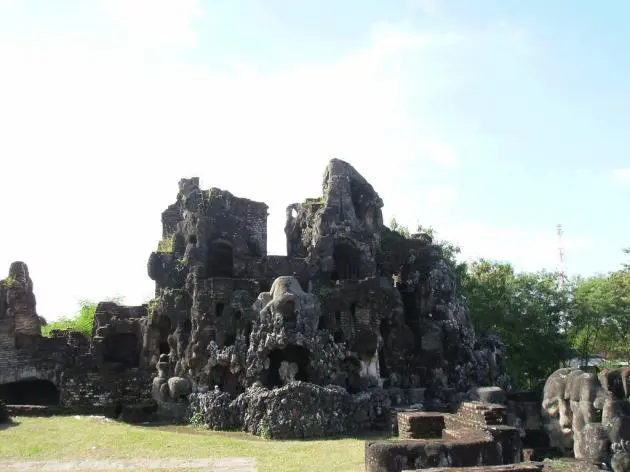
Rising from a carpet of green grass is a complex of coral, streams, stone huts, gapura (narrow gates) and caves.
Chatting with guide, I discover that the grotto, which locals know as Taman Arum Sunyaragi, is not just some odd geological structure coughed up by Mother Nature, but was actually constructed over 500 years ago for a local sultan and his wives.
The caves are divided into two sections – the pesanggrahan (“rest area”) and the maze-like tunnels. In the rest area is a porch, bedroom, bathroom and prayer room, while the tunnels hide meditation rooms.
Sultan Pangeran Emas Zaenul Arifin began constructing the site in 1536 as a retreat away from the prying eyes of his court.
His stony pleasure garden comprised six caves – Pengawal, Pawon, Lawa Kompleks, Peteng, Padang Ati and Kelanggengan.
Two centuries later in 1703, Sultan Sepuh II added three more caves – Arga Jumut, Bale Kambang and Mande Beling.
With the help of a Chinese architect, his successor Sultan Sepuh V then boosted the site’s pleasure potential and brought the total number of caves to 12.
Sunyaragi’s party times came to an abrupt end soon after during the colonial era. In 1787, the site was used as a covert base for freedom fighters in their revolt against the Dutch, then again during the Java War of 1825-30. The grotto was reportedly bombed by the Dutch after the Chinese architect gave away its secrets.
Most of the structures at Taman Arum Sunyaragi were designed in classic Hindu and Javanese architectural style. The grotto is located on the edge of Cirebon just a few kilometres from the city centre and easily reached by pedicab.
