
Thai Sites in Waiting


Play
Thailand's most updated English news website, newspaper english, breaking news : The Nation
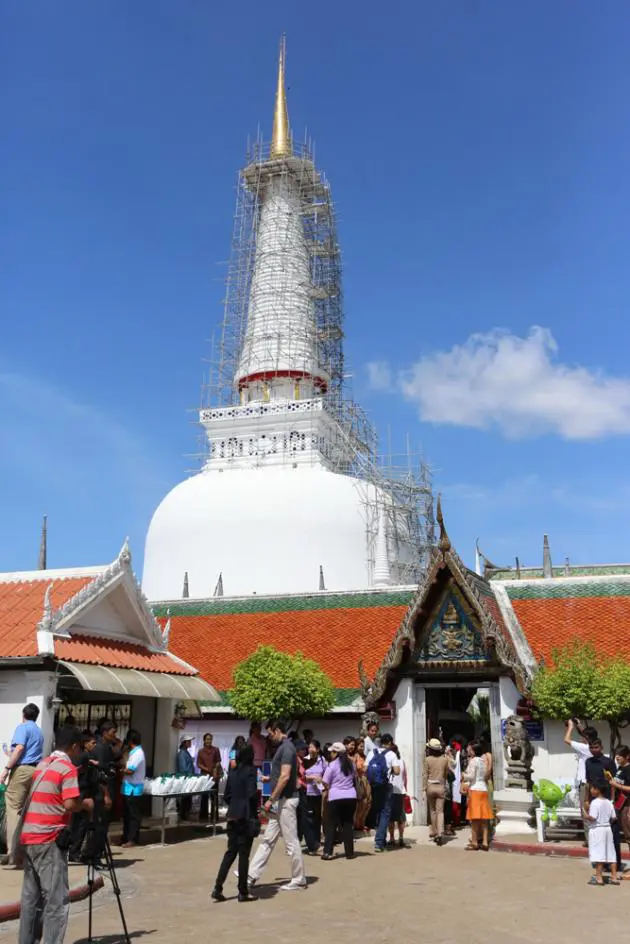
Wat Mahathat Woramahawihan in Nakhon Si Thammarat is Thailand’s latest location awaiting recognition as a World Heritage Site.
Beginning with a Unesco meeting in Phnom Penh last June, the Culture Ministry has been pushing hard for the temple – which is beautifully preserved and deemed of enduring benefit to the community – to be added to the UN agency’s list.
It meets three of the 10 criteria for recognition, enough to warrant consideration. It’s “a masterpiece of human ingenuity”, entails “influential architecture” and “a setting of artistic significance”, and, as a repository of documents pertaining to the spread of Buddhism, is a “historical structure”.
Wat Phra Mahathat Woramahawihan became the principal temple of the province when it was still the sovereign state of Tambralinga from the early 13th to mid-14th centuries.
The wat is a popular destination for foreign tourists as well as area residents. Its chapel and pagoda date to 311 (BE 854), the chedi holding relics of the Buddha, according to tradition.
A larger pagoda was built in 550 during the Srivijaya Era. The temple itself was registered as a national historic site in 1936.
The main stupa – the Phra Borommathat Chedi – dates to the early 13th century. “This gigantic bell-shaped stupa is the outstanding structure here,” former ministry permanent secretary MR Chakrarot Chitrabongs has said.
Along with Ayutthaya, Sukhothai and the Ban Chiang Archaeological Site, Dong Phayayen Khao Yai Forest Complex and Thungyai-Huai Kha Khaeng Wildlife Sanctuaries are also Thai World Heritage Sites.
“Phimai, its Cultural Route and the Associated Temples of Phanomroong and Muangtam” and Phuphrabat Historical Park have been on Unesco’s “tentative list” since 2004 and Kaeng Krachan Forest Complex was added in 2011.
