
Speaking out before death


Play
The last letters of Japan's World War II suicide pilots are being proposed for a Unesco listing
In an expected move last week, the Minami-Kyushu municipal government in Japan’s Kagoshima Prefecture submitted a recommendation letter to Unesco that farewell notes, diaries and mementoes of pilots who were sent on suicide missions during World War II be added to the Memory of the World Register in 2015.
If the items are selected as one of Japan’s nominations, they will be screened for registration at Unesco’s international advisory committee of the Memory of the World Register, which will be held from May to August 2015. Up to two documents can be nominated by Japan.
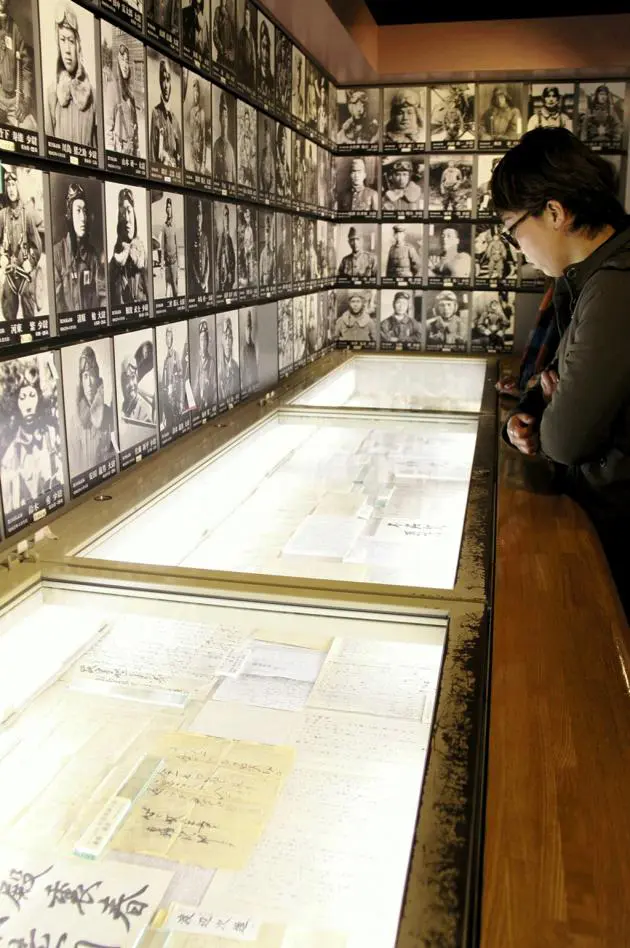
At the Chiran Peace Museum, which was built at the former Chiran airfield of the defunct Imperial Japanese Army, 1,036 deceased pilots’ photos are displayed, and about 14,000 items of their personal belongings are stored. The city chose 333 items of them for registry with Unesco.
Governments, municipalities and groups can recommend documents and items to Unesco’s Memory of the World Register, and the screening takes place once every two years. The government already has decided to recommend “Toji Hyakugo Monjo,” an ancient document consisting of about 25,000 letters handed down at the Toji temple, a World Heritage site in Kyoto.
Meanwhile, the Maizuru municipal government in Kyoto Prefecture plans to submit in March a recommendation letter on documents related to the return of Japanese soldiers detained in Siberian labour camps. Unesco’s domestic committee will choose two documents as Japan’s nomination. In 2011, painter Sakubei Yamamoto’s collection of paintings about coal mines in the Chikuho region of Fukuoka Prefecture was registered as the Memory of the World Register, and the “Mido Kampakuki” and “Materials Related to the Keicho-era Mission to Europe” were added to the list in 2013.
