
The palace that sailed the seas


Play
Visitors to Scotland should not miss the opportunity to tour the Royal Yacht Britannia
THESE DAYS no visitor to Scotland can avoid becoming embroiled in the discussions about which way the Scots will vote this September in the referendum that will decide whether the nation should become an independent country or remain within the United Kingdom. While the pros and cons are as debatable as the outcome, there is a certain irony in the fact that Scotland’s biggest tourist attractions often have as much to do with the English as they do with the Scots.
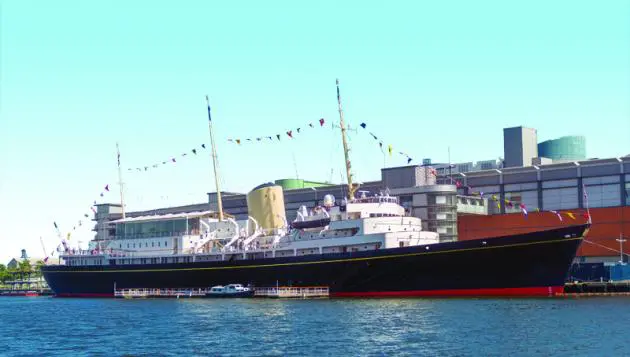
One such attraction is the Royal Yacht Britannia. Berthed alongside the waterfront Ocean Terminal in Edinburgh, it draws visitors eager to find out more about British royalty.
Built by the Scottish shipbuilding firm John Brown and Company, Britannia served as the floating royal residence of the British royal family during their foreign travels from 1953 to 1997. It also clearly reflects the “upstairs, downstairs” hierarchy with the opulence of the royal living quarters offering a stark contrast to the cramped space below decks.
“Since opening to the public in 1998, Britannia has welcomed more than 300,000 visitors a year. We estimate that only about one per cent of these are Thais though we are hoping the number will grow,” says marketing manager Casey Rust.
“Figures compiled by our national tourism organisation Visit Scotland indicate that an increasing number of Thai people are travelling to the UK, especially Scotland and so this year we have added a Thai-language audio tour. So far we have 27 different languages including a special children’s version and a British sign language tablet – making the audio tour the most translated in the world.”
The yacht is now owned by a non-profit charity, The Royal Yacht Britannia Trust with the revenue generated going towards Britannia’s long-term maintenance and preservation.
While on an official state visit, the Queen would travel with 45 members of the royal household who between them would bring on board around five tons of luggage. A specially built garage on the deck housed the Rolls Royce or sometimes a Land Rover though the bumpers had to be removed before the vehicles would fit.
When the royal family was on board their food was always prepared by the Buckingham Palace chefs and flown out to the ship. The cold rooms could hold two months’ supply of fish and meat, and the dairy and vegetable rooms held enough provisions to feed the whole ship for a month. Seawater was converted into drinking water through a process of three evaporators, which could produce about 140 tons of water daily.
Queen Elizabeth II and the Duke of Edinburgh played a role in the design of the yacht by selecting their own furniture, fabrics and paintings – giving the feel of country house comfort rather than anything too formal. White walls, brass metalwork and mahogany woodwork figure prominently in the royal accommodation.
The Queen and The Duke’s sleeping quarters consisted of two suites with an interconnecting door, each with its own bathroom. Opposite is the honeymoon suite with a double bed that was brought on board by Prince Charles when he travelled on board with Princess Diana shortly after their wedding.
The veranda deck is made of thick teak panels and these were scrubbed with seawater daily by the junior crewmembers to keep them in pristine condition.
“All work near the royal apartments had to carried out in complete silence and completed by 8am,” says Rust. “Shouting was forbidden on the ship. Orders were given through hand signals to preserve the tranquillity.”
Twinings tea, cake, scones and soup are today served in the tea room on the royal deck where the royal family once enjoyed cocktail receptions or played deck games.
The largest room on the ship and also the grandest is the state dining room, which in its day welcomed some of the world’s most powerful figures, among them Sir Winston Churchill, Rajiv Ghandi, Nelson Mandela, Bill Clinton and Boris Yeltsin.
“It took three hours to set the 56 places for a state banquet and the position of every knife, fork and spoon was meticulously measured with a ruler. The menus, which were printed in French long before Britannia set sail, were given to each guest to keep as a souvenir of a very special night,” adds Rust.
Today this room is still used for exclusive corporate hospitality, and companies entertaining on board experience the same attention to detail and high standards of service for which Britannia is famed.
The lower decks were home to the cramped sleeping quarters of the crew, whose lockers and cabinets were stacked from floor to ceiling. A tiny shop is also located in this area offers visitors home-made fudge along with ties and t-shirts, crystal and cut glass and pendants and plaques.
When Britannia was built in 1953, the ship was designed to serve not only as an official royal residence but also to double as a hospital ship in wartime, complete with dental surgery, laboratory, operating theatre and X-ray room.
It was estimated that up to 200 patients could be accommodated in the royal apartments, and that Britannia could be converted into a hospital ship within 24 hours. However this never proved necessary, and in 1992 it was officially decided to drop the idea – the royal yacht was to be just that and nothing more.
The laundry is still fitted with the original washing machines, dryers and steam presses and 60 years on, they are still in good condition. Britannia was the only ship in the Royal Navy to have a laundry permanently manned by her own crew.
Such dedication was necessary: when the ship was on royal duty, the 240 crewmembers could expect to change their uniforms up to six times a day and the laundry was able to handle up to 600 shirts in one day. The royal family’s laundry was also done here, though on a carefully scheduled rota to ensure that it never overlapped with that of the crew.
The engine room too is remarkable and in pristine condition. For 44 years of service, it carried Britannia more than one million miles around the globe and to more than 600 ports in 135 countries.
- The trip was made possibly by the support of Twinings Thailand -
CAST-OFF QE
>>> The Royal Yacht Britannia is moored at Leith, about 15 minutes’ drive from the Edinburgh city centre.
>>> Admission is 12.75 pounds (Bt700) for adults and 7.75 pounds for children. The audio handset guide is included in the prices and is available in 27 languages including Thai.
>>> The Britannia is open to visitors daily but opening times change. Plan your tour at www.RoyalYachtBritannia.co.uk.
