
Ethical ideas, elegant solutions


Play
A collective of environmentally aware designers presents home decor items that are as stylish as they are sustainable
AFTER A successful collaboration last year to promote eco-friendly designs, the Eco Design Thai Thai collective is returning to the 2014 edition of the Baan Lae Suan Fair next week with a range of products guaranteed to beautify our world without leaving a heavy carbon footprint in their wake.
The group will be manning a special green market featuring a variety of home decor products, accessories and furniture that will satisfy all tree-hugging inclinations yet lose nothing in terns of function and style.
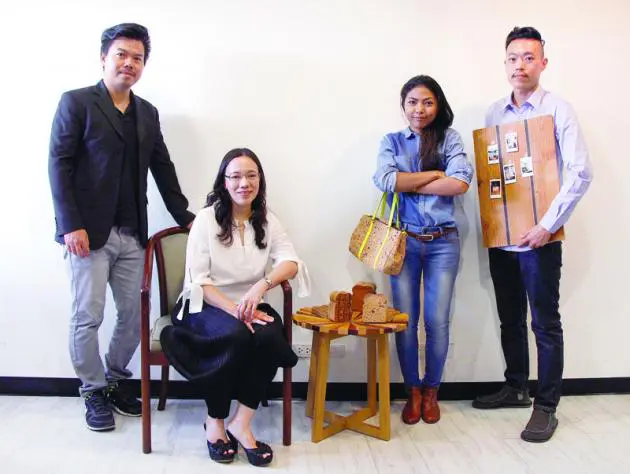
Led by Pipat “Top” Apiruktanakorn, owner of the Eco Shop on Siam Square and the brand O, the collective pools the strengths of its designer members while underlining its motto: The friendlier and more appealing the design, the better it sells and the sooner it makes an impact on the environment.
Among the products are lamps fashioned from leftover metal by Pin, smartphone cases and wallets made from kraft paper fabric by Good/Rak, Concept Tree’s bamboo and wood stationery, as well as plywood bikes by Dots Design Studio and Relabrador’s bags made from recycled leather compressed into paper-thin sheets.
The eco-friendly products of today have moved on from just recycling. Several renewable materials like teak are also very much part of the efforts to ensure that what we use is sustainable.
Known for a decade for its minimalist teak furniture, Plato is using the fair to launch its green label CRAW, an acronym that combines craft and raw.
“At Plato we mainly use teak because it’s durable and because we really want to promote our renewable teak forests. We have a zero-waste philosophy so we compress the teak leftovers into a single sheet. These single cuts can then be used to produce table tops, side tables, stools, wall and floor coverings for our CRAW label,” design director Rush Pleansuk explains.
Among the furniture being offered by CRAW is the Kon stool, a tree stump look-alike with a seat made from teak fragments topping a fibreglass structure. The lightweight twig-like Kin bookshelf is also crafted from bits of wood and has the advantage of being easy to assemble and fix to a wall.
“We’re also working with villager groups in Sukhothai and Uttaradit skilled in producing embroidered futons to produce embroidered seating for our limited-edition stools and armchairs. We want to combine a minimalist and chic design with craftsmanship,” Rush adds.
Like Plato, Benja Collection has been producing contemporary and oriental-style furniture with hardwood components for more than 10 years. Three years ago, the firm launched its first eco-friendly collection fashioned from scraps of wood.
“Our production is based on the maximum use of sustainable material. Our ash and teak comes from renewable forests and we ensure our products are functional and long-lasting thus slowing consumption,” says general manager Sopa Leevutinun.
Benja Collection’s Prasarn series features working tables, dining sets, bed headboards and coffee tables all made from wooden scraps. The large items are flat-packed in easy-to-transport packages to facilitate easy carrying and self-assembly at home.
Young designer Supawadee Kaewkum, the brain behind the brand Mazmoizelle, has won praise for adding value to overlooked resources and extending the life of natural materials. She finds lightweight cork’s natural properties of flexibility and impermeability perfect for her funky fashion and lifestyle gear.
“I got hooked on the cork wedges used for shoes. It comes in a sheet and is available in a variety of beautiful textures and doesn’t crack or peel. It’s also water-resistant, which is why it’s used to seal bottles. And when it’s dirty, it can be rubberised.” says Supawadee.
“Cork has antimicrobial properties and also repels insects and fends off fungus. It’s flexible and strong enough to be made into fabric that can be sewn. In addition to its natural look, it comes from the outer bark of a cork oak tree, which is stripped off, leaving the rest of the tree intact. It’s relatively easy to recycle, which adds to its sustainability,” she adds.
Launched three years ago, the brand has received positive feedback for its briefcases, handbags, shoulder bags, backpacks, clutches and wallets that come in more than 60 designs. The bags are strengthened with either light or hard frames and padded with fabric or leather to ensure durability. Supawadee’s new collection focuses more on such useful home accessories such as aprons, slippers, placemats, tissue holders and oven gloves.
Phutthiphong Thasanamana, the designer behind new brand Thas, is also enamoured with cork and last year introduced a range of corkboards with hand-painted surfaces designed to look like wood grain and fabric.
“You can pin your photos or accessories like earrings and necklaces on the corkboard. The board becomes a decorative item while your accessories act like a painting. It’s not only an accessory keeper but also an interactive piece,” says Phutthiphong.
His new collection is inspired by the texture of different breads and he’s called it OTAM, which stands for one time after meal. His coasters, which are hand-painted to resemble everything from white bread to wholewheat and wholegrain, are finished with a magnet, allowing you to attach them to the fridge or lay them out on the table in loaf style.
“The size and weight of each coaster is very close to real slices of bread. A product should have multiple uses. Cork, to me, is a thought-provoking material. It comes from the outer bark of tree and despite its obvious benefits, is often overlooked. We should never judge anything or anyone by their appearance,” says Phutthiphong.
NURTURING NATURE
>>> The products of Eco Design Thai Thai collective will be available at the Baan Lae Suan Fair at Bitec in Bang Na, from Wednesday to next Sunday. Find out more at Facebook.com/EcoDesignThaiThai.
