
Apple Watch induces yawns
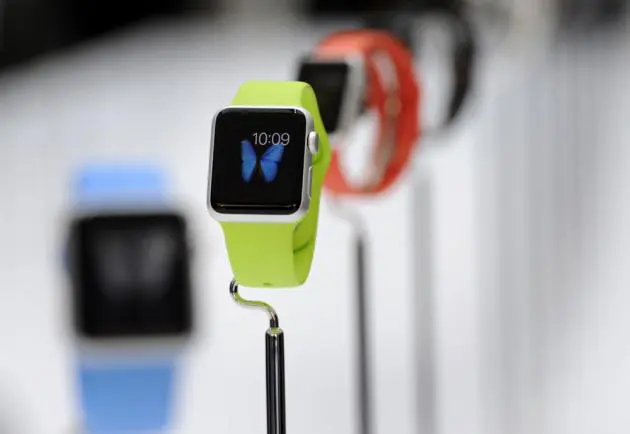


Swiss watchmakers needn't be ticked off, industry analysts say
Apple might be known for revolutionising the world of music and mobile phones, but Switzerland’s centuries-old luxury watchmakers are unimpressed with the US tech giant’s latest foray into their world.
“I was expecting more – I’m a bit disappointed,” says Jean-Claude Biver of the luxury-watch giant LVMH.
The Apple Watch, unveiled last week after months of anticipation, combines the personalised functionality that made the brand famous into a wearable computer that can also connect to iPhones. Apple chief Tim Cook said the smartwatch was “the next chapter in Apple’s story”.
But Biver says the gadget, to be released early next year, is not the “revolutionary product” it claims to be. With its square, touch-screen face and curved edges, it lacks “sex appeal” and is too feminine, he says.
In fact, Biver says, “It looks like it was designed by a student in their first semester.”
Apple has meanwhile been treading on the toes of some top luxury brands, plucking the sales director from Tag Heuer, a brand in the LVMH stable, in addition to former heads of Burberry and Yves Saint Laurent.
Tag Heuer chief Stephane Linder was surprised at Apple’s heavy focus on sport and health monitoring functions, which aren’t even new to the market. Equipped with pulse sensors, the smartwatch can monitor heart rate and chart activity levels along with the number of calories burned in a day.
“I thought they’d go in a less specialised direction,” Linder says, though he plans to “pay more attention” when new applications for the device begin surfacing.
Cheaply priced, Apple’s watch will not be playing in the same league as the Swiss watchmakers who dominate the luxury end of the market. And Jerome Bloch, who heads the men’s-fashion unit at Parisian style agency Nelly Rodi, says Swiss luxury watchmakers have nothing to fear.
“They don’t have the same target,” he says. Comparing Apple’s latest device to Swiss watches is like comparing a Mini Cooper to an Aston Martin.
Biver agrees, insisting that Apple will have no impact on the high-end. “Luxury is eternal – it is perennial. It’s not something that becomes worthless after five years,” he says, but Internet-connected watches are “doomed to become obsolete”.
The real threat is to the lower end of the scale, analysts say, with entry-level brands owned by the Swatch Group prime targets. The world-leading watchmaker saw its share price dip 1.76 per cent after Apple’s release.
A big player in prestigious timepieces with its luxury brands like Breguet, Omega and Harry Winston, Swatch also owns Tissot and is best known for its colourful plastic Swatch watches.
The Swatch Group doesn’t break down its earnings by brand, but Vontobel analyst Rene Weber estimates the two latter brands account for about 15 per cent of its profits.
Swatch chief Nick Hayek has also dismissed his new rival, though, telling media he’s “not nervous” about Apple diving into timepieces and insisting many of the capabilities offered in the new device are already available in Swiss watches.
For example, Apple’s “digital crown” button, which controls many functions to keep the screen visible, was inspired by a Breguet invention, he says.
