
Scars of a lost childhood


Play
New book recounts the untold stories from the teenage years of child-welfare activist Dr Amporn Wathanavongs
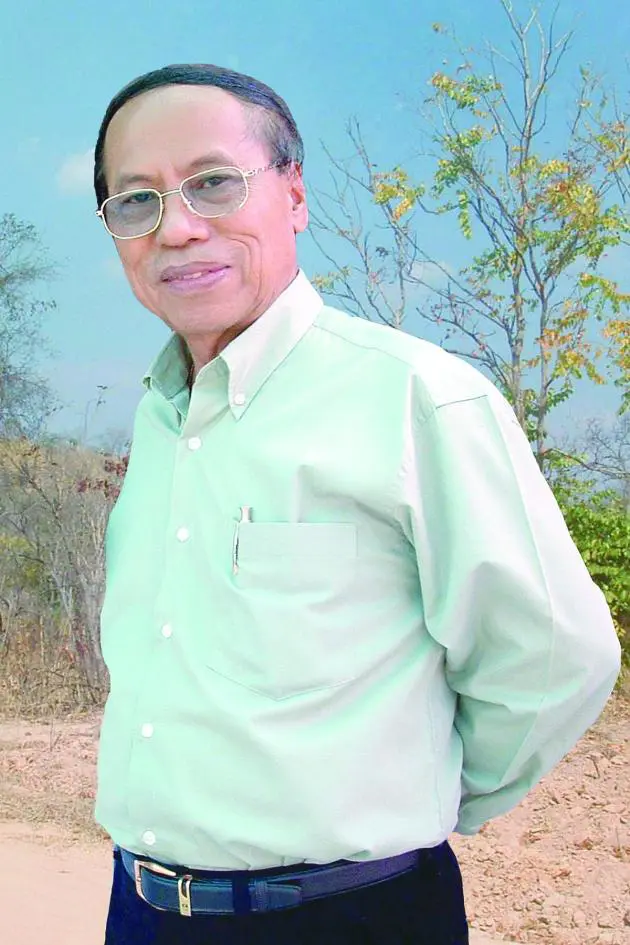
DR AMPORN WATHANAVONGS is no stranger to the Thai media. The head of Fordec, the Foundation for Rehabilitation and Development of Children and Family, he has been extensively profiled by Thai-language newspapers, magazines and TV shows. He even has a Thai-language biography.
None of them have mentioned the trauma that Amporn lived through as a 15-year-old soldier fighting alongside Cambodian nationalists against the French in the early 1950s. A shrapnel scar on his hand bears mute testament to the ravages of war.
Now this chapter in Amporn’s life is out in the open, published for all to see in the first English-language biography of his life, “The Boy with A Bamboo Heart”, by Canadian Chantal Jauvin.
“The Boy with a Bamboo Heart” is Jauvin’s first book. A career attorney who has conducted international trade negotiations in Paris, Buenos Aires, Sao Paulo, and Russia, she has also addressed the Central Banks of Spain and South Africa, worked with companies from Ghana to Uzbekistan, and mentored attorneys from Dubai to Mumbai.
On sabbatical for five years now, she still keeps her attorney’s licence, but along the way has found the joy of writing and developed an interest in helping underprivileged children in Thailand.
“Travelling to countries like Mexico and Cambodia, I’ve seen poverty. As someone who’s well educated with a family and friends, I’ve always wanted to do something about children. In my student days, I was very involved in youth activities,” she says, adding as a student, she won the Governor General’s Award for top French debater in Canada.
Jauvin came to Thailand in 2010, visiting children at Wat Mahawong Child Development Centre – also known as Fordec 6 – and was surprised to find the children she and her husband are sponsoring bursting with happiness and enthusiasm. She later met Dr Amporn for lunch.
“He asked if I could write well in English. I said, yes, I write a lot, but it’s legal English. Then he floated the idea of having me write his life story. I was quite enthusiastic about starting a writing project so I said yes,” she says.
She spent the next four years interviewing him face-to-face, over the phone, by Skype and by e-mail.
As has been well documented, Amporn spent his early childhood with his parents in a shack in Buri Ram in the Northeast of Thailand. His father died when Amporn was four years old. A year later, his mother passed away. With no one left to take care of him, he slept on the streets. He felt so hopeless in his teens that he twice tried to kill himself: first by hanging, then by gulping down rat poison. In both cases, strangers came to his rescue.
At 18, he became a novice Buddhist monk, and learned to read and write. When he came out of the monkhood five years later, he had just Bt23 in his pocket and supported himself by doing backbreaking menial jobs, working on construction sites and as a gardener, cleaner, and mechanic. In a positive twist of fate, he met a priest at Bangkok’s St Francis Xavier Church who encouraged him to take up odd jobs at the church and gave him access to higher education. After he was baptised in 1964, he soon learned to speak English, and eventually won a grant for two years’ of social development studies in the Philippines.
And that’s roughly all the public knows about him.
It wasn’t until more than two years into the interview process that Jauvin spotted a scar on his hand. Amporn was reluctant to talk about it at first, but eventually bowed to the inevitable.
“The scar was left by a shrapnel wound while he served as a child soldier in Cambodia for two years. He was just 15 at the time. During this same period but in a separate incident, he took five bullets to his stomach. All but one were removed,” Jauvin says.
Amporn was fighting on the Cambodian nationalist side against the French from 1952 to 1954 during the first Indochina War. In Amporn’s words, the French fighters were just “boys” from French North Africa.
“He was reluctant to talk about it because it’s still painful and he is ashamed,” she says, adding, “I would think he was extremely confused, brainwashed and totally lost while a soldier.”
In 1954, Amporn returned to Surin coming to terms with two failed suicide attempts. “He lost the will to live after a time in the Cambodian jungle.”
His subsequent journey into the monkhood and eventual conversion to Christianity both represent his personal trials of spiritual healing.
“Through Buddhism he learned to read and write. Buddhism got him wondering what was it that he might have done so badly in his previous life that he became an orphan. Through Catholicism, he experienced something of a spiritual awakening. The Virgin Mary became like his substitute mother. As a Catholic, he developed a sense of purpose and self-respect, and learned about redemption and forgiving,” she says.
Amporn overcame tremendous obstacles and eventually forgave himself, then devoted his life to helping other people. But whether or not he can overcome the trauma of fighting in the jungle is less sure. While doubting he can, Jauvin says Amporn came across as sincere, though at times reserved.
Through this book, Jauvin sets out to find Amporn’s voice while highlighting the fact that children have the right to live with dignity and self-respect. She’s hoping it will inspire others to do the same.
“It takes a lot of courage to do what Amporn did. At 77, he’s still helping children,” says Jauvin.
ON THE PAGE
“The Boy with a Bamboo Heart”, published by Maverick House, is available in local stores.
All the proceeds from the sale of the book go to Fordec.
