
Bangkok student invents ‘NANO-L’ anti-pathogenic surface coating
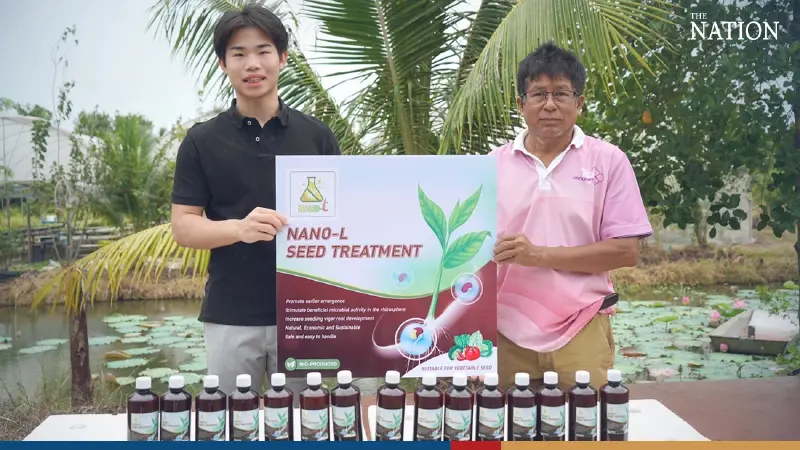


Setsiri "Mix" Chaiyosburana, a student from NIST International School in Bangkok, has invented the ‘NANO-L’ concept, an anti-pathogenic coating infused with silver nanoparticles that is produced from sugarcane leave surpluses.
Innovative ideas for brighter future of our world
“NANO-L is effective in killing up to 99% of pathogens within 24 hours while being produced through an environmentally safe process. We use sugarcane leaves in our production process in the biological synthesis of silver nanoparticles since the leaves contain phytochemicals that play an integral role in the chemical reduction of silver. Using these leaves would be a double win since they are usually burned by farmers in the agricultural regions of Thailand, which releases PM 2.5 into the atmosphere, impacting the air quality in Thailand,” said Setsiri.

The inspiration
Setsiri was inspired by the paddings on lift buttons which he noticed were labelled “Kill 99.99% of bacteria with copper nanoparticles” during his regular visits to the mall and sports club at RBSC towards the end of Covid-19. Thoroughly researching metal nanoparticles, Setsiri found silver nanoparticles to offer the best combination of safety and cost. He explained that there were three main ways of synthesizing silver nanoparticles: chemical, physical, and biological processes. The most common method was the chemical process, but this created many dangers due to the use of sodium borohydride. Exposure to this chemical in large amounts may lead to pulmonary edema, a medical emergency characterized by severe shortness of breath. Moreover, this chemical could also negatively impact freshwater ecosystems if it is improperly filtered. Upon delving into more research about the synthesis processes, Setsiri came upon the use of plant extracts in the synthesis process.

He thought of using the surplus of sugarcane leaves that he would often see burned during his monthly trips to visit his grandparents in Kanchanaburi Province. By using sugarcane leaves in the synthesis process, he hoped to decrease the burning of the leaves to protect the local environment and the people living in the area. (https://www.sei.org/featured/crushing-burden-small-scale-sugar-cane-farmers-bear-the-costs-of-thailands-bioeconomy-drive/).

The production process
The production process of the silver nanoparticles used to produce NANO-L differs from traditional processes. NANO-L’s silver nanoparticles are produced through a biosynthesis process that can be carried out at room temperature, unlike prior methods which required high temperatures and pressures. Furthermore, this biosynthesis process reduced the cost of the coating by 15%.
Setsiri has developed the NANO-L Spray, which can be used to apply the silver nanoparticle solution to a variety of surfaces. He is also working with a NANO-L Clothes social enterprise to apply it as an anti-bacterial coating for clothing. Finally, he plans to develop a NANO-L Seed Treatment, which would protect seeds from bacterial infection and improve germination rates.

The recognition
NANO-L has been recognized in multiple international innovation competitions, including being awarded the “Global Innovation Prize” in the Diamond Challenge 2022. It then went on to win several other prestigious awards from global competitions: Gold Medal from the (International Invention Innovation Competition in Canada, including 2 special prizes (‘Special Award of the Innovation Initiative Co-operative Inc.’ and the ‘Best Young Inventor Award’), Gold Medal from the World Invention Creativity Olympic 2022), Silver Medal from Inventions Geneva (Special Edition 2022 Invention Geneva Evaluation Days), Best Poster Presentation Award and full scientific paper acceptance at PACCON 2022 (Pure and Applied Chemistry International Conference). It was also awarded recognition from the National Research Council of Thailand.
Readers can learn more about NANO-L at https://nano-l.com/

