
River network petitions China in Chiang Mai over mine pollution
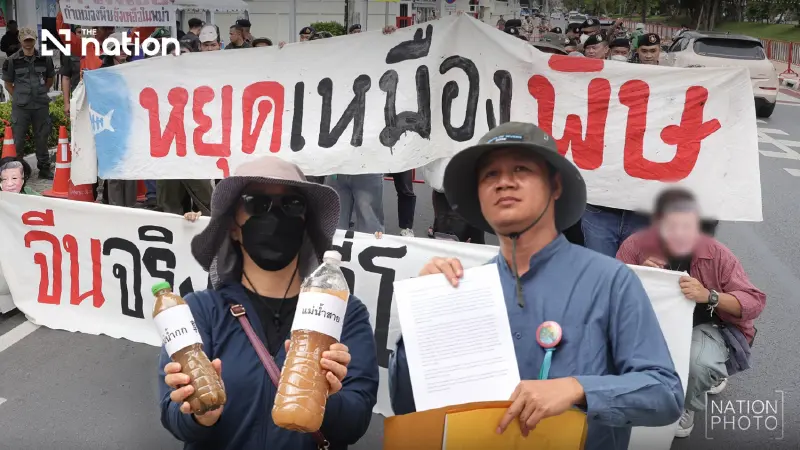


Thirty members of a river-protection network gathered outside China’s Chiang Mai consulate, where two protesters were hurt after police blocked the march.
- A Thai river protection network protested at the Chinese Consulate in Chiang Mai, delivering a petition to the Chinese government.
- The group is calling for an end to heavy-metal contamination flowing into Thai rivers from mines in Myanmar that are backed by Chinese investment groups.
- The pollution has allegedly damaged over 17,600 hectares of farmland, contaminated aquatic life with lead and mercury, and put over 120,000 residents at risk from unsafe tap water.
- The network's demands include that China investigate its investors, participate in joint mine inspections, and create a clear plan for environmental restoration and remedies for affected people.
Thirty members of the People’s Network to Protect the Kok, Sai, Ruak, and Mekong Rivers held cloth banners and placards, and brought an open letter addressed to Chinese President Xi Jinping, calling for an end to heavy-metal contamination from mines backed by Chinese investment groups in Myanmar.
The gathering took place on Monday (July 6, 2026) outside the Consulate General of the People’s Republic of China in Chiang Mai, in Muang district of Chiang Mai province.
Police deployed officers and metal barriers to block the area, forcing the group to begin its march from Suan Buak Hat Park and detour along the inner side of the city moat instead.
As the procession approached, police intercepted it and tried to push it away, leading to a clash.


The incident left two protesters injured, one of whom suffered a dislocated shoulder, and a rescue vehicle was called to take the injured person for medical treatment.
The group then prepared larb pla using fish from the Kok River as a symbolic act, issued a statement and submitted the letter before dispersing.
A protest leader said heavy-metal contamination from mines backed by Chinese investment groups in Myanmar had caused toxic substances to flow into the Kok, Sai, Ruak and Mekong rivers.
The leader said this had severely affected millions of Thai people, with more than 17,600 hectares of farmland damaged and aquatic animals contaminated with lead, cadmium and mercury, prompting the Ministry of Public Health to issue a warning against consumption.
The leader also said the pollution had affected local fishing and tourism, and left more than 120,000 Chiang Rai residents at risk from using contaminated tap water.
The network therefore called on the Chinese government to show sincerity in addressing the problem by investigating and taking legal action against Chinese investors alleged to have caused transboundary pollution.
It also called for checks tracing the origin of minerals imported from Myanmar into China.
The group also asked Chinese authorities to join representatives from Thailand and relevant agencies on field inspections of mines in Myanmar to ensure they met international environmental standards.
The network also called for a clear plan through the Lancang-Mekong Cooperation mechanism to end environmental destruction, restore water sources and provide urgent remedies to affected people, saying it hoped Chinese authorities would prove this commitment through genuine action.

