
Kumamoto quake strains water supply at Japan’s leading tomato hub


Only about half the planned seedlings were in the ground by late August after the July 28 earthquake damaged canals and greenhouse equipment in Yatsushiro.
- An earthquake in Yatsushiro, Japan's top tomato-producing municipality, has severely damaged the agricultural water supply.
- The damage includes collapsed irrigation channels, soil liquefaction, and the contamination of groundwater with elevated salt concentrations.
- The disaster struck just before the crucial mid-August planting season, resulting in only about 50% of planned tomato seedlings being planted by the end of the month.
- Individual farmers face flooded greenhouses and unreliable wells, forcing them to consider scaling back their crops.
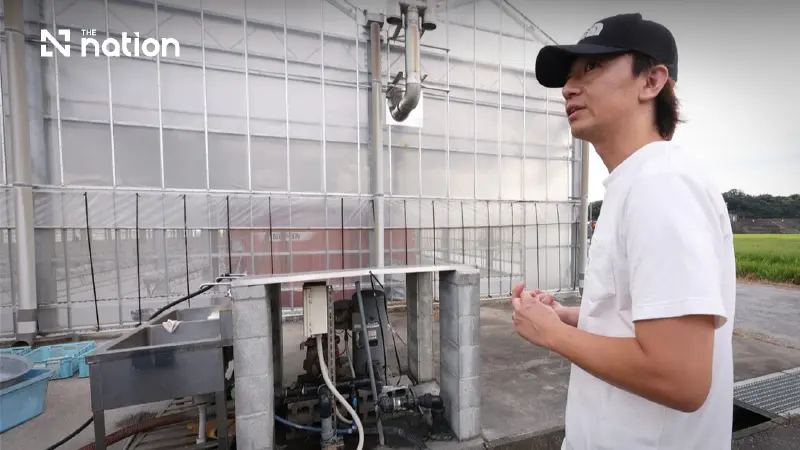
Inside a cherry-tomato greenhouse operated by Kenshiro Okada in Yatsushiro, Kumamoto Prefecture, puddles remain as evidence of the July 28 earthquake’s continuing effects.
Water entered from an irrigation channel damaged by the quake and has continued to seep through cracks despite repair work.
Okada, 40, has been unable to prepare the soil as intended and may have to scale back planting.
“I may not be able to plant the seedlings, but I can only do what I can,” he said.
The damage came at a critical point in Yatsushiro’s tomato-growing cycle.
The city recorded the highest tomato harvest volume among Japanese municipalities for the 2024 winter-to-spring shipping season and registered an upper 6 on Japan’s seven-level seismic intensity scale during the earthquake.

The local production calendar normally runs from seedling planting in mid-August to the start of shipments around October.
The earthquake therefore occurred while growers were preparing for the next crop.
Information obtained by the agriculture ministry from the Yatsushiro agricultural cooperative showed that only about 50% of the planned seedlings were in the ground by late August.
Reliable water remains another unresolved issue.
Collapsed irrigation channels have cut supplies in some areas.
The central government is undertaking restoration work, while water trucks and emergency pumps have been deployed.
A prefectural survey also detected elevated salt concentrations in some groundwater, complicating efforts to secure a stable agricultural supply.
None of the pipes used to supply water and fertiliser at Masahiro Ikeda’s greenhouse escaped damage.
The shaking also triggered liquefaction, a process in which wet soil behaves like a liquid, bringing sand and other material to the surface and leaving the harvest-trolley rails unusable.
Ikeda, 34, also saw changes in his well.
Pumped groundwater turned cloudy and often contained shellfish, possibly because the area is close to the sea.
“I went completely blank after the earthquake,” he said.
His greenhouse equipment has since been restored, but concern about the well has not eased. “Water is the lifeblood of tomatoes,” Ikeda said.
“I don’t know how long the well will last, but I want to do everything I can each day to get shipments out in time.”

[Copyright The Jiji Press, Ltd.]
