
Saudi airport attack kills one and wounds 11 on October 11
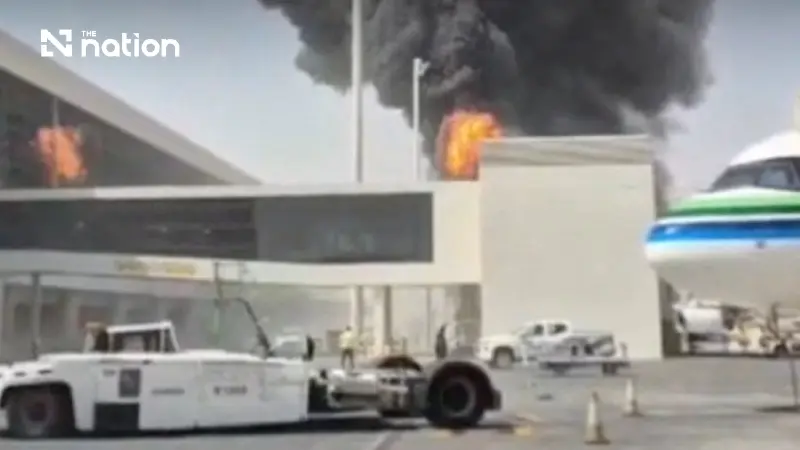


The latest Riyadh airport attack follows a strike that killed 13, as Saudi authorities confirm another airport was hit in Dammam.
- One person was killed and 11 were wounded in an attack on King Khalid International Airport in Riyadh on October 11.
- The incident was the second attack on the same airport in two days, following a strike claimed by Yemen's Houthi group that killed 13 people on October 10.
- Saudi-led coalition forces reported that an unidentified projectile caused a fire at the airport and that air defenses intercepted a cruise missile nearby on the same day.
One person was killed and 11 wounded in a new attack on King Khalid International Airport in Riyadh on October 11, 2026, Saudi aviation authorities said. The attack came a day after a strike claimed by Yemen’s Iran-aligned Houthis killed 13 people and wounded more than 300 at the same airport. Saudi-led coalition forces in Yemen said an unidentified projectile had targeted Terminal 4 at Riyadh’s international airport, causing a fire.
King Khalid International Airport remained closed on October 11 after the previous day’s attack, the deadliest in Saudi Arabia in more than a decade.
The latest attack brought the death toll from attacks on Riyadh’s airport to 18 for the week. Saudi authorities said four of the 13 people killed in the October 10 strike were Saudis and the remaining victims were foreign nationals.
Saudi forces report missile and drone interceptions
Saudi-led coalition forces said air defences intercepted a cruise missile near King Khalid International Airport on October 11. The coalition later reported that a drone had been intercepted and destroyed in the Eastern Province and a ballistic missile launched towards Khamis Mushait had also been intercepted.
Saudi Arabia’s civil defence agency said emergency alerts were issued in the southern city of Abha early on October 12, although the danger had since passed.

Saudi state television footage of the October 10 attack at Riyadh’s airport showed scores of religious pilgrims queuing at a gate before travelling to Islam’s two holiest sites. A bright orange flash sent people running, while parts of the roof appeared to collapse.
Reuters described the attacks as exposing vulnerabilities in Saudi defence capabilities as the kingdom wages an air campaign against the Houthis, who are fighting a ground war against the Saudi-backed Yemeni government.

Saudi authorities confirm strike on Dammam airport
Saudi civil aviation authorities confirmed late on October 11 that King Fahd International Airport in Dammam had been struck, saying “damage assessments and safety inspections of airport facilities are under way”.
Houthi military spokesperson Yahya Saree said in a televised address on October 11 that the group was responsible for the previous day’s Riyadh airport attack and had also struck Dammam’s airport and two Saudi Aramco facilities. The Saudi government’s media office and Aramco did not respond to Reuters’ requests for comment on the claims.
An eyewitness aboard an aircraft taxiing at Dammam airport told Reuters that a projectile struck the tarmac beside several parked aircraft at about 8.30pm local time on October 11, equivalent to 5.30pm GMT, causing a fire. The witness said the aircraft returned to the gate, where passengers disembarked and were told to leave.

Flight-tracking website Flightradar24 showed several delays and cancellations affecting arrivals and departures at Dammam, Saudi Arabia’s third-largest airport, on October 11.
The Houthis renewed their warning against using Saudi airports earlier on October 11. “We urge everyone to take our warnings seriously, and Saudi Arabia bears responsibility for any failed interceptions,” the group said.
Britain’s embassy in Saudi Arabia advised British citizens in a post on X against all but essential travel to Jeddah, Dammam and every airport in the kingdom except Medina’s airport.
US aviation authorities also issued a notice urging US airlines to exercise caution when flying to or over Saudi Arabia.

Houthis threaten further attacks as Saudi strikes intensify
The Houthis said on October 11 that Saudi Arabia had carried out 124 air strikes in Yemen during the preceding 24 hours.
“Unless the Saudi enemy stops its aggression and interference in Yemen, worse is yet to come, God willing,” the Houthi-run foreign ministry said in statements carried by Al Masirah television.
Saudi Arabia has increased its military involvement in Yemen, launching strikes against the Houthis and supporting a government counteroffensive after the group seized strategic territory along the Red Sea coast in September.
US President Donald Trump said on October 10 that Washington was considering joining Saudi strikes against the Houthis. The conflict has spilled over from the wider war against Iran launched by the United States and Israel in February 2026.
Iranian Foreign Minister Abbas Araqchi said in a Telegram post that he had told his Saudi counterpart Tehran was ready to help facilitate dialogue between Saudi Arabia and Yemen.
Riyadh energy meetings proceed despite travel disruption
A five-day conference organised by international energy organisation WPC Energy opened as planned on October 11 at a convention centre about 10 kilometres, or six miles, from Riyadh’s airport, the Saudi energy ministry said.
An International Energy Forum ministerial meeting also went ahead, according to a Saudi energy ministry media advisory, although it was unclear which ministers attended.
Italian Energy Minister Gilberto Pichetto Fratin, whose country was co-hosting the ministerial meeting, had said on October 9 that he would participate remotely by video link.
German officials were trying to arrange a return flight for Economy Minister Katherina Reiche, who was scheduled to travel from Riyadh to Berlin on October 12. Germany’s economy ministry said her flight appeared unlikely to take off.
Saudi authorities also announced that schools in Riyadh would switch from in-person classes to remote learning from October 11 to 15.

