
Cabinet to weigh 170-project border trade-led plan on Nov 3
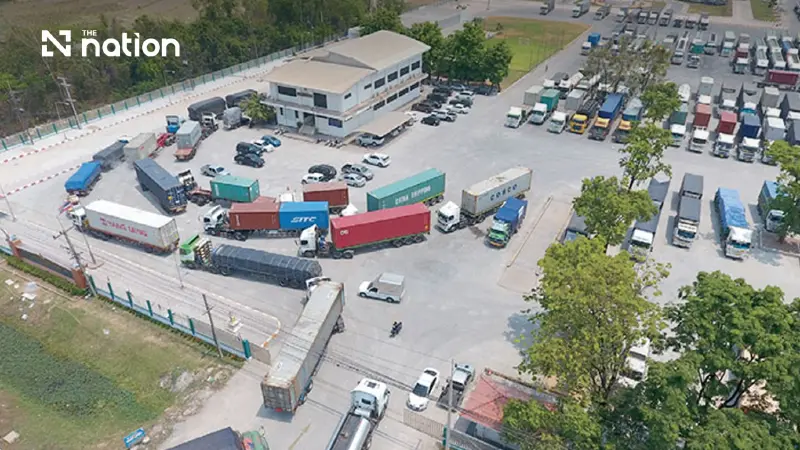


The proposed 78.46-billion-baht package covers five northeastern provinces, with 35 border trade projects accounting for about 73.4% of the budget.
- On November 3, the Cabinet will review a 170-project development plan for five northeastern provinces, with a proposed budget of over 78.461 billion baht.
- The plan is heavily focused on border trade, with 35 related projects accounting for 73.4% of the total requested funding (over 57.578 billion baht).
- The package is divided into four main priorities: border trade development, agriculture and food, tourism promotion, and drug suppression.
- Most of the requested funding is for 69 longer-term projects, valued at over 75.582 billion baht, rather than 101 "quick-win" projects.
Border trade accounts for nearly three-quarters of the funding requested in a proposed 170-project development package worth more than 78.461 billion baht for five northeastern provinces, due for Cabinet consideration in Udon Thani on Tuesday (November 3).
The 35 border-trade projects have a combined proposed budget of more than 57.578 billion baht, or about 73.4% of the overall request, based on the reported figures.
Prime Minister Anutin Charnvirakul is scheduled to chair the off-site Cabinet meeting, where the proposals from Upper Northeastern Provincial Cluster 1 will be presented for consideration.

Deputy Prime Minister Songsak Thongsri chaired the cluster’s joint public-private economic committee meeting on November 1 to review proposals covering Udon Thani, Bueng Kan, Loei, Nong Khai and Nong Bua Lamphu.
The package spans four priorities: agriculture and food, border trade, tourism and drug suppression. The figures represent proposed budgets rather than approved allocations.
Longer-term projects account for most of the funding request
The package comprises 69 longer-term projects worth more than 75.582 billion baht and 101 quick-win projects worth more than 2.879 billion baht that the provinces describe as ready to move forward immediately.

The split places most of the requested funding in longer-term development, rather than measures intended for immediate implementation.
By policy area, the proposed budgets are:
- Border trade development: 35 projects worth more than 57.578 billion baht.
- Agricultural and food production and trade: 38 projects worth more than 7.956 billion baht.
- Tourism promotion: 66 projects worth more than 9.887 billion baht.
- Drug suppression: 31 projects worth more than 3.039 billion baht.
Border infrastructure and higher-value agriculture underpin policy
Danucha Pichayanan, secretary-general of the National Economic and Social Development Council (NESDC), said border-trade infrastructure and cross-border bridges were important to efforts to raise local incomes sustainably.
Danucha said project selection would primarily reflect each area’s economic potential. Agricultural development would focus on improving productivity on existing farmland while moving towards higher-value agricultural and food products.
Establishing and using laboratories to test safety standards would also be necessary to build confidence in processed products, he said.
Songsak said the four development priorities reflected the strengths of individual provinces, with agriculture given particular emphasis under the prime minister’s ambition to make Thailand the “kitchen of the world”.

Songsak cited Thailand’s infrastructure, agricultural land and distinctive spices and food ingredients as strengths that could help meet demand from consumers worldwide.
Despite the short notice given for the meeting, all five provinces had prepared their information quickly and comprehensively, he added.
Cluster-wide proposals exceed 35 billion baht
Projects covering the provincial cluster as a whole carry a proposed budget of more than 35.064 billion baht, the largest geographical category. Among the five provinces’ individual proposals, Bueng Kan has the highest funding request.
The geographical breakdown is:
- Cluster-wide projects: more than 35.064 billion baht.
- Bueng Kan: more than 17.334 billion baht.
- Loei: more than 10.137 billion baht.
- Nong Khai: more than 8.334 billion baht.
- Udon Thani: more than 5.887 billion baht.
- Nong Bua Lamphu: more than 1.702 billion baht.
The provincial proposals include airport development, road construction, agricultural processing, tourism promotion and water-management projects.
Udon Thani proposes bamboo and agricultural-processing upgrades
Udon Thani’s proposals include expanding bamboo cultivation and upgrading agricultural processing for higher-value industries, alongside water-management, city-branding and agritourism projects.
Selected proposals are:
- Udon Thani Bamboo Quick Win: Farm-to-Factory: 23,585,700 baht to expand cultivation of Sang Mon bamboo and raise raw-material standards for industrial use.
- Udon Thani City Branding: 15,000,000 baht.
- Agricultural-processing upgrades: 16,680,000 baht to help processing groups move into higher-value industries under the bio-circular-green (BCG) economy model.
- Water-source conservation, restoration and development: 63,450,000 baht to address drought outside irrigated areas.
- Agricultural wellness learning centre and Isan agritourism network: 4,070,000 baht.
Bueng Kan includes 9.711-billion-baht airport development phase
Bueng Kan’s airport proposal comprises an urgent property-expropriation phase worth 35 million baht and a longer-term development phase worth 9.711 billion baht.
Other selected proposals include:
- Huai Pha Khang sluice gate: 400,000,000 baht for the project in Wisit subdistrict, Mueang Bueng Kan district.
- High-value agricultural products: 12,000,000 baht to strengthen production, processing and marketing.
- Amazing Bueng Kan: 6,000,000 baht for a tourism programme themed around Naga faith and connections between the two banks of the Mekong.
- Ring of Love Bueng Kan 2027: 6,000,000 baht for tourism promotion.
Loei proposes 5.2-billion-baht western bypass
Loei’s proposed western bypass carries a budget of 5.2 billion baht, alongside projects promoting wellness, agricultural processing, the creative economy and premium coffee.
Other selected proposals include:
- Loei Wellness & Longevity: 82,171,600 baht to develop Loei as a wellness destination.
- BCG agricultural production and processing: 11,765,500 baht.
- Loei Creative City: 6,500,000 baht to promote and develop the province’s creative economy.
- Mekong Premium Coffee: 3,000,000 baht.
Nong Khai combines export logistics with food and tourism projects
Nong Khai’s proposals include a 50-million-baht Na Tha smart centre and export ecosystem, described as an Agro-Logistics Hub, and an 8-million-baht Smart Border Trade O2O platform.
Other selected proposals are:
- Food Verse: 25,000,000 baht for a food festival themed as a universe of culinary delights.
- Nong Khai black cattle: 11,000,000 baht to develop higher-value agricultural processing under a Mekong cattle-fattening sandbox.
- Phra That La Nong landmark: 85,000,000 baht for construction.
Nong Bua Lamphu prioritises water projects and a skywalk
Nong Bua Lamphu’s proposals include an 890-million-baht water-development project involving the Ban Chom Thong sluice gate, alongside urban development, tourism and reservoir improvements.
Other selected proposals include:
- Nong Saeng development: 129,871,000 baht for work under Nong Bua Lamphu’s comprehensive town plan.
- Phu Phan Noi Fah Chot Phu Skywalk: 99,960,000 baht to construct an elevated scenic walkway.
- Distinctive local agricultural products and community tourism: 27,953,000 baht to link agricultural development with community-based tourism.
- Pha Wang Reservoir: 23,080,000 baht for dredging and repairs to associated structures.
NESDC will compile the provincial needs and project details for submission to the November 3 Cabinet meeting, where approval and measures to accelerate implementation will be considered.
