
Thailand halts new waste plant licences, orders 3,049 inspections
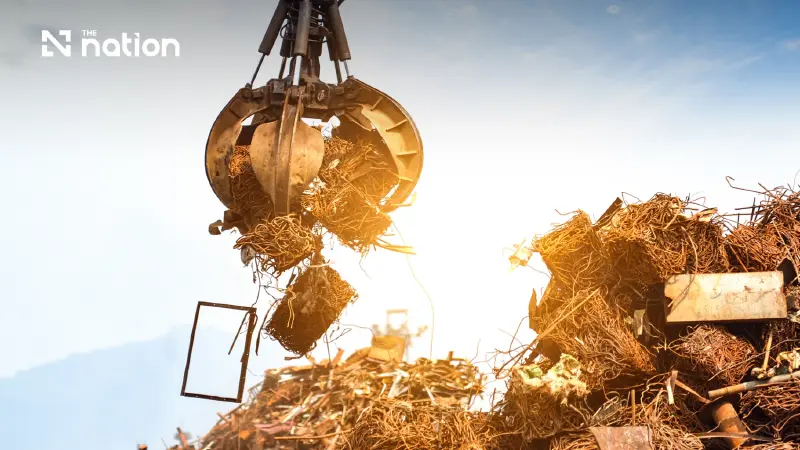


Thailand suspends new Type 105 and 106 waste factory licences as Industry Minister Varawut Silpa-archa orders 3,049 inspections within a year, starting in five provinces.
- Thailand has suspended issuing new licenses for industrial waste treatment and disposal facilities (factory categories 105 and 106).
- A nationwide inspection campaign targeting all 3,049 registered factories has been launched to review compliance and identify illegal operators.
- The campaign will begin with 50 special inspection teams deployed to five high-risk provinces before expanding across the country.
- Enforcement will go beyond simple compliance, investigating ownership structures, customs violations, and pursuing criminal proceedings and asset seizures against offenders.
Thailand has suspended the issuance of new licences for industrial waste treatment and disposal facilities under factory categories 105 and 106, as Industry Minister Varawut Silpa-archa launches a nationwide inspection campaign targeting 3,049 factories within one year.
The suspension will remain in place while authorities review the compliance of existing operators. The ministry aims to ensure that all 3,049 registered factories meet the required standards, while also identifying unlicensed facilities operating outside the official system.
The enforcement drive includes investigations into suspected nominee ownership arrangements, potential customs violations and offences that could lead to criminal proceedings and asset seizures.

Fifty inspection teams deployed to five high-risk provinces
Varawut confirmed that 50 special inspection teams had been deployed to five provinces: Samut Prakan, Chon Buri, Rayong, Chachoengsao and Prachin Buri.
The teams have been instructed to prioritise factories in areas classified as high-risk or “red zones”, with inspections subsequently extending to the remaining 71 provinces.
Speaking during a visit to Udon Thani, Varawut indicated that the first progress reports from the five provinces were expected later that day.
He stressed that protecting residents living near industrial waste facilities was the ministry's main priority.
The minister urged operators uncertain about their compliance with regulations to take corrective action immediately, as inspections of Type 105 and 106 factories were being accelerated nationwide.
He also called on community leaders and local authorities to report suspicious industrial activities or potentially illegal factories through the Department of Industrial Works hotline, 1564, available 24 hours a day.

Investigations to extend to shareholders and nominee arrangements
Varawut emphasised that enforcement action against offending factories must go beyond administrative fines.
Investigators will examine company ownership structures, identify shareholders and determine whether nominee arrangements have been used to conceal the identities of those controlling businesses.
The Ministry of Industry will coordinate with the Ministry of Commerce, the Department of Special Investigation (DSI) and the Anti-Money Laundering Office (AMLO) to investigate potential violations.
Authorities will also examine whether goods imported by industrial waste operators were accurately declared to customs.
Where false declarations or other offences are established, the minister indicated that authorities could pursue criminal proceedings under customs legislation, together with asset seizures where permitted by law.
Varawut stressed that enforcement officers must strictly follow legal procedures to prevent cases from being undermined by subsequent lawsuits.
Responding to public opposition to the construction of electronic-waste facilities, particularly in eastern Thailand, he acknowledged residents' concerns and the need for prompt intervention.
However, he explained that factory closures and licence revocations must follow the procedures prescribed by law.
Failure to comply with those procedures could allow operators to challenge enforcement decisions successfully, potentially worsening the problems faced by surrounding communities.
He also pledged to protect ministry officials carrying out their duties from unnecessary legal risks.

Udon Thani waste facility presented as model operator
During his visit to Udon Thani, Varawut inspected Advance Asia Power Plant Co., Ltd., a company within the Absolute Clean Energy Public Company Limited (ACE) group.
The Type 105 facility specialises in sorting and disposing of non-hazardous industrial waste through landfill operations.
The factory represents an investment of THB140 million and employs 20 workers.
Mongkol Pruekwatana, identified as executive chairman of the ACE group, welcomed the minister and his delegation.
Varawut described the facility as an example of an industrial waste operator meeting the ministry's requirements.
He highlighted its landfill management practices, including the prescribed depth and slope of individual disposal layers, wastewater treatment systems and environmental safeguards.
The site also maintains a surrounding green buffer planted with eucalyptus trees, intended to reduce environmental impacts in the event of water overflowing from the landfill area.
The minister commended the company's community engagement activities, which he regarded as an important part of responsible industrial operations.
He emphasised that factories should contribute to local employment and economic opportunities while maintaining constructive relationships with neighbouring communities.
Previous environmental improvement order resolved
The Udon Thani Provincial Industry Office had previously issued an order under Section 37(1) of the Factory Act 1992 requiring Advance Asia Power Plant to improve an earthen embankment near the landfill outlet.
The measure was intended to prevent rainwater from carrying waste materials beyond the factory boundary.
The company subsequently completed the required improvements, and the authorities lifted the order.
The factory is now preparing to open the second phase of its landfill operations, as the first phase is approaching full capacity.
According to the ministry, the facility has continued to comply with relevant monitoring and reporting requirements.
These include annual inspections, checks of industrial waste management documents under the Kor Or 1 and Kor Or 2 systems, monthly submissions through the i-Single Form platform, and annual reports on soil and groundwater quality.
Its industrial waste controllers are also properly registered, with their registrations kept up to date.
Ministry targets illegal operators while supporting compliant factories
Permanent Secretary for Industry Phasakorn Chairat acknowledged that many industrial waste treatment and disposal facilities already operate legally and comply with environmental standards.
However, factories violating regulations or operating without the necessary licences require urgent investigation and enforcement.
He explained that unlawful operators could undermine public confidence in Thailand's industrial waste management system, which plays an important role in supporting the country's Bio-Circular-Green (BCG) economic model.
The ministry intends to strengthen enforcement while supporting legitimate businesses that maintain appropriate safety and environmental standards.
Upper Northeast has 1,562 waste-generating factories
Phasakorn also outlined the industrial waste management situation in five upper northeastern provinces: Bueng Kan, Loei, Nong Khai, Nong Bua Lamphu and Udon Thani.
The provinces have 1,562 registered waste-generating factories, classified as Waste Generators (WG).
They are served by 30 Type 105 and 106 facilities classified as Waste Processors (WP), which receive industrial waste for treatment or disposal.
The ministry described the ratio of waste-generating factories to waste processors as approximately 53 to one and considered the existing processing capacity appropriate for the region.
The Ministry of Industry will continue promoting legally compliant waste management operations while pursuing enforcement action against offending factories.
The objective is to improve transparency, protect communities and strengthen environmental safeguards while supporting the long-term development of Thailand's circular economy.
