
The Heat They'll Inherit: A City, a Reef, and the Next Generation
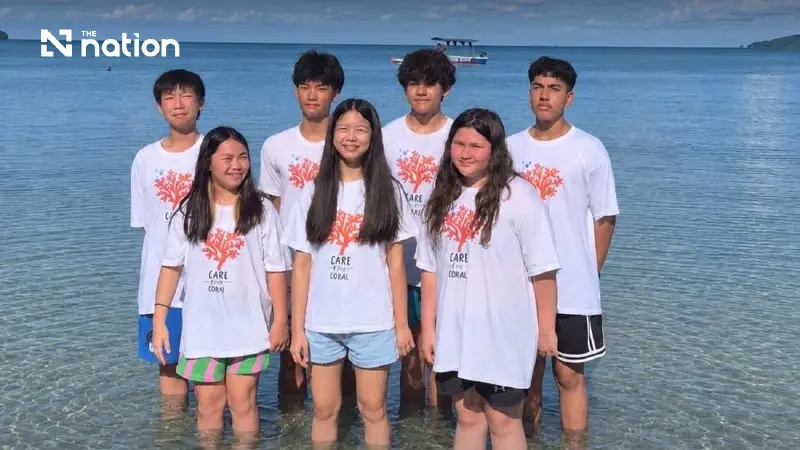


From Bangkok’s concrete heat island to bleaching coral reefs, a new generation is passing the baton to protect Thailand’s warming climate
- The next generation in Thailand is inheriting a warming climate, which manifests as an intense "urban heat island" effect in Bangkok and widespread bleaching of coastal coral reefs.
- In response, a youth-led organisation called Care for Coral was founded to actively protect and restore the threatened reefs through dives and educational programs.
- As the original founders have aged, they are now mentoring and passing leadership to an even younger group, ensuring the knowledge and responsibility for climate action are handed down.
From Bangkok’s concrete heat island to bleaching coral reefs, a new generation is passing the baton to protect Thailand’s warming climate.
In Bangkok, heat is becoming harder to escape. Concrete roads, glass towers, and dense traffic absorb the sun through the day and release it long after dark, a phenomenon urban planners call the urban heat island effect.
For the young people growing up here, an unbearable afternoon is no longer just weather. It's becoming a preview of the world they're set to inherit. The heat doesn't stop at the city limits.
A few hours south, the Gulf of Thailand is warming too, and with it, the coral reefs that anchor the coastline's marine life. Rising sea temperatures are pushing reefs toward bleaching, a slow die-off that ripples through fish populations and the coastal communities that depend on them.
Bangkok's streets and Thailand's reefs can feel like separate worlds, but they're registering the same crisis in different ways: one in hotter nights, the other in whiter, emptier coral.
For sisters Pleng and Pyn, that connection became personal. Still in their youth themselves, they founded Care for Coral out of a shared alarm over what was happening beneath the water.

Charlotte, now the organisation's vice president, has worked alongside them for nearly five years, joined over time by a growing group of volunteers.
Together, the team built the initiative into something tangible: reef restoration dives, environmental education programmes, and a growing network of volunteers and local partners.
As the initiative grew, so did the people running it. Pleng, Pyn, and Charlotte, once the youngest voices pushing for change, found themselves several years into leadership roles, no longer new to the work, and no longer the youngest people in the room.

That shift raised a question few youth movements plan for: what happens when a movement's founders age out of the "youth" they set out to represent?
Pleng, Pyn, and the wider Care for Coral team chose not to hold on.
This year, they launched Care for Coral Juniors, a programme built around five younger environmentalists now stepping into leadership roles, mentored by the people who came before them.
What's being handed over isn't just a name or a title. It's years of field knowledge, relationships with local communities, and something harder to quantify: proof that young people can be trusted to lead.

The stakes reach beyond one organisation or one stretch of reef.
Climate change hands down an unusual kind of inheritance, not just what one generation builds, but the environmental cost of what it leaves behind.
Children born today are likely to inherit hotter cities, warmer seas, and ecosystems already under strain, conditions their parents never had to navigate at the same age.
No one generation can decide what condition the planet will be in by the time it's passed on. But they can decide what goes with it — the knowledge, the networks, the belief that the work is worth continuing. An overheated city may be part of that inheritance. It doesn't have to be the only thing left behind.


Charlotte Khoo, Care for Coral
This report was produced as part of the Media Fellowship under the Cities on Fire initiative in Bangkok
