
The Hand That Speaks When Words Cannot
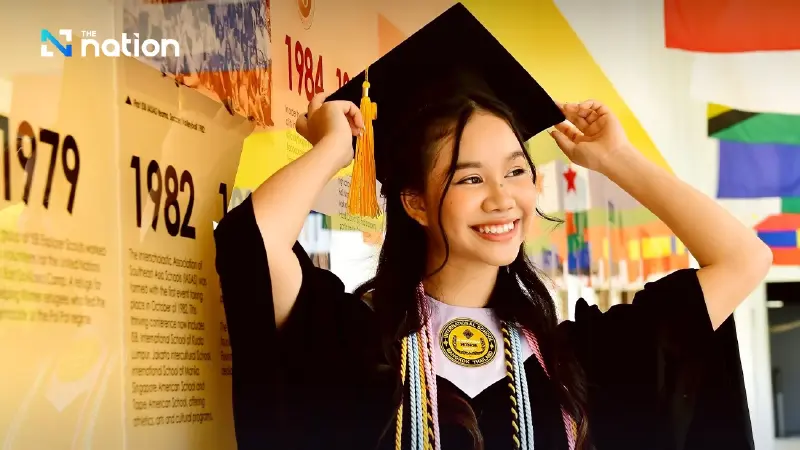


Meet the young Thai activist turning a global hand signal into a nationwide lifeline — one school, one ministry, and one silent gesture at a time
- A young Thai activist is leading the "SOS Sign for Help" project, promoting a discreet hand gesture for people to silently signal for help when they feel unsafe and cannot speak.
- To make the signal more culturally accessible in Thailand, it was framed as a general safety tool rather than one exclusively for domestic violence, a topic often considered private or taboo.
- The project has successfully gained backing from two Thai government ministries and is being integrated into schools and police training to create a nationwide network of informed responders.
Meet the young Thai activist turning a global hand signal into a nationwide lifeline — one school, one ministry, and one silent gesture at a time.
There are moments in an activist's journey that cannot be traced to a single headline or a dramatic turning point. For Pynbhairoh (Pyn) Snidvongs Kruesopon, the founder of the SOS Sign for Help project in Thailand, the path from environmental campaigner to domestic safety advocate was not a sudden pivot — it was a quiet inevitability.
"There wasn't really a single turning point," she reflects. "It was more of a natural progression."
Having first built her advocacy credentials through Care for Coral, an environmental initiative she launched alongside her sister, Pyn came to understand early on that protecting ecosystems and protecting people were never truly separate concerns.
"You can't separate environmental issues from human ones," she says. "Vulnerability exists in ecosystems and human communities too."
That conviction led her to the Sign for Help – a discreet hand gesture developed internationally as a tool for those experiencing domestic violence to silently signal distress.
In Thailand, where domestic matters are still widely considered private affairs, Pyn saw not just a useful tool but an urgent one.

Reframing the Signal
Bringing a global concept home required more than translation. It required cultural intelligence. Rather than positioning the gesture solely as a domestic violence signal — a framing that risked alienating communities where such conversations remain taboo — Pyn and her team broadened its meaning deliberately.
"We wanted to transform it into something that can be used in any situation where someone feels unsafe and cannot speak openly," she explains.

The reframing proved significant. By presenting the sign as a general safety signal rather than one loaded with a specific and potentially stigmatising context, the campaign became more culturally accessible. Less confrontational. More likely to be embraced.
The campaign's delivery was equally considered. Visual storytelling and social media — particularly platforms popular with younger Thais — were deployed to reach audiences already more open to conversations around personal safety.
Crucially, the young people involved were not merely recipients of the message but architects of it.
"Our team was made up of kids who were actively involved in decision-making and creative processes," Pyn says. "Their perspectives ultimately helped shape the campaign so it felt relatable, approachable, and empowering for young people."

A Seat at the Table
What sets Pyn apart from many youth-led initiatives is not just her vision but her institutional reach. The SOS Sign for Help project has secured backing from two major Thai government ministries – the Ministry of Higher Education, Science, Research and Innovation (MHESI) and the Ministry of Social Development and Human Security (MSDHS).
For a young activist, gaining such access is no small feat. Her strategy was deliberate.
"I made a conscious effort to build credibility before asking for institutional backing," she says—a lesson drawn from her experience building Care for Coral.

By the time she entered official rooms, she was not presenting an abstract idea but a movement already demonstrating grassroots momentum.
"I wasn't just introducing a concept. I was showing people something that already had interest."

Her advice for other young people who feel unheard is characteristically direct: "Start where you are and build something tangible, even if it's small. But don't be afraid to take up space."
The project has since been integrated into schools, the Thai Royal Police, and the ROTC—creating what Pyn describes as a "network of informed responders" rather than leaving intervention to chance.

The Delicate Balance of Visibility
One of the project's thorniest challenges is a paradox at its core: for the sign to work, it must be widely known – but not so widely known that an aggressor might recognise it.
It is a tension Pyn's team has thought through carefully.
"Our goal isn't to make the sign 'viral' in a flashy way," she says, "but to make it widespread through targeted awareness toward vulnerable groups."
And even if an aggressor were to learn the gesture, the sign's design offers a degree of inherent protection: it can be blended seamlessly into natural hand movement, preserving a layer of safety for the person using it.

Protecting the Protector
The emotional weight of working in a field rooted in crisis and vulnerability is not lost on Pyn. Dealing with stories of fear, silence, and suffering demands that advocates tend to their own wellbeing as attentively as they tend to others'. Her approach is grounded and clear-eyed.
"I always try to remind myself that I'm not responsible for carrying every outcome on my own," she says. "This work is about creating a network of support."
For Pyn, the sustainability of her advocacy depends on her capacity to step back when necessary.
"It's okay to feel overwhelmed and to take a step back when I need to. Protecting my own mental well-being is what allows me to continue showing up fully engaged."

The Skills That Will Shape the Future
When asked to name the three essential skills young Thais will need to address the country's most pressing social issues, Pyn does not hesitate: empathy, a strong moral compass, and collaboration.
The order matters. Empathy, she argues, is the foundation — the ability to truly inhabit someone else's experience before acting.
A moral compass ensures that action remains principled, particularly when challenges mount. And collaboration, she says, is the quality that separates good leaders from transformative ones.
"Knowing when to stand firm and when to compromise can be the difference between being a good leader and a great one who is driving meaningful change."

Looking Ahead
Five years from now, Pyn's ambitions for the project are unambiguous: national curriculum integration so that the sign and its protocols reach every corner of Thailand—including communities with limited access to digital outreach. But the deeper aspiration is cultural.
"My vision is to build a widespread culture of care and action," she says, "where people know how to help, feel supported in doing so, and can walk down the street with the reassurance that someone is looking out for them too."
To any young person currently witnessing something troubling and too afraid to act, she has a final word — delivered not as a slogan but as something closer to a quiet, steady conviction.
"Being brave doesn't always mean speaking up loudly or stepping in directly," she says. "Bravery manifests in different ways. In the end, it's the moments of uncertainty that shape who you become. Act in a way that lets you look back without regret — because in these moments, you're not only impacting someone else's life: you're defining your own."
NOTE: SOS Sign for Help is an ongoing youth-led safety awareness project operating across schools, government bodies, and community organisations in Thailand.
