
Suphajee urges SME support as K-shaped growth pressures Thailand
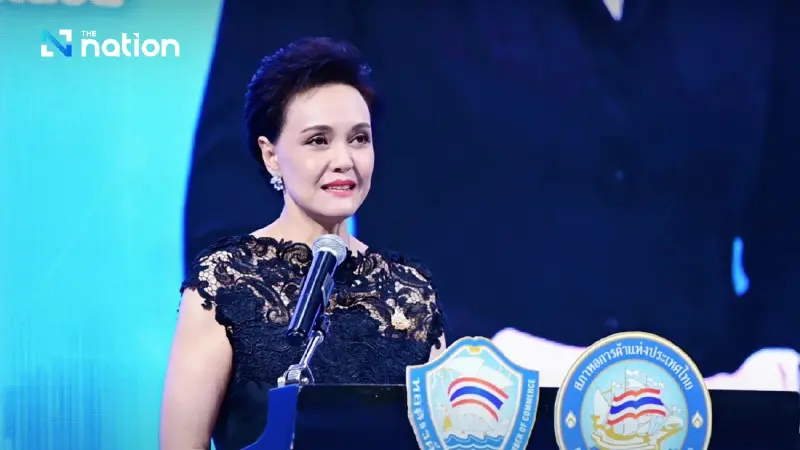


Suphajee says Thailand must rethink trade and lift SMEs as GDP and exports grow, but gains remain concentrated among large firms.
Thailand must rethink its economic strategy as global trade grows more complex and domestic growth remains uneven, Deputy Prime Minister and Commerce Minister Suphajee Suthumpun has said, warning that SMEs risk being left behind while large firms continue to expand.
Suphajee delivered the message during a special address at the 2026 annual meeting of the five regional chambers of commerce on May 30, where she set out her view of the pressures facing Thailand and the need for a new approach to growth.
Global pressures force Thailand to rethink
Thailand is facing challenges it has not encountered before, especially in global trade, where conditions have become increasingly complicated.
Multiple pressures are emerging at the same time, including geopolitics, trade tensions, climate change, logistics costs and new global rules. These factors mean Thailand must “think again and act differently” if it is to remain competitive and continue growing in the new environment.
One major risk is extreme weather, particularly the possibility of a Super El Niño, which could drive temperatures higher and affect Thai agricultural output.
At the same time, higher transport costs, freight rates and insurance premiums, together with shipping times that have lengthened by around 15-20%, are adding pressure on Thai businesses, especially exporters and SMEs.
Headline growth masks a two-track economy
Thailand’s GDP expanded by 2.8% in the first quarter of 2026, beating expectations and continuing from 2.5% growth in the fourth quarter of 2025. The figures suggest the economy carried momentum into this year, particularly through investment and exports.
Investment was the main driver of first-quarter GDP, growing by more than 10%, while exports also performed well. Part of the export growth came from accelerated shipments ahead of the possible impact of tariff measures by the United States.
However, Suphajee said the stronger headline figures did not mean growth was being shared evenly across the economy.
Much of the investment has flowed into large-scale industries such as AI, technology and emerging sectors, which are important for Thailand’s future. Yet income and opportunities have not spread widely enough to ordinary people or smaller businesses.
This has left Thailand facing a K-shaped pattern of growth, or a two-track economy. Large businesses continue to expand, while SMEs and smaller operators are recovering slowly, with some still unable to regain firm footing.
Export gains remain concentrated among large firms
Thailand’s exports grew by 17.6% in the first quarter of 2026 and surged by 23% in April. But a closer look shows that about 80-90% of export growth came from large companies.
Thailand has more than 30,000 registered exporters, including around 7,000 large operators. The rest are smaller businesses, yet they generate only about 17-20% of export revenue.
This shows that Thailand’s export growth remains heavily concentrated among major companies, while SMEs — despite their importance to the economy and employment — still face limits in accessing markets, technology, funding and tools needed to compete internationally.
Although Thai exports have grown strongly, imports have risen even more, leaving the country with a trade deficit. Part of this comes from the import of raw materials and parts for production and re-export.
Suphajee said a key challenge is how Thailand can increase local content, meaning the use of more domestic raw materials, parts and production in the economy.
The automotive industry is one example. Thailand needs to promote more domestic production so foreign investment does not only involve assembly operations or use the country as a temporary base.
Instead, investment should build domestic value chains, connect with Thai businesses and generate real income for the wider economy.

Ministry targets skills, markets and finance for SMEs
Thai SMEs have accounted for about 35% of the economy for many years. Suphajee said the key question is how to help them generate more income and play a bigger role in the new economic system.
The Commerce Ministry is focusing on upgrading SMEs in several areas:
- It aims to develop SME skills so that businesses can adapt to the new world of trade, understand markets, use technology and strengthen their competitiveness.
- The ministry is working to find both domestic and overseas markets for SMEs by linking them with initiatives such as Thai Help Thai Plus, helping SME products gain more sales channels. It is also working with the Industry Ministry to upgrade products and production standards.
- The ministry will work with the Finance Ministry to improve SMEs’ access to funding. One approach is to allow new forms of collateral, such as cash flow, to be considered in loan approvals instead of relying only on traditional assets.
- Intellectual property will be developed as a financial tool through IP Finance. This would allow entrepreneurs to use the value of brands, patents, innovations, production formulas and creative works as a basis for accessing more funding.
- The ministry aims to increase local content and raise SME potential through trade platforms such as THAIFEX, which serves as an important channel for Thai entrepreneurs, especially SMEs, to reach broader markets and connect with buyers, investors and international partners.
Trade talks require strategic balance
Suphajee said geopolitics and geoeconomics are now inseparable. Trade negotiations must therefore be handled carefully, as policies towards one country may affect relations with another.
She cited Thailand’s participation in SelectUSA as an example of efforts to build confidence that Thailand values investment in the United States. At the same time, Thailand must also give importance to China, its largest trading partner.
This makes strategic balance extremely important.
During a recent APEC meeting, the Commerce Ministry held talks with the Chinese government and found that China’s five-year strategic plan is aimed at becoming part of supply chains in target countries through investment, the use of local raw materials, and support for target countries to become major production bases linked to wider markets.
Thailand is therefore pushing pilot projects in sectors where it has strong potential, especially processed agriculture. The aim is to ensure foreign investment uses more Thai agricultural raw materials, adds value to farm products and helps income flow back to farmers and domestic businesses.
In manufacturing, the Thai government has asked investors to consider models that are more closely connected to Thai raw materials and local operators. This would support domestic growth across the entire value chain, from upstream to midstream and downstream activities.
It would also reduce dependence on imports, address transshipment concerns, and make Thai exports more transparent, competitive and sustainable.
Team Thailand seen as key to investment push
In this context, Suphajee said “Team Thailand” is crucial. Attracting investment and negotiating trade deals cannot be done by one agency alone. It requires cooperation among the government, private sector and relevant agencies to deliver concrete results.
During a visit to France, the Commerce Ministry held talks with European investors, who made clear calls for Thailand to accelerate the Thailand-EU free trade agreement.
For the ninth round of talks later in May, progress has already been made on 11 chapters, while 13 chapters remain under negotiation. Thailand will try to consolidate outstanding issues into about six chapters to help speed up the process.
If Thailand can move ahead with key FTAs, Suphajee said, it will help open new markets, increase investor confidence and give Thai goods and services better access to high-quality consumer markets.
This is particularly important in Europe, where buyers place strong emphasis on standards, sustainability, the environment and supply-chain transparency.
“The world has changed, and Thailand must adapt quickly to today’s realities,” Suphajee said.
