
PowerChina eyes investment in 7 Thai transport megaprojects
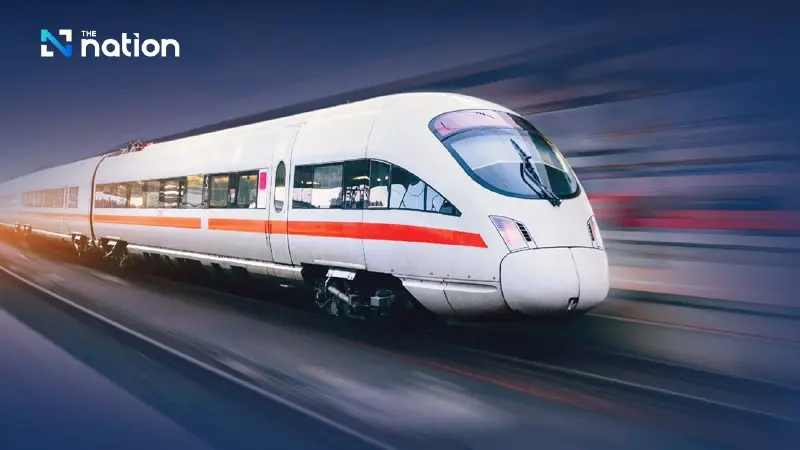


Chinese state enterprise PowerChina is eyeing investment in seven major Thai transport projects, including high-speed rail, airport expansions and the Kathu–Patong tunnel in Phuket.
- Chinese state-owned enterprise PowerChina is establishing a local subsidiary to facilitate large-scale investment in Thailand's transport infrastructure.
- The company has expressed specific interest in investing in seven major Thai transport projects, including railways, airports, and a tunnel project in Phuket.
- The targeted projects include the southern double-track railway, the Nakhon Ratchasima–Nong Khai high-speed rail, and the development of Don Mueang, Suvarnabhumi, Lanna, and Andaman airports.
- PowerChina is proposing joint-venture arrangements with Thai firms and offering access to low-interest funding, leveraging its backing from the Chinese government.
PowerChina has expressed confidence in Thailand’s potential and is preparing to establish PowerChina (Thailand) Co Ltd to support full-scale investment in the country’s transport infrastructure.
Deputy Prime Minister and Transport Minister Phiphat Ratchakitprakarn disclosed the plan after talks with Yang Jiang, vice-president for the Asia-Pacific region at PowerChina International Group Limited and chairman of Sinohydro Thailand, along with other senior executives.
The meeting centred on potential joint investment in major transport infrastructure schemes.
Phiphat added that the company was ready to propose joint-venture arrangements with Thai firms and support access to low-interest funding, as PowerChina is fully backed and owned by the Chinese government.

PowerChina highlights track record in Thailand
PowerChina has previously carried out projects in Thailand worth more than US$5 billion across 15 major schemes, covering energy and infrastructure development. These include energy schemes, including wind power, as well as infrastructure works such as the Blue and Green Line mass-transit systems.
One of the company’s key strengths is its “Zero Accident” record, which aligns with the Transport Ministry’s emphasis on the highest safety standards.
Phiphat has also expressed interest in visiting PowerChina’s project sites in Thailand to observe its work and operating methods. The visit would help assess the company’s readiness and standards ahead of any future cooperation.
PowerChina has shown interest in investing in seven key Transport Ministry projects aimed at strengthening Thailand’s competitiveness:
- The southern double-track railway projects: Chumphon–Surat Thani, Surat Thani–Hat Yai and Hat Yai–Padang Besar
- The Kathu–Patong tunnel project in Phuket
- The Nakhon Ratchasima–Nong Khai high-speed rail project, Phase 2
- The Lanna Airport development project
- The Andaman Airport development project
- Don Mueang Airport development, Phase 3
- The expansion of Suvarnabhumi Airport’s passenger terminal
Thailand raises high-speed rail project for detailed talks
During the talks, the Thai side raised the Thailand-Laos-China high-speed rail project for in-depth discussion, with the aim of moving it forward and ensuring maximum benefit for the public.
Both sides exchanged views and acknowledged PowerChina’s capabilities, particularly its experience as both investor and contractor in high-speed rail projects. PowerChina accepted the proposal and will discuss further details with the governments of both countries.
“This proactive discussion reflects the Transport Ministry’s commitment to opening opportunities for foreign investors to develop infrastructure, while focusing on safety standards and pushing ahead with national projects such as high-speed rail in a concrete manner. The goal is to improve quality of life, reduce logistics costs and create sustainable economic opportunities for the Thai people,” Phiphat said.

Thailand and China pledge closer transport cooperation
Earlier, on May 21, Phiphat welcomed and held bilateral talks with Zhang Jianwei, Ambassador of the People’s Republic of China to Thailand, to strengthen relations and advance Thailand-China cooperation in transport.
The meeting was described as cordial, with both sides expressing a shared intention to resolve obstacles so that national-level projects can continue moving forward.
Phiphat added that the Transport Ministry was pleased to hold talks with the Chinese side and remained committed to driving key projects, especially the Thailand-China high-speed rail project Phase 1, from Bangkok to Nakhon Ratchasima, towards completion.
He also reaffirmed cooperation on Phase 2, from Nakhon Ratchasima to Nong Khai, as well as the construction of the second Thai-Lao Friendship Bridge between Nong Khai and Vientiane, so that implementation could proceed smoothly.
Chinese ambassador discusses accelerating Thailand-China rail project
Ambassador Zhang Jianwei and Chinese representatives expressed readiness to fully support Thailand through the Joint Committee for Railway Cooperation between Thailand and China, known as the JC mechanism, to ensure that projects deliver tangible progress.
They also voiced confidence that Thailand could become a regional hub. China places importance on joint infrastructure development with Thailand, not only in high-speed rail but also in the Laem Chabang Port Phase 3 project, in which Chinese companies are taking part.
China believes that once these megaprojects are completed, they will significantly enhance Thailand’s competitiveness and help position the country as a major transport and logistics hub in the region.
To ensure smooth and efficient implementation, the ambassador proposed that the Transport Ministry step up supervision and monitoring of projects.
The Chinese Embassy in Thailand is ready to act as a coordinator and help build understanding among Chinese companies involved in the projects, so that all parties can work together smoothly and in line with the Thai government’s goals.
Both sides also discussed the Landbridge project, which is expected to create a new shipping route and boost the capacity to transport goods from southern China and the Mekong subregion to global markets.
At the end of the talks, Phiphat reaffirmed Thailand’s readiness to maintain close coordination with China to follow up on and accelerate tangible cooperation.
