
Anutin Pushes Three-Point ASEAN Strategy in Manila to Boost Trade and Investment
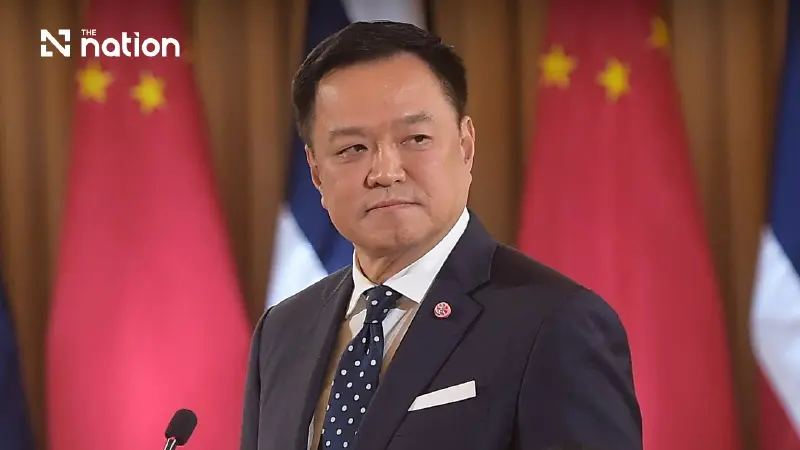


Prime Minister Anutin Charnvirakul outlines plans for chairmanship continuity, trade expansion, and flexible collaboration at the 49th ASEAN Summit
- Thai Prime Minister Anutin is promoting a three-point strategy at the ASEAN Summit focused on ensuring chairmanship continuity, expanding trade, and increasing operational flexibility.
- The first point proposes a "troika" mechanism, linking past, present, and future ASEAN chairs to ensure long-term policy initiatives are not stalled by annual leadership changes.
- The second point aims to boost trade and investment by reducing barriers within the bloc to deepen regional supply chains and expand market access.
- The third point advocates for greater agility, allowing willing member states to pioneer new initiatives so the bloc can respond more quickly to global changes.
Prime Minister Anutin Charnvirakul outlines plans for chairmanship continuity, trade expansion, and flexible collaboration at the 49th ASEAN Summit.
Prime Minister and Interior Minister Anutin Charnvirakul is leading a Thai delegation to Manila to champion a three-point strategy aimed at strengthening regional integration, boosting intra-bloc trade, and positioning Thailand as a premier economic connectivity hub.
Government Spokesperson Ekkapob Pianpises announced on Saturday (14 November) that Anutin is attending the 49th ASEAN Summit and Related Summits in the Philippine capital from 14 to 18 November.
Against a backdrop of global economic volatility and geopolitical shifts, the Thai premier intends to push reforms designed to make the 10-member bloc more continuous, agile, and globally competitive.
Three Pillars for a Stronger Bloc
According to the government spokesperson, Anutin’s agenda rests on three core proposals:
Ensuring Chairmanship Continuity: Establishing a "troika" working mechanism linking the previous, current, and incoming ASEAN Chairs. This aims to prevent annual leadership transitions from stalling long-term regional initiatives and ensures concrete follow-through on policy commitments.
Expanding Trade and Investment: Reducing trade barriers and maximising ASEAN’s economic potential to deepen regional supply chains and expand market access for Thai businesses and entrepreneurs.
Increasing Operational Agility: Allowing ready member states to pioneer initiatives first—supported by frameworks that help developing peers join later—so the bloc can respond swiftly to global changes without compromising unity.
Beyond internal ASEAN meetings, Anutin is scheduled to hold talks with key Dialogue Partners and international bodies, including China, Japan, South Korea, India, Australia, the United States, and the United Nations, focusing on trade, technology, and regional security.
Showcasing Thai Strengths and Investor Confidence
Speaking ahead of his departure on the “Talk with PM Anutin” broadcast, the Prime Minister emphasised that the ASEAN Summit—alongside the upcoming 33rd APEC Economic Leaders’ Meeting—provides vital platforms to showcase Thailand’s economic readiness and policy successes.
Anutin highlighted international praise for Thailand’s clean energy transition, particularly its household solar rooftop buy-back scheme, which lowers consumer electricity bills while feeding surplus power back into the grid.
He also noted that the government’s rigorous crackdown on cybercrime, online scammers, money laundering, and narcotics has earned international trust, translating into technology transfers and low-interest financing for major domestic projects.
The Prime Minister revealed that global investors are approaching Thailand weekly regarding billions of US dollars in Foreign Direct Investment (FDI).
According to Anutin, prospective investors consistently cite Thailand’s political stability, transport infrastructure, strategic location, and reliable power supply—a critical factor for high-tech industries—as key draws.
He added that recent outlook upgrades from "Negative" to "Stable" by S&P, Moody’s, and Fitch have further bolstered international confidence in conducting business with Thailand.
Flexible Diplomacy and Direct Leadership
Under an "ASEAN and Beyond" approach, Anutin advocated for targeted, smaller-scale partnerships based on complementary national strengths—such as tapping into Laos’s hydropower potential for renewable energy or partnering with Vietnam on logistics to support manufacturing and exports.
On the diplomatic front, Anutin confirmed he will hold bilateral discussions with the President of South Korea and engage with US counterparts during the ASEAN Plus sessions.
He underscored the importance of attending the summits in person rather than sending a representative, noting that protocol dictates speaking order by rank and that heads of government possess the direct authority required to finalise trade deals on the spot.
Echoing his address at the United Nations General Assembly (UNGA) in September, Anutin stated that Thailand will continue advocating for ASEAN to unite small and medium-sized nations to amplify their collective bargaining power on the world stage.
Spokesperson Ekkapob added that the government remains focused on leveraging Thailand’s strategic position along the North–South and East–West economic corridors to attract capital, expand export markets, and deliver tangible economic benefits to Thai citizens.
