
Xi backs open trade at APEC as Putin criticises sanctions and sees promise in Nov 19 three-way talks with Trump
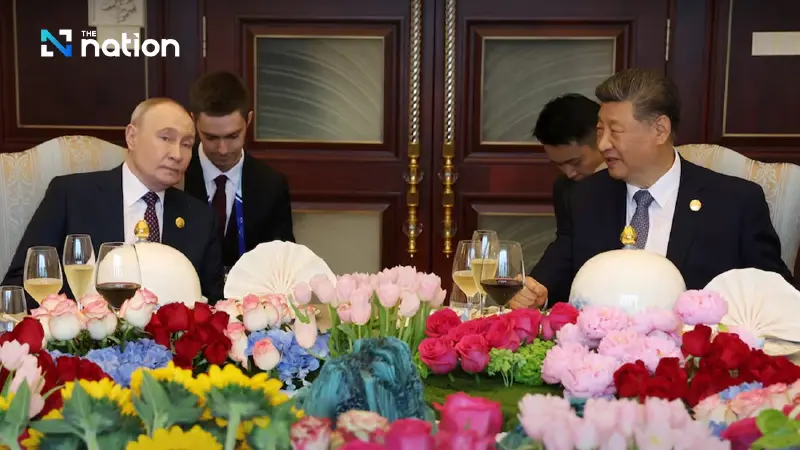


The wars in Ukraine and Iran could feature when Xi Jinping, Vladimir Putin and Donald Trump meet on the sidelines of the APEC summit in Shenzhen.
- At the APEC summit, Chinese President Xi Jinping advocated for open trade, pledging to lower tariffs, open China's markets, and resist protectionism.
- Russian President Vladimir Putin condemned Western sanctions, arguing they have backfired and ultimately made Russia stronger.
- Both leaders made their statements a day before a scheduled trilateral meeting with US President Donald Trump on November 19.
Chinese President Xi Jinping pledged to cut tariffs and open China’s markets further at the Asia-Pacific Economic Cooperation (APEC) summit in Shenzhen on November 18, 2026. Russian President Vladimir Putin followed him on stage and argued that Western sanctions had strengthened Russia, a day before both leaders were due to meet US President Donald Trump.
The three presidents could discuss Russia’s war in Ukraine and the US war in Iran at their November 19 meeting. Trade, artificial intelligence and nuclear weapons could also feature. Leaders of smaller economies in Europe and Asia fear the three powers could strike deals that disregard their interests.
Xi and Putin also met bilaterally in Shenzhen, where they praised their partnership and pledged closer cooperation in pursuit of what they called a “multipolar world”. Trump was expected to arrive from Manila after meeting regional allies.

Xi pledges lower tariffs as US tightens chip controls
Xi told business executives that the World Trade Organization should remain at the centre of global trade rules. He called for fewer barriers to investment and urged governments to keep supply chains running smoothly. With the US raising tariffs under Trump, Xi presented China as a dependable trading partner and pledged to resist protectionism.
Washington had just tightened restrictions on China’s access to advanced artificial intelligence chips from US suppliers such as Nvidia. Beijing has promised to retaliate, putting the countries’ trade truce under further pressure.
Western trading partners argue that policies favouring Chinese manufacturers at the expense of domestic consumers have helped China run annual trade surpluses of more than US$1 trillion. Washington and Brussels say China’s dominance of supply chains gives it political leverage and threatens their industries and jobs.

Beijing defends its economic model as appropriate for a country still catching up with the world’s wealthiest economies. Xi pledged further investment in Chinese industry and said other countries would benefit from the technologies it develops.
George Chen, partner and chair of digital practice at The Asia Group, said Xi’s message was likely to appeal to many countries in the Global South and help Beijing distinguish its approach to technology from Washington’s.
Putin sees value in three-way talks
Putin told the opening session of the APEC CEO Summit that divisions in the global economy and mounting political and military risks made it more important for countries to build partnerships. He described APEC as a forum where leaders could discuss their differences constructively.
“I therefore expect big potential benefit from the upcoming trilateral meeting between the leaders of Russia, China and the United States,” Putin said.
At a separate meeting with Xi on November 18, Putin said Russia and China were working well together on foreign policy and that their partnership was developing steadily. Xi said ties had held firm through difficult periods. He called for more concrete steps to deepen cooperation across the board and for both countries to encourage the shift towards a world with several centres of power.

Putin argues Western sanctions have backfired
Putin described Western powers as “former hegemons” and Europe as being in “humiliating decline”. He argued that sanctions imposed after Russia invaded Ukraine had made his country stronger. Tariffs and export restrictions could still have some deterrent effect, he said, but could no longer stop a rival economy from growing.
Putin spoke after Ukraine destroyed the Kerch road bridge linking Russia to Crimea, a setback for Moscow more than four years into the war. Taiwan and Japan had also reported incursions by Russian aircraft into their airspace on November 17.
In Manila, Trump pledged closer defence cooperation with the Philippines as tensions with Beijing rose over disputed features in the South China Sea. Trump also raised the possibility of meeting North Korean leader Kim Jong Un in China. No such meeting had been confirmed.
The prospect of the US, China and Russia reaching agreements that affect countries outside the room has drawn comparisons with the 1945 Yalta Conference. At Yalta, the US, Britain and the Soviet Union formalised spheres of influence that helped shape the post-war order. The Kremlin dismissed the comparison as “games of political scientists”, although it expects the Shenzhen talks to influence global affairs.
Trump’s Asia trip is his first since Republican losses in the US midterm elections. Allegations that Nvidia co-founder Jensen Huang was the target of a Chinese intelligence operation have added to tensions with Beijing. Nvidia’s board commissioned an investigation, and Beijing denies the espionage allegation.
Most analysts expect Washington and Beijing to keep relations relatively stable. Xi and Trump are due to meet again in December at the Group of 20 summit in Miami, which would be their fourth meeting this year.
Smaller economies fear being sidelined
Leaders of smaller economies in Europe and Asia fear the US, China and Russia could reach agreements that disregard their interests. The prospect has drawn comparisons with the 1945 Yalta Conference, where the US, Britain and the Soviet Union formalised spheres of influence that helped shape the post-war order.
The Kremlin dismissed the Yalta comparison as “games of political scientists”, although it expects the Shenzhen talks to influence global affairs. Beijing said the three-way meeting would promote peace.
