
Thailand to map food-safety risks in Kok and Sai river basins
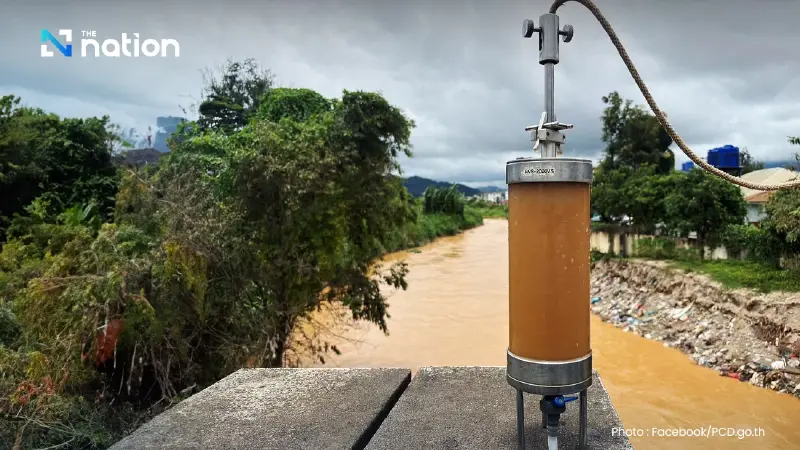


Heavy-metal checks in Thailand’s Kok and Sai river basins will guide food-safety controls, risk mapping and targeted assistance for farmers.
- Thailand will conduct heavy-metal testing in the Kok and Sai river basins to identify agricultural risk zones and bolster food-safety confidence.
- The findings will be used to create a three-color coded map (green, yellow, red) to classify areas based on contamination levels, accessible through the Agri-Map application.
- Areas designated as high-risk "red zones" will be subject to immediate controls and a three-stage farmer assistance plan, including providing alternative water sources and promoting different crops.
- The project involves collecting soil, water, and animal samples from 333 locations between November 23-25, 2026, with results expected in early December to guide interventions.
Thailand plans to use heavy-metal testing in the Kok and Sai river basins to identify agricultural risk zones and guide food-safety controls and assistance for farmers, with field inspections scheduled for November 23–25, 2026.
Deputy Government Spokesperson Capt Patdarasm Thongsaluaykorn outlined the plan on November 18, saying the Ministry of Agriculture and Cooperatives had ordered checks from upstream to downstream in the two northern river basins.
The ministry aims to strengthen confidence in food safety and protect agricultural produce prices from the effects of contamination fears.
Three-colour map to guide monitoring and intervention
The Land Development Department will record Global Positioning System (GPS) coordinates at each sampling point and incorporate the findings into a geographic information system through the Agri-Map application to create a three-colour surveillance map.

Under the planned classification, green zones would have heavy-metal concentrations within applicable standards, allowing farming and produce sales to continue normally.
Yellow zones would identify areas showing signs of contamination risk and requiring close monitoring of soil and water quality. Red zones would cover areas where contamination exceeded standards, triggering immediate controls and rehabilitation.
Three-stage support planned for red-zone farmers
The Agriculture and Cooperatives Ministry has prepared a three-stage response for areas classified as red zones, beginning with tighter controls on agricultural produce and safety certificates for products that meet the required standards.

During the immediate phase, test findings would also be made public to strengthen consumer confidence and provide information for buyers and sellers.
Under the medium-term plan, the Land Development Department is prepared to provide funding and machinery to build small on-farm water storage ponds where farmers can no longer use their existing water sources. The ponds would serve as alternative reserves.
The long-term phase would encourage farmers to switch to alternative economic crops suited to local conditions and safety requirements, including rubber, flowering and ornamental plants, and other commercially valuable trees. The plan also includes sharing technology and techniques for soil rehabilitation and improvement.
Farm and irrigation checks followed by laboratory analysis
The announced three-day inspection programme lists 333 target locations across the Kok and Sai river basins, which support farmland and local livelihoods in northern Thailand.

The Rice Department, Department of Agriculture and Land Development Department will jointly collect 250 soil and water samples from farmers’ fields. The Royal Irrigation Department will test water at 83 irrigation locations, including key distribution points and major water control gates.
The Department of Fisheries will inspect aquaculture ponds in areas considered at risk, while the Department of Livestock Development will examine heavy-metal accumulation in animals raised for human consumption.
All samples are due at laboratories operated by the Land Development Department, Department of Agriculture and Rice Department by November 27, with analysis expected to take one to two weeks.
Laboratory findings are expected to begin emerging in early December and will guide decisions on contamination controls and targeted assistance for farmers.
