
China seeks deeper Thailand ties in ‘golden 50 years’
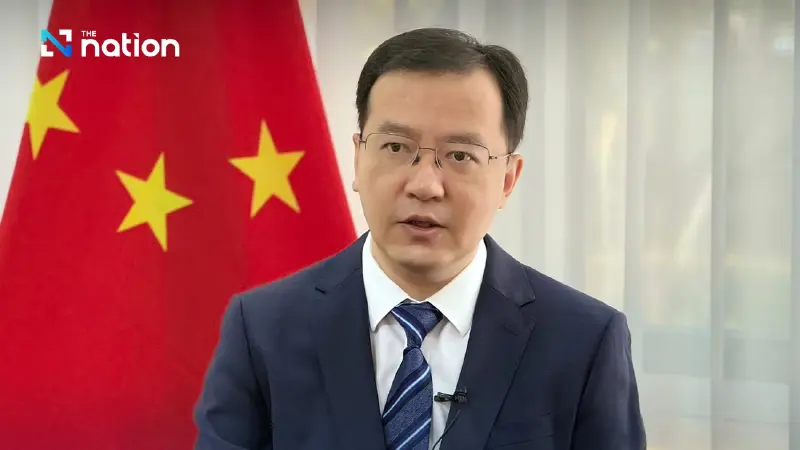


China says its newly approved 15th National Economic and Social Development Plan will deepen cooperation with Thailand in AI, green growth and the digital economy, while Beijing, Bangkok and Naypyidaw intensify joint action against scam networks.
China is looking to deepen cooperation with Thailand in what it calls the “golden 50 years” of bilateral ties, with a focus on artificial intelligence, the green economy and the digital economy, while also stepping up joint efforts with Thailand and Myanmar to dismantle scam networks along the border.
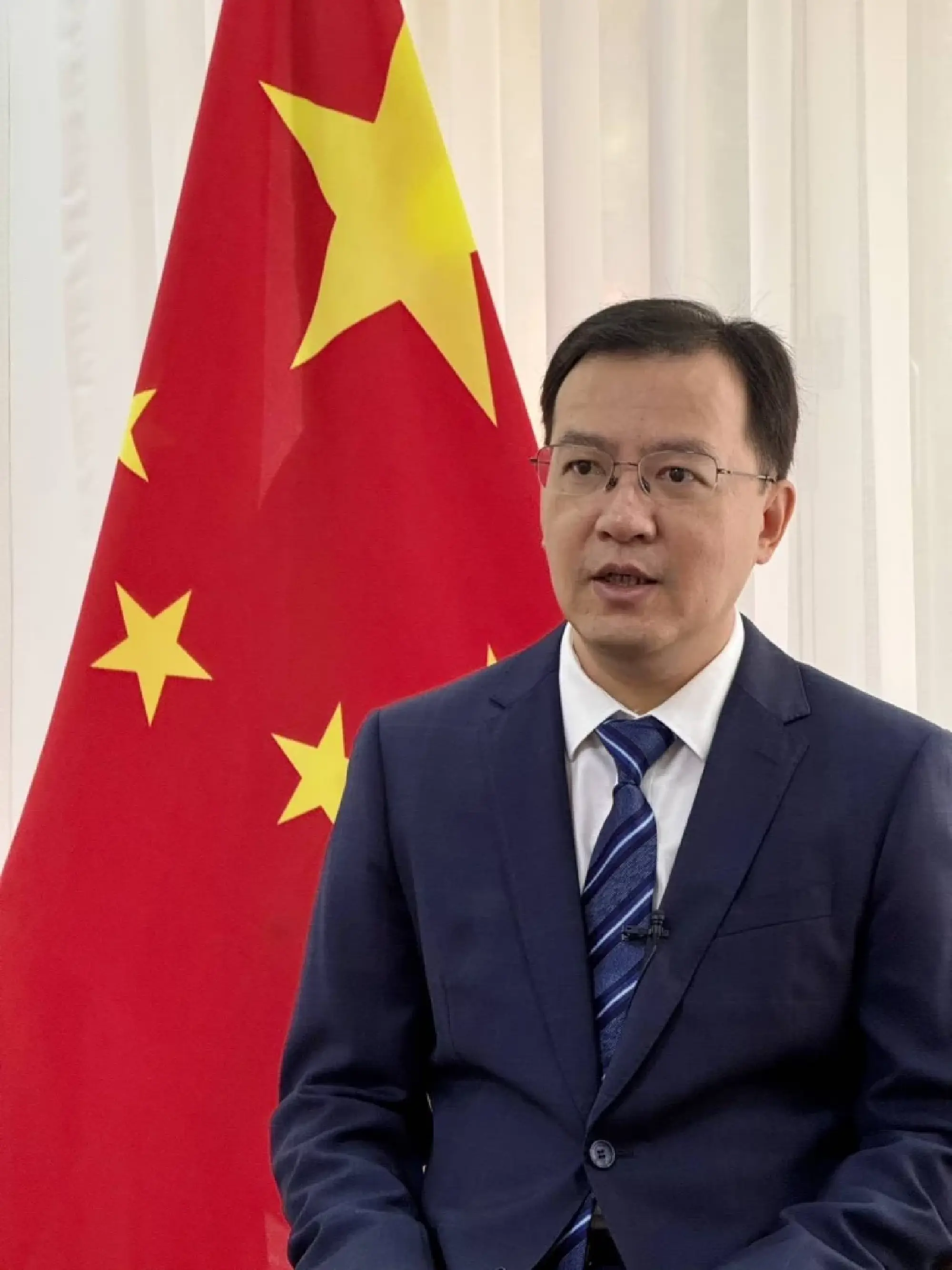
Chen Haiping, Consul General of the People’s Republic of China in Chiang Mai, outlined the direction in a special interview with Nation TV following the conclusion of China’s 2026 “Two Sessions” — the annual meetings of the National People’s Congress (NPC) and the Chinese People’s Political Consultative Conference (CPPCC).
He said the meetings approved China’s 15th National Economic and Social Development Plan, which will shape the country’s development path over the next five years.
Three signals from the Two Sessions
According to Chen, the 2026 Two Sessions sent three key messages about China’s future direction.
The first was strategic determination. At a time of intensifying global uncertainty, armed conflict and geopolitical instability, China, as the world’s second-largest economy and a major driver of global growth, remains committed to long-term development and aims to provide stability for the international community through a scientifically framed five-year plan.
The second was a stronger emphasis on scientific and technological innovation, alongside the development of future industries, with advanced manufacturing at the centre. Chen said China aims to integrate the digital economy more closely with manufacturing in order to strengthen industry, improve living standards and enhance governance.
The third was reform-led development through greater openness. That includes expanded trade and investment cooperation, continued high-quality Belt and Road cooperation, and broader opportunities for mutually beneficial partnerships with China.

From rapid growth to high-quality growth
Chen said China’s development model is now placing less emphasis on how fast the economy grows and more on how stable, sound and high-quality that growth is.
Under the 15th National Economic and Social Development Plan, he said, the focus is on ensuring that economic expansion is driven more by scientific and technological advancement, structural reform and transformation, helping China move from being a large economy to a strong one.
He added that the plan highlights six future industries: quantum technology, biomanufacturing, green hydrogen, nuclear fusion energy, brain-computer interfaces, and intelligent communications and 6G.
The plan also places strong emphasis on improving quality of life, particularly in employment, education, healthcare and elderly care, with the benefits of economic development intended to be directly felt by the public.
Thailand-China ties enter ‘golden 50 years’
Chen said last year marked the 50th anniversary of diplomatic relations between China and Thailand, which was celebrated as a milestone in bilateral ties.
During that period, President Xi Jinping welcomed Their Majesties the King and Queen of Thailand in Beijing, where both sides mapped out a broader vision for a China-Thailand community with a shared future.
He said China has remained Thailand’s largest trading partner for 13 consecutive years, the biggest export market for Thai agricultural goods, and one of Thailand’s major sources of investment.
Chen added that both countries have made solid progress in advancing high-quality Belt and Road cooperation, while collaboration in green development, technological innovation and the digital economy has continued to expand.
He also pointed to the implementation of the mutual visa exemption policy and growing people-to-people exchanges as further evidence of close ties, reflected in the long-standing phrase that China and Thailand are “as close as brothers”.
This year, he said, the relationship will enter its “golden 50 years”, with both countries expected to strengthen strategic coordination, share governance experience and pursue landmark cooperation in emerging sectors such as artificial intelligence, the green economy and the digital economy.
Joint crackdown on scam compounds
Chen also highlighted joint action by China, Myanmar and Thailand against transnational scam operations, particularly in Myawaddy and surrounding areas.
He said the three countries have established a ministerial-level coordination mechanism to tackle scam gangs, leading to large numbers of arrests and serious disruption to criminal bases.
The three countries have also jointly repatriated offenders on 10 occasions, which he said had created a strong deterrent effect on criminal groups.
According to Chen, more than 630 buildings linked to scam operations in Myawaddy’s KK Park have already been demolished, while scam compounds in “Asia Pacific New City” have been completely eradicated.
He described the operation as having already achieved phased success.
Safety measures for Chinese nationals
Chen said the Chinese Consulate-General in Chiang Mai has followed the principle of “diplomacy for the people” by working closely with local police to protect the safety and lawful rights of Chinese nationals.
That has included cooperation on repatriating offenders, anti-fraud awareness campaigns, travel warnings and the handling of consular protection cases involving scam-related incidents.
He added that the consulate has also stepped up efforts to improve safety for Chinese visitors in northern Thailand and has organised consular protection awareness activities for groups such as Chinese students and parents.
The consulate, he said, will continue working with all sides to help ensure a safe, friendly and convenient environment for cross-border travel and exchanges between the two countries.
