
Thai forces outline battlefield data upgrades on Sept 17
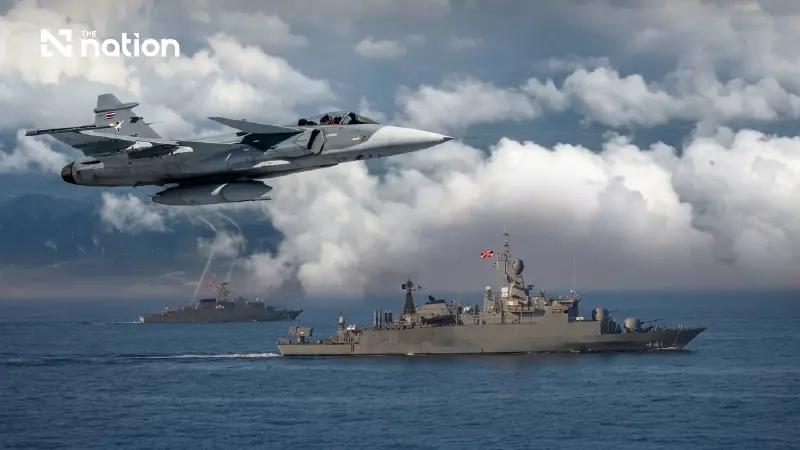


Thai forces plan data-link upgrades, with Gripen E/F deliveries from 2029 and a second Barak MX purchase planned for fiscal 2027.
The Royal Thai Navy and Royal Thai Air Force outlined plans on Thursday (September 17, 2026) to strengthen battlefield data-sharing and give commanders a common operational picture across land, sea and air missions.
Speaking after a meeting of service commanders at Royal Thai Armed Forces Headquarters, the two services’ spokespersons detailed developments in tactical data links, command-and-control systems and equipment integration.
Air Marshal Chakkrit Thammavichai, spokesperson for the Royal Thai Air Force, said the development of the Joint Capabilities Command (JCC), in line with the Chief of Defence Forces’ policy, was intended to allow commanders at every level to see the same operational situation across all three domains.
Chakkrit described network-centric operations as essential to mission success. The Air Force had continuously developed its command-and-control systems since introducing Gripen C/D fighters more than a decade ago, and those systems had been central to operations during previous Thai-Cambodian fighting, he said.
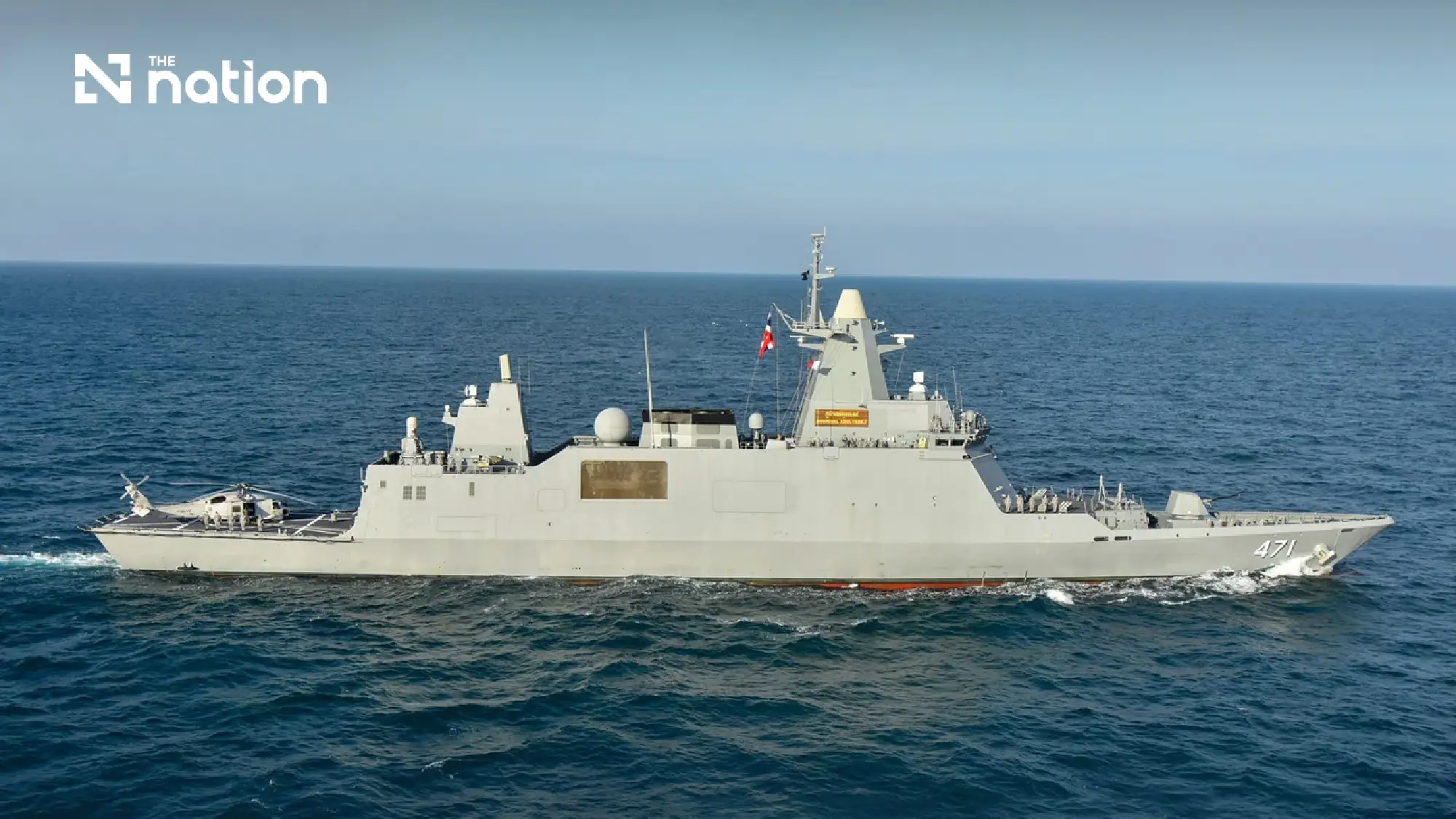

Navy develops data links for ships and ground units
Capt Nara Khunthothom, assistant Royal Thai Navy spokesperson, said the Navy had briefed commanders on the development of its Tactical Data Link (TDL) system to provide faster situational information for operational and tactical decisions. Naval and ground units would be able to view the operational picture immediately.
Nara said the Navy would also develop its command, control, communications, computers, intelligence, surveillance and reconnaissance (C4ISR) system to address cyber threats and handle growing volumes of data. The system would accommodate maritime information from domestic and external sources, as well as international developments.

The Navy also intends to expand tactical data links to connect with additional frigates being procured and strengthen the ability of ships to operate with one another and with aircraft, Nara said.
Chakkrit described tactical data links as a force multiplier, allowing military assets to share an understanding of the battlefield and conduct operations more efficiently and coherently.
Gripen programme supports Thai data-link self-reliance

Chakkrit said the first phase of Thailand’s Gripen E/F procurement programme would provide the Air Force with intellectual property rights to Link-T. Aircraft deliveries under the programme are scheduled to begin in 2029, he said.
The Link-T technology could be installed across Thai military assets, including Air Force aircraft and additional systems acquired by the Army and Navy, according to Chakkrit. He described the development as a significant advance with benefits for security agencies more broadly.
Chakkrit said the services would need to discuss their requirements and develop a concept design. Personnel preparations were already under way to support the transition towards self-reliance, which he expected could be achieved within two years.

Chakkrit also highlighted the divide between Eastern and Western combat-data systems, saying the two could not be connected across that divide. Thailand therefore needed to consider compatibility when procuring weapons and military equipment, he said.
Western suppliers were concerned about sensitive information leaking because they faced conflicts on a larger scale than Thailand’s, Chakkrit said. He argued that Thailand consequently needed to build the knowledge and capability to develop its own systems.
Barak MX deliveries remain on schedule, Air Force says
Military procurement and equipment deliveries remain on schedule, including the Barak MX air-defence system, according to Chakkrit. Despite the fighting involving Israel, deliveries would begin in stages as planned, with an Air Force team monitoring progress.
Chakkrit said a second procurement phase was planned under the fiscal 2027 budget. He cited the scale of threats posed by drones, missiles and PHL-03 systems as the reason for acquiring additional air-defence equipment.
Air Force plans Saab 340 upgrades and domestic attack drones
The Air Force also plans to upgrade its Saab 340 airborne early warning (AEW) aircraft so they can issue warnings and direct aircraft in flight without routing instructions through ground stations, Chakkrit said.
Chakkrit said research and development of one-way attack, or “kamikaze”, drones formed part of efforts to strengthen Thailand’s defence industry and achieve greater self-reliance.
The current security environment demonstrated the effect of asymmetric warfare on combat capability, Chakkrit argued. Developing attack drones domestically would improve mission readiness, alongside efforts to make air-defence systems more effective, he said.
“Although the Joint Capabilities Command is still in its early stages, the Thai armed forces are ready if there is a third round of fighting,” Chakkrit said.
“We have already coordinated our work and have an understanding of how we would operate. Please be confident that we have learned lessons and have already worked together,” Chakkrit added.
