
Myanmar disguised Iranian jet fuel as diesel, Reuters finds
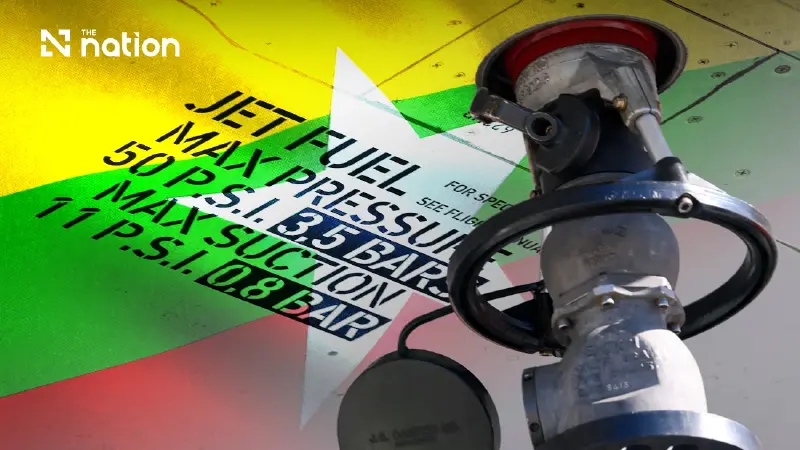


Reuters found Myanmar disguised Iranian jet fuel as South African diesel in contracts naming a Thai trader and an account at Siam Commercial Bank.
- Myanmar imported Iranian jet fuel using contracts and import documents that falsely identified the shipments as diesel originating from South Africa.
- The scheme, designed to evade U.S. sanctions, involved a Myanmar energy broker and a Thai fuel trader, with payments directed to a Thai bank account.
- Myanmar's military authorities were directly involved, with the country's foreign exchange regulator officially authorizing the mislabeling of jet fuel as diesel in paperwork.
- The investigation verified the fuel's true origin by using shipping records and satellite imagery to track tankers traveling from Iran to Myanmar, contradicting the official documents.
Myanmar disguised purchases of Iranian jet fuel as imports of South African diesel through contracts involving a Thai fuel trader, according to a Reuters investigation published on October 26, 2026.
The report drew on shipping records, satellite imagery and commercial documents to trace the shipments, while a letter from Myanmar’s foreign exchange regulator showed that officials authorised import paperwork identifying jet fuel as diesel.
The findings detail how fuel continued to reach Myanmar despite US sanctions targeting its aviation-fuel industry, with contracts specifying payments to a Thai bank account.
US$15.8 million contract described South African diesel
One transaction involved Myanmar energy broker Dynamic Wave and Thailand’s Tawan-Oil Trading, which signed a US$15.8 million agreement, worth approximately THB534 million, for a shipment purportedly containing South African diesel.
However, United Nations (UN) data and information from shipping and energy data provider Vortexa showed no corresponding fuel trade between South Africa and Myanmar in 2025.
Shipping records and satellite analysis by SynMax Intelligence instead indicated that the tanker Reef carried Iranian jet fuel to Myanmar in December 2025. SynMax traced the vessel’s voyage from Bandar Abbas in Iran to Southeast Asia.
Reuters described its investigation as the first to reveal the methods used to conceal Myanmar’s Iranian jet-fuel purchases and the entities involved in the transactions.
Regulator authorised diesel labelling
A letter dated November 30, 2025, indicated that Myanmar’s military authorities were involved in the arrangement.

Days before Reef arrived, the country’s foreign exchange regulator informed Dynamic Wave’s customer that import documents would describe the delivery as diesel rather than jet fuel.
The letter also authorised Dynamic Wave and its customer, National Energy Prime Aviation Services Company, to pay Tawan-Oil Trading for the shipment. The customer company is partly owned by Myanmar’s military-backed government.
Justice for Myanmar, an activist organisation that supplied documents to Reuters, published its own findings on October 26, concluding that the military authorities were importing jet fuel mislabelled as diesel.
The organisation, which supports further sanctions on Myanmar’s jet-fuel imports, explained that it obtained the documents from a junta-controlled server that had briefly been publicly accessible.
Reuters found an inactive link to one of the documents through the DuckDuckGo search engine, indicating that it had previously been hosted on the server. Delivery dates and fuel quantities in the documents also matched Iranian jet-fuel shipment records examined separately by the news agency.
Contracts specified payments to Thai bank account
The fuel sales contract required payment into Tawan-Oil Trading’s account at Siam Commercial Bank (SCB). Reuters could not determine whether SCB was aware of the nature of the trader’s business.
A 2024 report by UN experts identified Tawan-Oil Trading as a supplier of jet fuel to Myanmar’s military and described SCB as a major facilitator of military procurement. Tawan-Oil Trading has not commented on those allegations.
Following that report, SCB maintained that it complied with anti-money-laundering laws and that its Myanmar-related transactions were legitimate and unrelated to the arms trade.
The bank did not respond to repeated requests for comment from Reuters about its commercial relationship with Tawan-Oil Trading in the latest investigation.
Tawan-Oil Trading and the Bank of Thailand, which oversees Thailand’s financial sector, also did not respond to questions.
Thai regulators instructed banks in 2024 to scrutinise transactions involving Myanmar more closely to ensure compliance with sanctions and anti-money-laundering requirements.
Earlier shipment showed similar discrepancies
The December delivery was not the first shipment of jet fuel to reach Myanmar under documents identifying it as diesel, according to Reuters.
In May 2025, Dynamic Wave agreed to buy 202,000 barrels from Tawan-Oil Trading under another contract obtained from the junta-controlled server. That agreement also described the fuel as South African diesel.
It required delivery to Yangon within one month and specified payment of US$26 million, approximately THB879 million, into Tawan-Oil Trading’s SCB account.
However, the accompanying invoice contained details suggesting that the cargo was jet fuel.
The density listed in the document matched jet-fuel specifications rather than those of diesel sold in Southeast Asia, according to Joshua Heyne, a jet-fuel expert at Washington State University, and data from energy information provider Platts.
The stated price was also more than 50% above a global diesel benchmark.
Shipping records showed that the tanker Noble called at Yangon on June 17, 2025, carrying just under 200,000 barrels of jet fuel destined for Dynamic Wave.
SynMax’s satellite analysis indicated that Noble had loaded its cargo at Bandar Abbas, as Reef did for its December shipment. During the voyage towards Yangon, Noble transmitted location signals that made its destination appear to be Chittagong in Bangladesh.
The manager of both tankers did not respond to questions sent through contact details listed on its website.
Fuel supplies continue despite sanctions
The United States imposed targeted sanctions on Myanmar’s jet-fuel industry in 2023, citing the military’s deadly bombing of civilian targets during its campaign against a rebel-led insurgency. Buyers of Iranian oil and fuel are also exposed to extensive US sanctions.
Myanmar’s military seized power from Aung San Suu Kyi’s elected government in 2021, triggering a civil war.
The UN stated in August that military air attacks had killed thousands of people, including many civilians. Myanmar’s foreign ministry responded that the armed forces exercised maximum restraint to avoid civilian harm.
Iran was the Myanmar military’s principal jet-fuel supplier between October 2024 and December 2025, according to a Reuters report published in January 2026. Much of the trade was carried by Reef, subsequently renamed Maris, and Noble.
Reuters reported earlier in October that shipments had continued during 2026, citing further satellite imagery and SynMax analysis.
The investigation highlighted the limits of sanctions, with continuing fuel deliveries earning Iran foreign currency and sustaining both commercial aviation and military air operations in Myanmar.
Dynamic Wave, National Energy Prime Aviation Services Company, spokespeople for Myanmar’s military-backed government and foreign exchange regulator, and Iran’s foreign ministry did not respond to Reuters’ questions. The US Treasury Department also did not respond to questions about the shipments.
