
Thailand objects to Cambodia's wording on displaced people at ASEAN
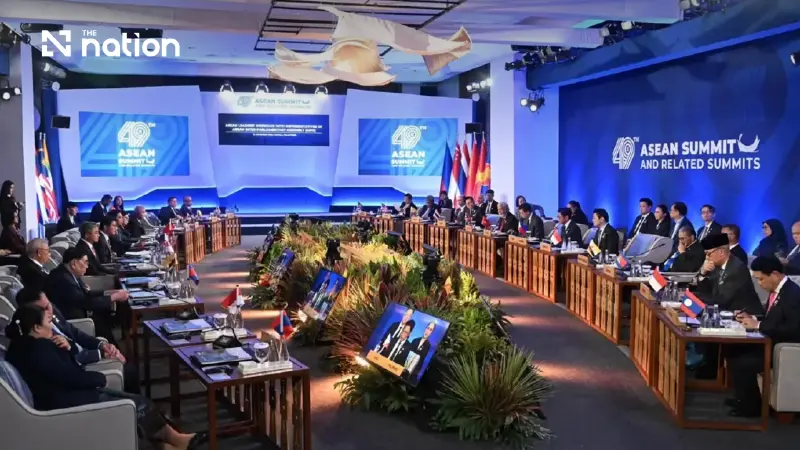


Thai House Speaker Sophon Saram opposed Cambodia's proposed reference to more than 20,000 displaced people at an ASEAN–AIPA meeting and urged bilateral talks.
- Thailand has objected to Cambodia's proposal to include a reference to more than 20,000 displaced people in a regional ASEAN Inter-Parliamentary Assembly (AIPA) statement.
- The Thai representative argued the figure is a disputed and unverified claim, and its inclusion would misleadingly suggest the assembly was endorsing one side's allegations.
- Thailand insists the underlying border dispute is a bilateral issue that should be resolved through direct negotiations, not within a multilateral forum intended for regional cooperation.
Thailand's House Speaker Sophon Saram has opposed Cambodia's proposal to include a reference to more than 20,000 displaced people in a regional parliamentary statement, arguing that the unresolved Thailand–Cambodia border dispute should be addressed through bilateral mechanisms.
Sophon raised the objection at the 15th ASEAN Leaders' Interface with Representatives of the ASEAN Inter-Parliamentary Assembly (AIPA), held in Manila, the Philippines, on Sunday (November 15), alongside the 49th ASEAN Summit.
The meeting aimed to bring public concerns and parliamentary perspectives into discussions with ASEAN leaders.
It was linked to the theme of the 47th AIPA General Assembly, "Parliaments Securing a Peaceful, Prosperous and People-centered ASEAN".

Thailand disputes Cambodia's proposed wording
Sophon was responding to reports in Cambodian media claiming that AIPA had supported Cambodia's proposal to include language on respecting the ceasefire agreement and resolving the border dispute peacefully.
He maintained that supporting peace and a ceasefire did not constitute an endorsement of either country's figures or allegations.
The Thai parliamentary leader specifically objected to the proposed reference to more than 20,000 displaced civilians, describing the figure and associated claims as matters that remained disputed between Thailand and Cambodia.

According to Thailand's position, the figure had not been jointly verified. Sophon argued that including such claims in a regional statement could create the misleading impression that member countries or the meeting itself had endorsed one side's allegations.
He stressed the importance of mutual trust and cautioned against treating information supplied by one side as an agreed conclusion at a regional meeting.

Border dispute should remain a bilateral matter
Sophon maintained that the Thailand–Cambodia border dispute should be addressed through bilateral mechanisms agreed by both sides rather than introduced into a multilateral forum primarily concerned with regional cooperation.
"Bringing a dispute involving only two parties into a forum intended to discuss cooperation across the region is inconsistent with the meeting's objectives and inappropriate under the conventions of multilateral discussions," Sophon stated.
"Border issues should return to the negotiating table and mechanisms agreed by both parties, rather than using a regional forum to lend weight to one side's claims."

Thailand submits formal objection to AIPA president
Before the meeting, Thailand sent a formal letter to the Speaker of the Philippine House of Representatives, in his capacity as AIPA president, objecting to Cambodia's proposed wording concerning more than 20,000 displaced people.
Sophon also reaffirmed Thailand's commitment to regional cooperation on tackling technology-related crime, combating online scams and preparing for an ageing society, all of which require international cooperation.
