
Shenzhen outlines preparations and visitor services for APEC summit
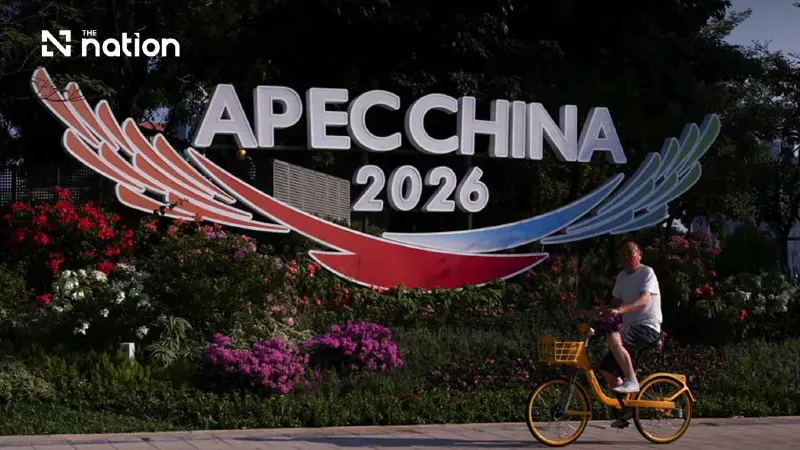


Bank cards issued abroad can be used for metro fares and cash withdrawals, while translation devices and volunteers are available to assist visitors.
- All meeting venues are fully prepared, with completed equipment inspections and full rehearsals.
- Special channels have been established at nine entry points (sea, land, air, and rail) and advanced airport screening technology is being used to speed up arrivals.
- City-wide services for visitors include over 100,000 standardized foreign-language signs and 7,000 AI translation devices installed in transport hubs and tourist areas.
- Financial accessibility has been improved, allowing participants to use foreign bank cards for metro fares
Shenzhen is the third Chinese city to host the Asia-Pacific Economic Cooperation (APEC) meeting, following Shanghai in 2001 and Beijing in 2014, China Daily reported on Monday (November 16, 2026).
This year’s APEC theme is “Building an Asia-Pacific Community to Prosper Together”, with a focus on openness, innovation and cooperation.
The city’s preparations cover more than the media centre.
They also include conference management, services for visitors and technology to welcome guests from across the Asia-Pacific.
Shenzhen mayor Li Yun told a press conference on Saturday (November 14, 2026) that every meeting venue was fully ready, with equipment inspections and full rehearsals completed.
Chinese authorities have set up special channels for meeting participants at nine entry points for arrivals by sea, land, air and rail.
Li added that Shenzhen Bao’an International Airport was using advanced baggage screening technology to speed up entry procedures.
Across the city, more than 100,000 foreign-language signs have been brought into line with a common standard.
More than 7,000 translation devices using artificial intelligence (AI) have also been installed at transport hubs, tourist attractions and shopping districts.
Participants can pay metro fares with bank cards issued abroad and use them to withdraw cash at more than 3,000 cash machines around the city.
A total of 1,360 conference volunteers and tens of thousands of community volunteers are also on hand to provide ongoing assistance.
These preparations draw on technology in ways that reflect Shenzhen’s wider capabilities in innovation and manufacturing.
Xia Lei, deputy director of the Science, Technology and Innovation Bureau of Shenzhen Municipality, said industry had accounted for more than 30% of the city’s gross domestic product (GDP) for many years, helping turn laboratory research into products ready for sale.
Xia Lei also cited the Huaqiangbei electronics market and supply chains extending across the city as parts of an ecosystem that supports the growth of technology companies.
At the APEC media centre, Mariia Cherdantseva, a journalist with Russia Today, watched a robot making coffee.
She had visited Shenzhen before and said she was impressed every time she saw how the city had developed.
The centre’s AI applications were useful for reporters and enjoyable to use, she added.
The media centre opened on Wednesday (November 11, 2026) for journalists covering the APEC Economic Leaders’ Meeting.
It gives the media a view of Shenzhen’s preparations for the 33rd meeting, scheduled for Wednesday (November 18, 2026) and Thursday (November 19, 2026).
Shenzhen, a city of trade, development and technology
Global technology leaders including Huawei, BYD, Tencent and DJI originated in Shenzhen.
The city’s GDP reached $580 billion in 2025, while research and development spending represented 7.1% of GDP, the highest proportion of any Chinese city for a second year running.
An extensive regional network of trade and investment supports this industrial base.
Shenzhen’s trade with other APEC economies increased by 40% in the first nine months of 2026 compared with the same period a year earlier, representing nearly 70% of its total foreign trade.
Figures presented at the press conference on Saturday (November 14, 2026) showed that Shenzhen companies had invested $4.1 billion in APEC economies, representing more than 60% of the city’s total overseas investment.
Customs figures show that Shenzhen has become the first city in mainland China with foreign trade exceeding 5 trillion yuan.
Its combined imports and exports totalled 5.25 trillion yuan in the first 10 months of 2026.
Zhang Feimeng, director-general of the Commerce Bureau of Shenzhen Municipality, put goods imports for the first three quarters of the year at 2.24 trillion yuan, an increase of 70.1%.
He attributed the rise to the city’s efforts to give overseas suppliers greater access to its market.
Over the same period, the value of Shenzhen’s exports of competitive products, including 3D printers, digital cameras and smartphones, grew by 15.5%.
Du Lan, deputy director of the Department for Asia-Pacific Studies at the China Institute of International Studies, said Shenzhen’s use of technology and city services to welcome overseas visitors illustrated wider opportunities for China to support Asia-Pacific growth by opening markets and cooperating on innovation.
Du added that China could use the scale of its market to give businesses more predictable access by advancing trade and investment liberalisation and aligning more closely with regional trade agreements.
