
Thailand revives $30bn Land Bridge plan to challenge Malacca Strait
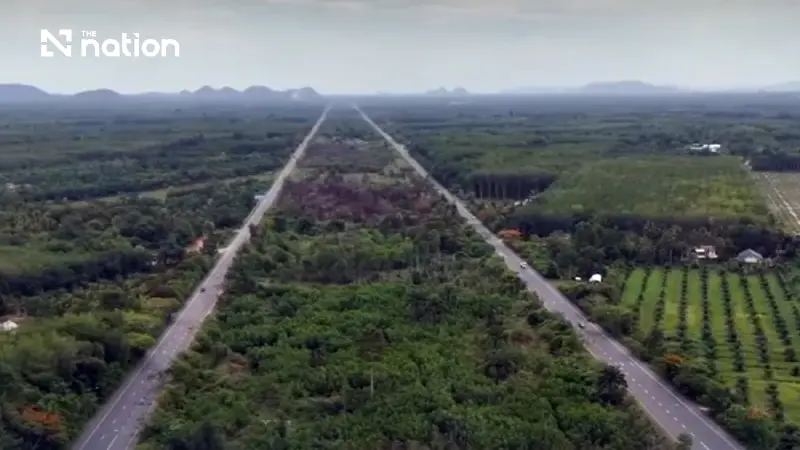


Thailand has revived its $30bn Land Bridge project linking Chumphon and Ranong, aiming to create a coast-to-coast logistics corridor as an alternative to the Malacca Strait.
Thailand has revived its ambitious US$30 billion Land Bridge project, aiming to build a coast-to-coast logistics corridor that could offer shippers an alternative to the congested Strait of Malacca, one of the world’s busiest maritime routes.
The project, backed by Prime Minister Anutin Charnvirakul’s government, has returned to the spotlight after the war in Iran and disruption around the Strait of Hormuz highlighted the vulnerability of global trade to strategic maritime chokepoints.

The plan envisions a 1-trillion-baht logistics corridor connecting two new deep-sea ports: Chumphon on the Gulf of Thailand and Ranong on the Andaman Sea. The two coasts would be linked by rail, highways and logistics infrastructure across southern Thailand.
According to a government presentation seen by Reuters, the corridor could cut logistics costs by nearly 30% and reduce transit times by up to 14 days for cargo travelling between southern China and ports in the Indian Ocean serving South Asia and the Middle East.
At the centre of the project is a 90-kilometre standard-gauge railway between the two deep-sea ports, with capacity of up to 20 million TEUs a year. Another metre-gauge rail line would connect the corridor to Thailand’s existing national railway network, supported by multi-lane highways and local roads.

Thai officials say the project is not designed to replace the Malacca Strait entirely, but to capture part of the region’s trans-shipment and feeder cargo market. Jiraroth Sukolrat, director-general of the Office of Transport and Traffic Policy and Planning, said Thailand was targeting feeder vessels with capacity of 12,000 TEUs or less, rather than giant mainline container ships.
Government estimates suggest feeder-to-feeder cargo movements between the Gulf of Thailand and the Andaman Sea could be around 10% cheaper and six days faster than comparable routes through Singapore, mainly because of lower congestion.

However, the project still faces major challenges. Analysts say the Land Bridge remains economically ambitious and may struggle to compete with the seamless shipping route through Malacca. Eugene Mark of Singapore’s ISEAS-Yusof Ishak Institute said the project may ultimately become more viable as a strategic national corridor for Thailand rather than a global rival to Malacca.
The current version of the Land Bridge has also been repackaged from earlier proposals. Unlike past plans, it excludes petrochemical complexes and oil refineries, focusing instead on ports, railways and light industry. Independent researcher Wipawadee Panyangnoi said the core concept had not changed significantly, but the way it was being presented had shifted towards logistics and transport infrastructure.

Investor interest has so far remained cautious because of the project’s huge cost, shifting policy frameworks and geopolitical sensitivities. Thai authorities say the state would act mainly as regulator and supporter, while financing would need to come largely from private investors through a consortium of shipping lines, port operators, financiers and land developers.
The project also carries diplomatic risks, with neighbouring countries watching the plan carefully. Analysts warn that heavy involvement by foreign state enterprises, particularly from China, could trigger domestic concerns in Thailand over foreign control of critical infrastructure.
Local opposition is another major obstacle. Reuters reported that fishing and farming communities along the proposed corridor fear the project could disrupt livelihoods, marine ecosystems and established agricultural areas. In Ranong, fisherman Chaiyaporn Arunrasamee said the project would be built in an area where local residents earn their living.

In Chumphon’s fertile Phato district, where durian plantations and coffee farms already generate substantial income, some residents have questioned whether large-scale industrialisation is necessary. Coffee entrepreneur Chalermchart Seekhiao said the area should not be viewed as empty land waiting for development.
The project suffered another setback this month after regulators ordered a new Environmental and Health Impact Assessment, following a large discrepancy between government and private research estimates on marine life density near the proposed ports.
A government-appointed panel is now reviewing the project and its previous impact assessment reports, with findings expected before the end of July. The outcome will be closely watched by investors, local communities and regional governments as Thailand weighs whether the Land Bridge can become a strategic logistics asset — or another mega-project that remains on paper.
Source: Reuters
