
Steel mills face random checks as minister warns repeat offenders risk licence revocation
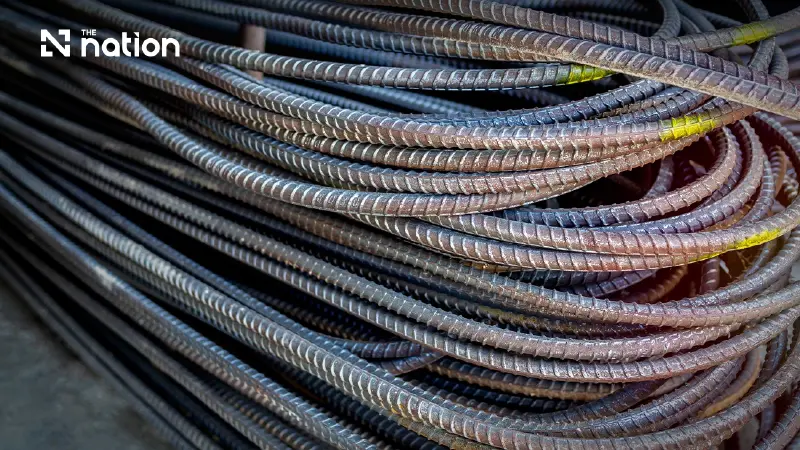


Industry Minister Varawut Silpa-archa says steel mills must meet Thai Industrial Standards regardless of production technology, with repeat violations risking licence revocation.
- Thailand's Industry Minister has ordered stricter inspections of steel mills, which will now include genuine random on-site sample testing by officials to ensure quality standards are met.
- Factories found producing substandard steel or exceeding pollution limits will be ordered to suspend operations immediately.
- The minister warned that operators who repeatedly violate these standards risk having their factory licences permanently revoked.
- The focus of the inspections will be on whether the steel's properties meet safety standards for its intended use, not on the specific production technology employed.
Industry Minister Varawut Silpa-archa has warned that steel factories will face stricter inspections, including genuine random testing, and that repeat violations could lead to licence revocation.
Speaking about concerns over the steel industry, induction furnace (IF) technology and Thai Industrial Standards, or TIS, Varawut said the key issue was not how steel was produced, but whether its properties met the required safety and quality standards.
He said Thailand should not focus solely on whether steel is made using induction furnace technology or electric arc furnace (EAF) technology. Instead, every batch and every furnace run must produce steel that meets all required standards.
Varawut said that if the global steel industry shifts from IF to EAF, or towards green steel standards, Thailand must adapt accordingly while keeping public safety as the top priority.

He said steel standards should define product properties according to actual use, such as steel for flooring, supporting columns or load-bearing structures, to ensure maximum safety.
If steel passes public-safety tests, it should be considered usable, he said. There is no need to issue separate industrial standards based solely on production technology, because future technologies such as green steel or other methods could require repeated revisions or cancellations of standards.
On pollution from steel factories, Varawut said the Department of Industrial Works already has the authority to order any factory exceeding pollution limits to suspend operations and make corrections.
He said he had assigned the Thai Industrial Standards Institute (TISI) and related officials to study the issue carefully with all sides to prevent future problems.
Factories exceeding pollution limits face immediate closure
Varawut also addressed concerns over the cleanliness of production processes, particularly IF technology, which has been criticised for high energy use and pollution.
He said the Department of Industrial Works already has clear rules on emissions. Any factory found to have exceeded pollution limits must be ordered to close immediately.
On inspections of steel rebar factories in Thailand, Varawut said the Department of Industrial Works and TISI must tighten their work.
He stressed that inspections must not rely on factories preparing steel samples in advance for officials. Instead, officials must enter factories and select samples randomly themselves to ensure that the results reflect actual production standards.
If steel is found to be below standard, the factory will be ordered to close immediately. If the same offence is repeated several times, the operator could face licence revocation.
Varawut said industrial factories must strictly follow the rules to protect workers, officials and the public, while also ensuring fair treatment for business operators.
He added that MPs who had previously raised questions on the issue in Parliament had been invited to join the inspection committee to ensure transparency.
Varawut insisted that he was not taking sides, but was prioritising public interest and public safety.
The stricter stance follows public scrutiny over the reopening of Xin Ke Yuan Steel Co Ltd, which the Department of Industrial Works allowed to resume operations on June 5, 2026, after the factory had been ordered to suspend operations for more than 18 months to correct problems linked to substandard steel, industrial waste management and air-pollution controls.
Reports said the earlier shutdown followed an LPG tank explosion and fire at the plant on December 18, 2024, after which officials found several violations, including steel that failed Thai Industrial Standards, excessive boron content and improper handling of “red dust” waste containing hazardous substances.
Varawut has defended the reopening by saying the Department of Industrial Works was legally required to allow the plant to restart once corrective conditions had been met, but stressed that it could be ordered to close again if its steel products fail quality standards.
The decision has also drawn concern from the Thailand Structural Engineers Association, which warned that steel made with induction furnace technology may carry safety risks if impurities are not properly removed, and urged clearer, separate standards and stricter limits on its use in critical structures.
