
TSEA warns IF steel may pose safety risks, urges separate TISI standard
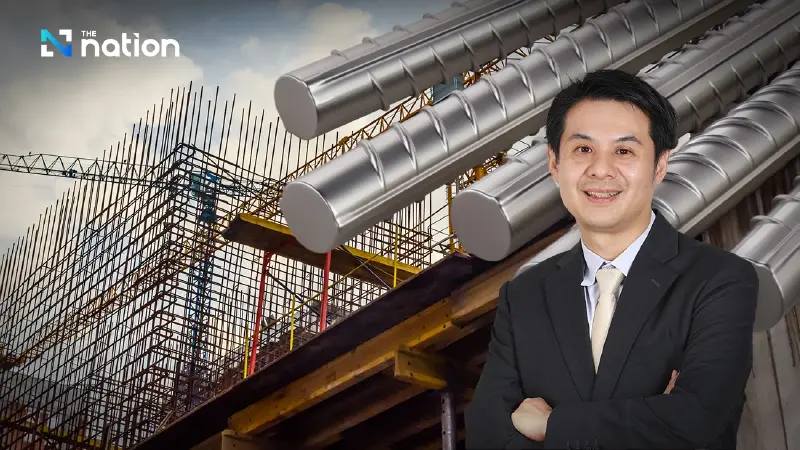


Thailand’s structural engineers call for separate standards and limited use of IF steel after Xin Ke Yuan Steel is cleared to resume operations.
- The Thailand Structural Engineers Association (TSEA) warns that steel from induction furnaces (IF) poses a safety risk because the process has difficulty removing impurities, which can result in brittle, substandard steel.
- TSEA highlights that China, the technology's country of origin, has already banned IF furnaces for producing construction rebar due to these quality and safety concerns.
- The association urges the Thai Industrial Standards Institute (TISI) to create a separate and distinct standard for steel produced from IF furnaces, rather than grouping it with general standard steel.
- TSEA proposes that the use of IF steel should be strictly limited to small buildings (e.g., no more than two storeys) and prohibited in critical structures like tall buildings, large bridges, and in earthquake-risk zones.
Following the Department of Industrial Works’ order on June 5, 2026, allowing Xin Ke Yuan Steel Co Ltd to resume normal operations at its rebar and structural steel factory, the Thailand Structural Engineers Association (TSEA) has raised concerns over the safety of steel produced from induction furnaces, or IF furnaces.
The company had previously been ordered by the Ministry of Industry to suspend operations for more than a year. The Department of Industrial Works later inspected the factory and found that it had corrected and improved its operations in line with official orders.
Reports said the steel manufacturer had been closed for failing to comply with several legal requirements, including steel products that did not meet Thai Industrial Standards (TISI), pollution from the production process that exceeded control limits under the Factory Act, and workplace safety issues.
Amorn Pimanmas, President of the Thailand Structural Engineers Association (TSEA), said engineers remained concerned about the quality of rebar produced from induction furnaces, or IF furnaces, because steel is a key material for the strength of building structures.
Although there has so far been no clear conclusion that certain building collapses were directly caused by this type of steel, Amorn said quality and compliance with standards must remain the first priority.
Technical limits of IF furnaces make impurity removal difficult
Amorn said that, in theory, high-quality steel can be produced from IF furnaces. In practice, however, it is difficult because this type of furnace has a major limitation: removing impurities from molten steel is not easy.
If the raw material, or scrap steel, contains high levels of elements such as phosphorus or other contaminants and they cannot be fully removed, the resulting steel may become brittle and fall short of the required quality.
For IF furnace steel to reach international standards, producers need an additional process using a ladle furnace (LF) and must also carefully select high-quality scrap steel.
However, investment in a ladle furnace is very costly, which would erase the price advantage of cheaper IF furnace steel when compared with steel produced from electric arc furnaces (EAF), the international standard.
Available information shows that China, once a major user of IF furnaces, banned their use in the production of construction rebar around 2015-2016 and ordered all related factories to close after recognising quality and safety concerns.
Amorn said it was worth considering why Thailand still allows the use of this technology when China, the country of origin for the technology, has already abolished it.
Separate TISI standard and restricted use proposed
Amorn proposed that the Thai Industrial Standards Institute (TISI) address the issue by clearly separating standards for steel produced from IF furnaces from general standard steel.
He said IF furnace steel should not be grouped together with ordinary standard steel, and that its scope of use should be strictly defined. For example:
- It should be allowed only for small buildings, or buildings of no more than two storeys, and not in earthquake-risk zones.
- It should be strictly prohibited in tall buildings, large bridge structures and important public structures.
“We should not prioritise cheap steel for important structures. Safety is far more important, especially when structures must withstand earthquake vibrations or additional loads from actual use,” Amorn said.
Amorn also expressed concern over the state inspection process, saying TISI may not have enough personnel to monitor factories comprehensively.
This creates a risk that steel samples submitted for certification under Thai Industrial Standards may be produced from specially selected high-quality raw materials, while steel actually sold in the market may not meet the same quality.
Another key issue is that ordinary consumers cannot tell what type of furnace was used to produce the rebar they buy, as this is a technical detail that is difficult to identify, even when markings are embossed on the steel.
TSEA can therefore only issue warnings to engineers and contractors to be cautious when selecting steel.
Some state agencies have already begun issuing internal rules banning the use of steel produced from IF furnaces in their own projects.
TISI is currently revising the rebar standard, which has used the 2016 version for a long time. Changes are expected soon.
TSEA sees this as a good opportunity to accelerate the push for separate standards and clearly defined usage limits to protect people’s lives and property in the long term.
