
Bank Indonesia governor resigns as market eyes central bank independence
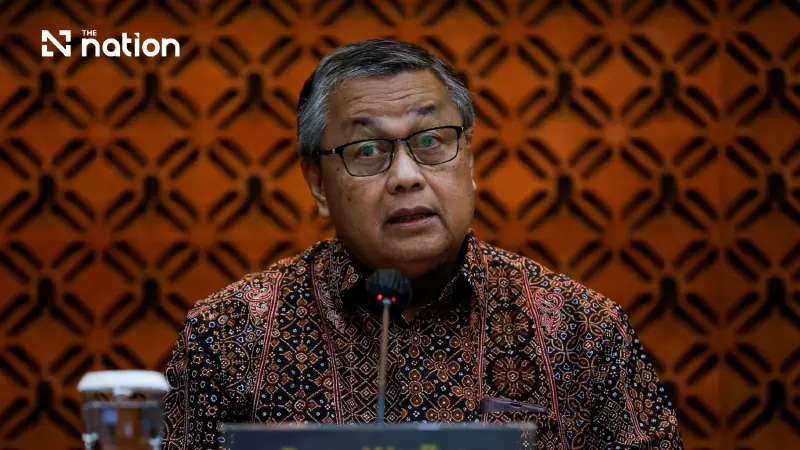


Perry Warjiyo has stepped down as Bank Indonesia governor in a surprise move, with Destry Damayanti appointed interim chief as investors watch policy direction.
Bank Indonesia governor Perry Warjiyo has stepped down in a surprise move that could unsettle investors already watching the central bank’s independence and Indonesia’s fiscal direction.
President Prabowo Subianto has accepted Warjiyo’s resignation, State Secretariat Minister Prasetyo Hadi told reporters on Monday, ahead of the opening of financial markets in Jakarta.
Destry Damayanti, Bank Indonesia’s senior deputy governor, has been appointed interim governor. Destry said Warjiyo had informed the government on Saturday that he was resigning for personal reasons. Prasetyo said the resignation was submitted by letter to the president, but declined to give further details.

Warjiyo, who first became governor in 2018, had begun his second five-year term in 2023. His early departure comes at a sensitive time for Southeast Asia’s largest economy, as markets weigh currency pressure, fiscal credibility and the evolving role of the central bank under Prabowo’s administration.
The rupiah weakened as much as 0.32% to 17,992 per US dollar after the announcement, while Jakarta’s main stock index moved between gains and losses in choppy trading.
Analysts said the resignation could raise questions over Bank Indonesia’s future independence. Bhima Yudhistira Adhinegara, executive director of the Center of Economic and Law Studies, warned that investor confidence may be difficult to restore if markets see monetary policy coming under greater executive influence.
Angus Mackintosh, an ASEAN specialist at Aletheia Capital in Singapore, said much would depend on who is chosen as Warjiyo’s permanent successor. He said markets could view any politically connected appointment with suspicion because the central bank governorship is a key technocratic post.
The appointment of a new governor requires the president to submit a nomination to parliament, where the candidate must undergo a fit-and-proper test before approval. Prasetyo said the president had not yet proposed a nominee.
Bank Indonesia has faced pressure to support Prabowo’s high-growth agenda, while the rupiah fell to a historic low in June amid global market volatility and concerns over Indonesia’s fiscal management and central bank independence.

Last month, Indonesia’s parliament passed legislation expanding Bank Indonesia’s role in supporting growth and giving lawmakers the power to issue binding recommendations to independent financial regulators and the central bank.
Destry sought to reassure markets, saying Bank Indonesia would continue carrying out its duties and authority to maintain rupiah and financial-system stability, while supporting an economic environment conducive to growth. She said the central bank would continue to work in line with best practice.
The issue of central bank independence has already featured in rating agencies’ assessments. Moody’s and Fitch earlier cited concerns about changes to Bank Indonesia’s mandate among the reasons for cutting Indonesia’s credit-rating outlook to “negative”. S&P, however, kept its outlook “stable” this month, saying it did not expect the mandate change to drastically affect Bank Indonesia’s operational independence.
Bank Indonesia surprised markets last week by keeping policy rates unchanged and instead introducing incentives to attract foreign capital inflows to support the rupiah. The central bank had raised rates by a total of 100 basis points since May to attract inflows and help shore up the currency.
Warjiyo’s resignation also follows last year’s abrupt removal of influential finance minister Sri Mulyani Indrawati, which unsettled investors concerned that Indonesia’s fiscal credibility could be weakened by costly spending plans under Prabowo.
Source: Reuters
