
Thai exporters advised to prepare for EU Forced Labour Regulation
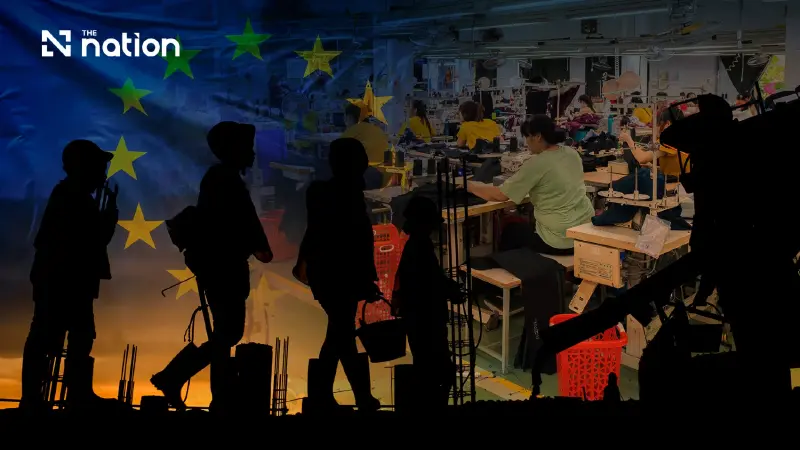


European Commission guidance sets out enforcement procedures ahead of the 2027 rules, as Thai businesses are urged to improve traceability.
- The European Union is implementing a Forced Labour Regulation (FLR), set to take full effect on December 14, 2027, which will ban products made with forced labor at any stage of the supply chain from the EU market.
- As the EU is Thailand's fourth-largest trading partner, the new rules are expected to significantly impact the country's export sector, particularly for major exports like electrical appliances and electronics.
- Thai exporters are urged to prepare by developing due diligence processes and supply chain traceability systems to prove to EU importers that their products are free from forced labor.
Arada Fuangtong, director-general of the Department of Foreign Trade, said that in June 2026 the European Union (EU), through the European Commission, published guidelines to support effective enforcement of the Forced Labour Regulation (FLR).
The regulation prohibits products made with forced labour, including forced child labour, from being placed on the EU market or exported from it.
Using the International Labour Organisation (ILO) definition, products are considered to have been made with forced labour where such labour is used, wholly or partly, at any stage of extraction, harvesting or production, including processes related to the product throughout its supply chain.
The guidelines were prepared following a public consultation with stakeholders, including government agencies, non-governmental organisations (NGOs) and labour organisations.
The process was intended to make the guidance comprehensive, grounded in practical conditions and capable of effective implementation.
Key provisions define the scope of duties, procedures and responsibilities of the parties involved, as follows:
- Guidance for public authorities sets out criteria and procedures for checks and enforcement. This includes customs authorities’ oversight of imports and exports, legal action against violators and fines proportionate to the offence.
- Guidance for businesses requires due diligence processes to ensure that products are free from forced labour.
- Guidance for civil society allows information or tip-offs about forced labour to be submitted. Victims may also lodge complaints directly with the relevant authorities in EU member states.
The guidelines are intended to improve enforcement, promote transparency throughout supply chains and raise ethical standards in global trade.
They also support the achievement of United Nations Sustainable Development Goal target 8.7, which seeks over the long term to end forced labour, human trafficking and child labour.
The European Commission will monitor, evaluate and update the guidelines while continuing to seek feedback, so they remain aligned with recommendations from stakeholders throughout supply chains and with changing economic and social conditions.
The FLR is due to take full effect on Tuesday (December 14, 2027).
Arada added that the EU was Thailand’s fourth-largest trading partner in 2025, with total trade worth THB1.7 trillion.
Thai exports to the EU were valued at about THB1 trillion and imports from the EU at about THB700 billion, leaving Thailand with a trade surplus of about THB300 billion.
This underscored the EU’s importance as a major trading partner and indicated that enforcement of the forced labour rules could have a significant impact on Thailand’s export sector, particularly the electrical appliances and electronics sector, which accounts for the largest share of Thai exports to the EU.
Thai businesses exporting goods to the EU therefore need to be ready to provide information to EU importers. They may need to develop traceability systems to confirm that no forced labour is used in production processes throughout their supply chains.
The Department of Foreign Trade urged Thai businesses to monitor developments closely.
Further details are available at https://ec.europa.eu/info/law/better-regulation/have-your-say/initiatives/16292-Forced-labour-guidelines-on-the-implementation-of-the-EU-rules_en.
Enquiries can be made to the Agreement Merchandise Administration and Trade Measures Division on 02 547 4735 or via the 1385 hotline.
