
Commerce Ministry says fertiliser supplies sufficient as Hormuz disruption eases
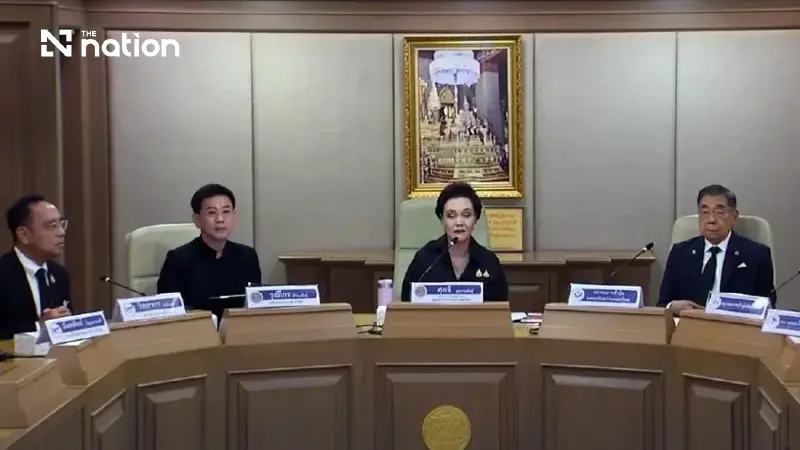


Deputy Prime Minister Suphajee Suthumpun says Thailand will not face fertiliser shortages, as shipments delayed near the Strait of Hormuz begin moving and domestic prices gradually ease.
- Thailand's Commerce Ministry has confirmed that fertiliser supplies are sufficient and domestic prices are declining as shipping disruptions in the Strait of Hormuz have started to ease.
- The supply outlook has improved as several fertiliser cargo vessels, previously stuck in the strait, have been cleared to travel or have been rerouted through other ports.
- To ensure future stability, the government is negotiating with alternative import sources like China and Russia, and has received confirmation from Iran on its readiness to supply urea.
- Authorities are also taking measures to control domestic costs, including taking legal action against sellers for overpricing and implementing schemes to reduce fertiliser expenses for farmers.
Deputy Prime Minister and Commerce Minister Suphajee Suthumpun said on Monday that Thailand has sufficient fertiliser supplies and that domestic prices are gradually declining after disruption near the Strait of Hormuz began to ease.
Speaking after a meeting with private-sector representatives, Suphajee said the government had been closely monitoring the impact of unrest overseas. Although uncertainty remains over a formal end to the conflict, she said the government would ensure there are no shortages while keeping prices at appropriate levels.

She said there had been positive developments involving five fertiliser cargo vessels previously stuck in the strait. Two vessels have now been cleared to continue their journeys, while another has changed its route by transporting goods overland to a Red Sea port before shipping onward to Thailand.
Suphajee said these developments had significantly improved the supply outlook.
The Commerce Ministry has also been implementing the “Thais Help Thais Green Flag Fertiliser” scheme to reduce costs for farmers. The project aims to cover 40 provinces. It has already been carried out in six provinces and will continue until August.

On price control, the Department of Internal Trade has taken legal action against more than 1,640 fertiliser sellers for overpricing. Suphajee urged farmers to report any cases of unfair trading or exploitation.
For the longer term, the government is preparing “co-payment” schemes for fertiliser raw materials and seeds, under which the Bank for Agriculture and Agricultural Cooperatives will support half of the loan cost.
The aim is to help farmers use fertiliser that matches soil conditions, increase yields and produce crops in line with market demand.
The government is also negotiating with friendly countries such as China and Russia to secure backup import sources in case normal shipping routes face further disruption.
Thepvit Teosuratkul, vice-president of the Thai Fertilizer and Agricultural Supplies Association, said global fertiliser shortages were beginning to ease, especially for urea, which had been in short supply from March to May.
He said imports from the Middle East through the Strait of Hormuz had resumed, while producers in Saudi Arabia had adjusted logistics by transporting fertiliser by truck from the eastern side of the country to Red Sea ports for continued shipment to Thailand.
He said prices were beginning to soften, especially for nitrogen and urea fertilisers. Prices of NP and NPK fertilisers have stabilised and could decline in the near future.
However, domestic prices will gradually fall in line with actual costs, similar to fuel prices, and may not drop immediately because some existing stock was purchased at earlier higher costs. He insisted there would be no further price increases.

Plengsakdi Prakaspesat, president of the Thai Fertilizer and Agricultural Supplies Association, said the Iranian government had confirmed its readiness to supply urea fertiliser to Thailand.
He said Iran had informed Thailand that no special fees or “commissions” would be charged for vessels heading to the country. Russia is also ready to cooperate with Thailand on chemical fertiliser trade as a friendly country.
“I ask farmers not to panic and to be confident that there will definitely be no fertiliser shortage,” he said.
He added that the current situation offered a positive sign, as Thai agricultural products, including rice, were seeing stronger exports and higher prices, helping raise farmers’ income and support economic recovery.
Wittayakorn Maneenetr, director-general of the Department of Internal Trade, said price statistics showed that compared with the pre-war period, urea fertiliser prices had risen by an average of about 60%, phosphate fertiliser by about 20%, and potassium fertiliser by only 0.2%.
At present, urea prices are showing the clearest downward trend.
He said the department monitors fertiliser stocks from operators every 15 days and confirmed that all fertiliser formulas remain sufficient for sale.
However, he asked the media not to report detailed stock figures to prevent certain groups from exploiting the information to hoard goods for speculation, which could create artificial prices in the market.
The department will continue working with the Central Committee on Prices of Goods and Services and related associations to ensure retail prices fairly reflect actual costs.
