
Wildfires force evacuations in Canada and France as smoke spreads across US
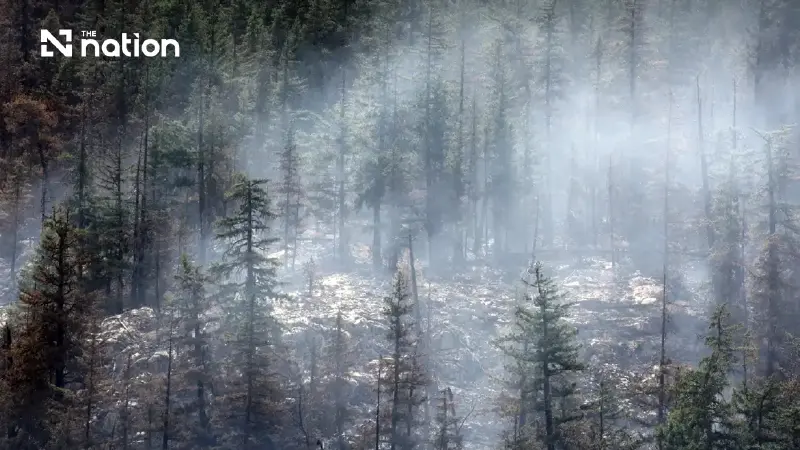


Canada has deployed military aircraft to evacuate a remote Ontario community as wildfire smoke triggers unhealthy air alerts across the US, while major fires near France’s Fontainebleau forest have burned more than 2,000 hectares.
Canadian wildfires have prompted a military-assisted evacuation from a remote Indigenous community in Ontario and sent heavy smoke across large parts of the United States, while France assesses the damage from major fires around the historic Fontainebleau forest.
The emergencies on both sides of the Atlantic highlight the increasingly far-reaching consequences of wildfires, from displaced communities and cross-border air pollution to disruption of transport networks and damage to important ecosystems.
Scientists say rising temperatures, drought and increasingly dry vegetation are creating conditions in which fires can spread more rapidly and become more difficult to control, although the immediate cause of each blaze can vary.
Military aircraft support Ontario evacuation
The Canadian Armed Forces deployed four Royal Canadian Air Force CC-130 Hercules aircraft to support the evacuation of Eabametoong First Nation, also known as Fort Hope, after a rapidly advancing wildfire threatened the community in northwestern Ontario.
The fly-in community has limited road access and relies heavily on air transport. About 600 community members were expected to be moved during the first phase of the evacuation.
Canada’s Natural Resources Department reported 69 new fires overnight by Saturday, bringing the nationwide total to 955.
Almost 28,500 square kilometres of land had burned across the country. Although that figure remained below the five-year average, fire activity had intensified sharply in parts of Ontario, where provincial officials said about 655,000 hectares were burning.
Thousands of residents from remote northern Ontario communities have already been evacuated to towns and cities farther south. Indigenous communities have been particularly affected because many are isolated and have few evacuation routes.
Smoke triggers US air-quality warnings
Smoke from the Canadian fires has travelled hundreds of kilometres south across the border, reducing visibility and causing unhealthy air conditions across parts of the US Midwest, Mid-Atlantic and Northeast.
The US Environmental Protection Agency’s AirNow system classified air quality as unhealthy across areas including eastern Ohio, most of Pennsylvania and New Jersey, Maryland, Delaware and Washington, DC. Parts of western Pennsylvania, including Pittsburgh, reached the “very unhealthy” category.
The Copernicus Atmosphere Monitoring Service said smoke from Canadian wildfires had significantly degraded air quality from the Great Lakes region to the US East Coast, exposing millions of people to hazardous pollution levels.
Smoke plumes were also detected over the Arctic and the Atlantic Ocean, demonstrating how wildfire pollution can travel far beyond the areas where fires are burning.

Fontainebleau fires burn more than 2,000 hectares
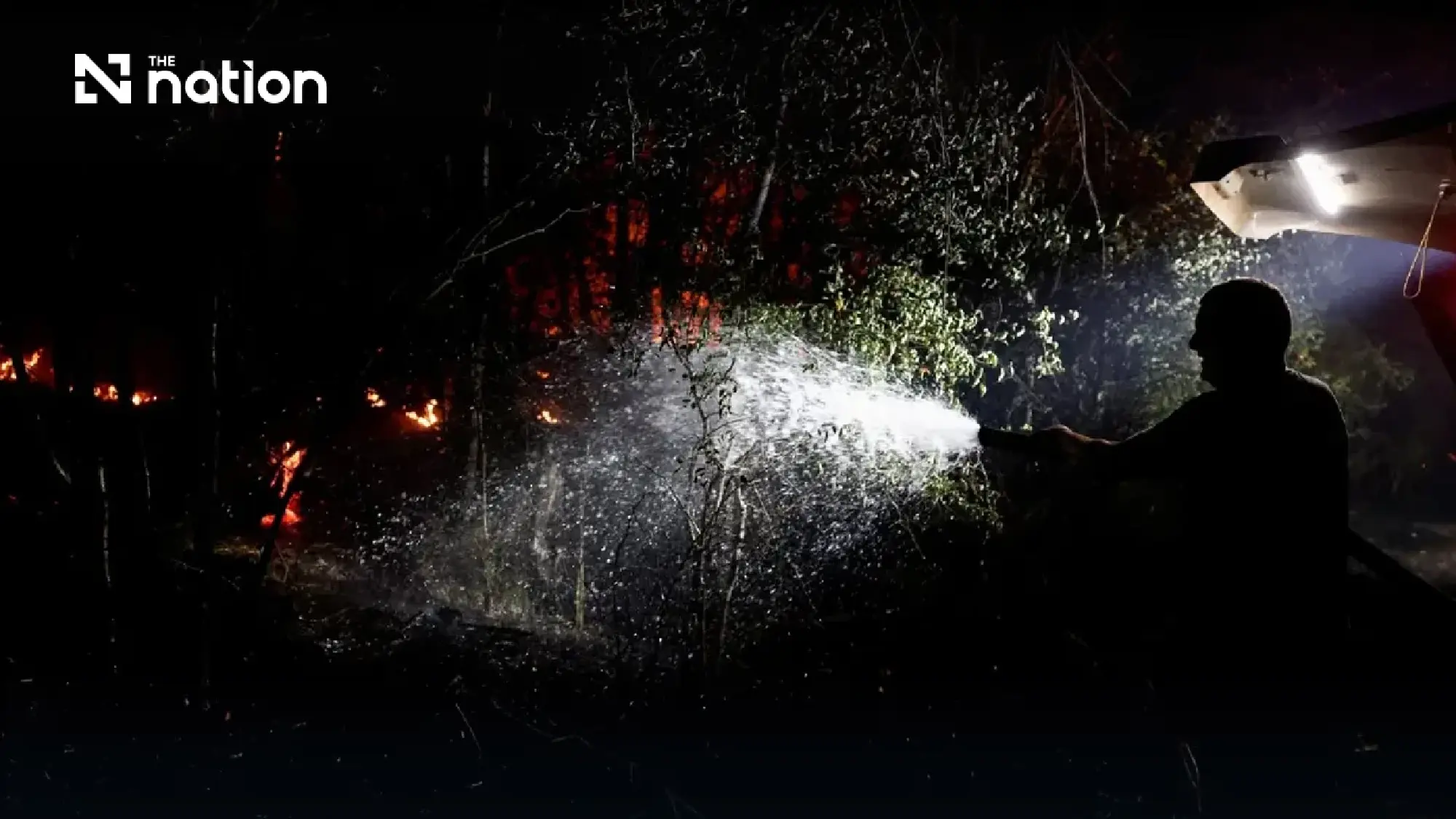
In France, two major blazes around Fontainebleau forest, about 60 kilometres south-east of Paris, burned approximately 2,050 hectares — equivalent to about 12,800 rai — before authorities contained their spread.
About 900 to 1,000 people were evacuated as the fires approached communities and came within a few kilometres of the Palace of Fontainebleau, one of France’s best-known former royal residences. No deaths or injuries were reported.
The fires forced the temporary closure of the A6 motorway connecting Paris with Lyon and southern France and disrupted high-speed rail services.
Water-bombing aircraft were deployed in the Paris region for the first time, repeatedly collecting water from the River Seine before returning to the fire zone.
The Fontainebleau blaze came during France’s third heatwave of the year and amid severe drought conditions. By July 15, about 32,000 hectares had burned across France in 2026, already exceeding the country’s total for the whole of 2025.

Suspects investigated over French fires
French Interior Minister Laurent Nunez said 59 people had been arrested across the country on suspicion of starting fires. The figure covered separate incidents nationwide and was not limited to the Fontainebleau investigation.
In the Fontainebleau case, an 18-year-old volunteer firefighter was placed under formal investigation and remanded in custody. A prosecutor said he initially admitted using petrol and a lighter to set fire to twigs but later withdrew that admission.
Another suspect reportedly said he had accidentally started a separate fire by discarding a cigarette. Investigations into the origins of the fires were continuing.
The Canadian and French emergencies show that the consequences of wildfires increasingly extend beyond the forests themselves, affecting public health, transport, local economies and communities far from the original fire zones.
