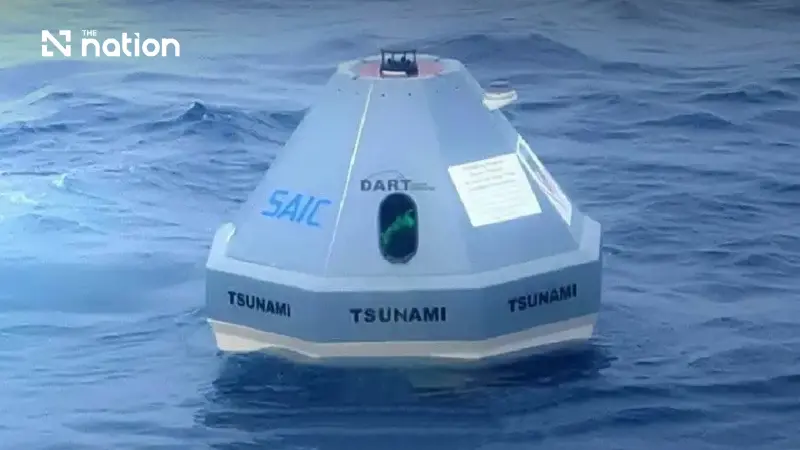
DDPM says Thailand’s multi-source tsunami warning network remains operational as crews plan to recover and replace a displaced Andaman buoy in November.
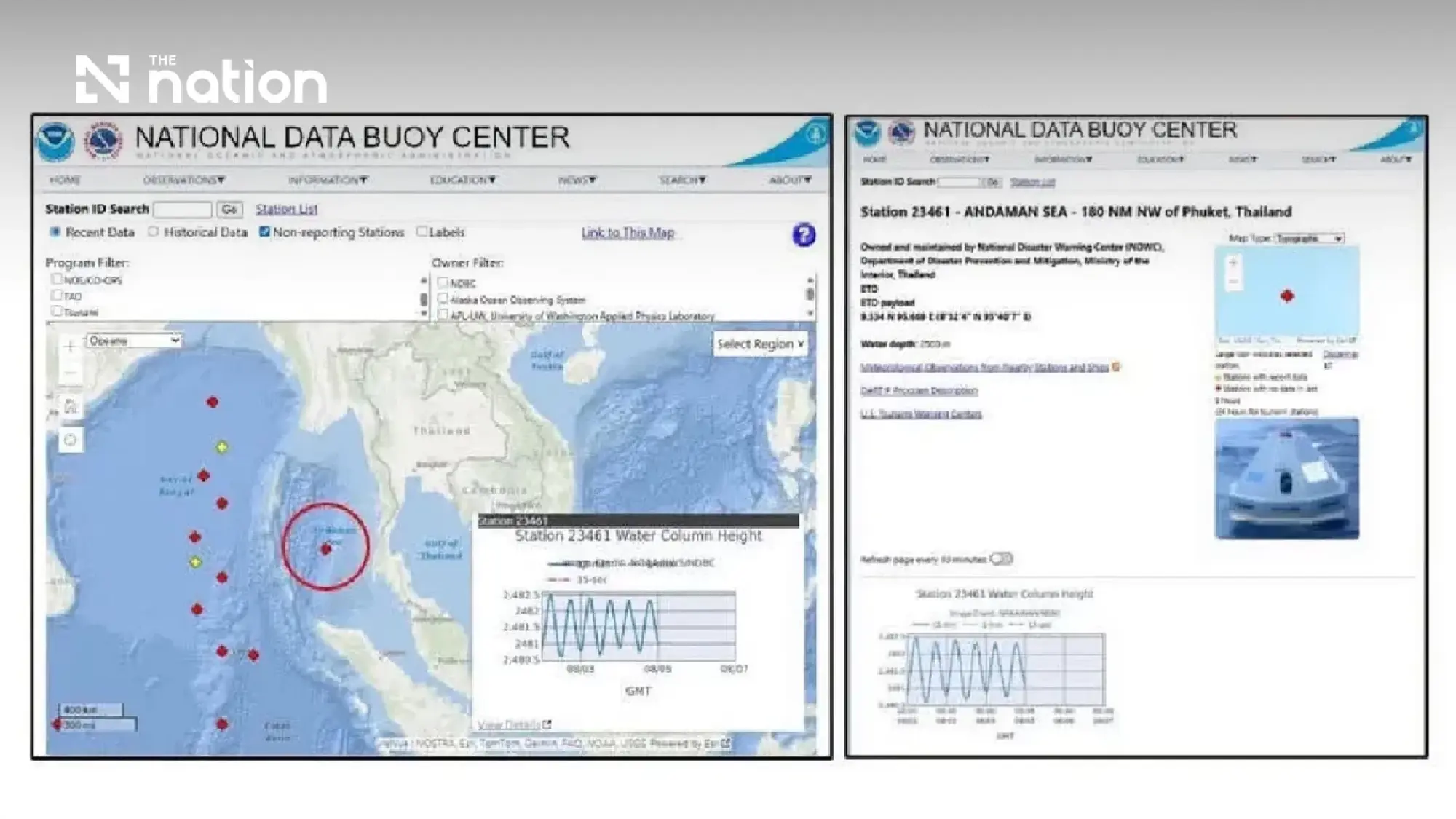
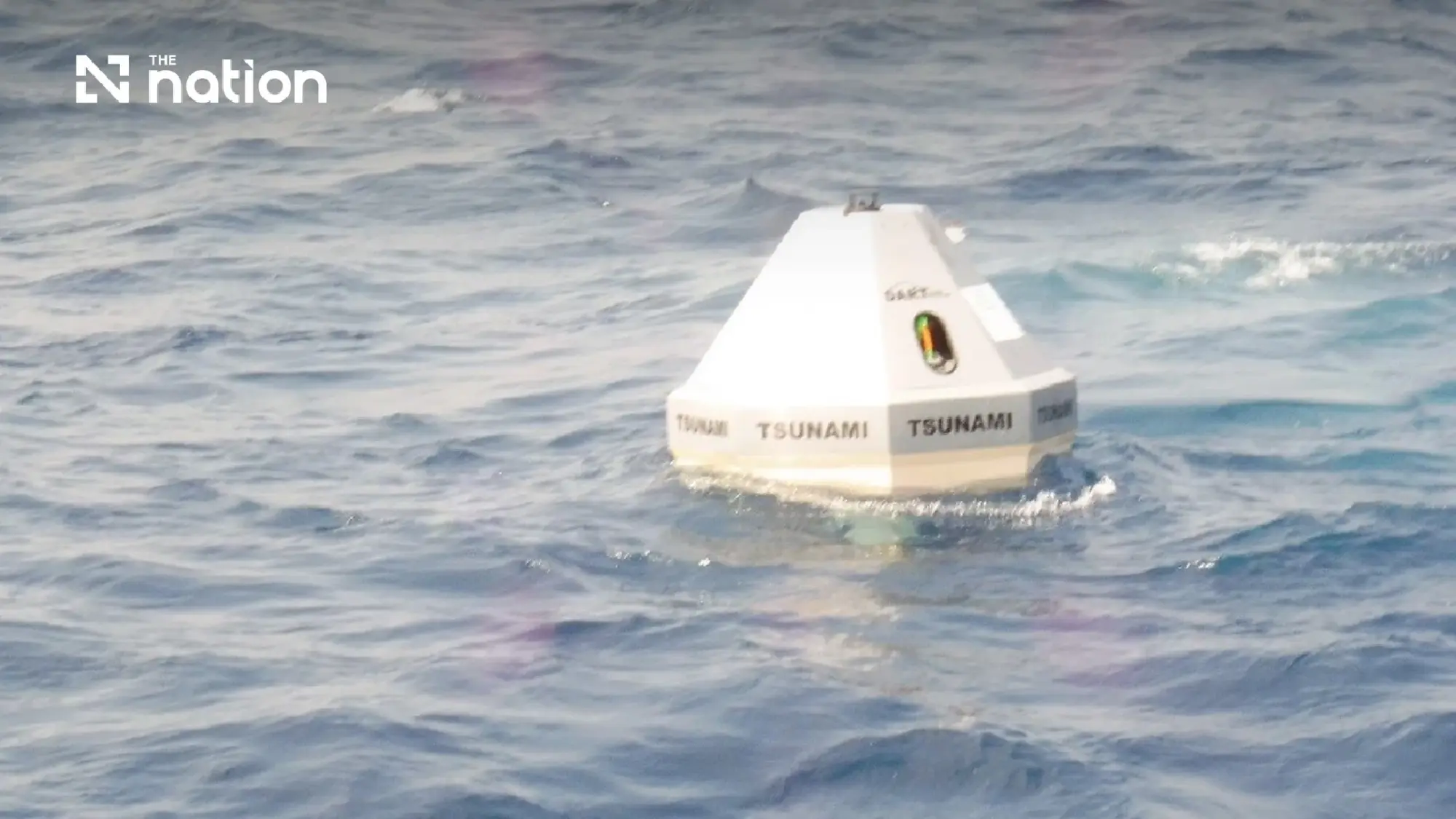
Thailand’s tsunami warning system remains operational despite an Andaman Sea monitoring buoy drifting from its position and no longer transmitting data, officials have assured residents following concern across the country’s six Andaman coastal provinces.
Deputy Interior Minister Jeset Thaiseth said Thailand did not rely on a single buoy to detect potential tsunami threats. The national warning system combines information from several domestic and international sources before authorities decide whether an alert should be issued.
Online reports about the buoy’s status had prompted questions over whether the country’s marine disaster-warning system was still functioning effectively.
Jeset, who oversees the Department of Disaster Prevention and Mitigation (DDPM), maintained that the buoy problem had not disabled the wider monitoring network.
Warning network draws on several data sources
Tsunami-monitoring buoys are only one component of Thailand’s surveillance system. Authorities also use earthquake data, sea-level monitoring stations and information supplied by international agencies and monitoring networks.
Officials follow a standard operating procedure (SOP) to analyse the available information, assess the level of danger and determine whether coastal communities need to be warned.
“The warning system does not rely on a buoy alone,” Jeset explained. “It brings together information from several sources, agencies and operational stages so that we can assess the situation accurately and warn the public in time.”
When an assessment identifies an immediate risk, the government can use Cell Broadcast to send emergency messages directly to mobile phones in affected areas.
The Interior Ministry and DDPM are continuing to monitor the situation and coordinate with relevant agencies to ensure that threat assessments and public warnings can be issued quickly.
Buoy found 111km from Koh Phayam
DDPM Director-General Teerapat Kachamat said the National Disaster Warning Center had continued to check the buoy’s technical condition and GPS signal.
The latest GPS information placed it about 111 kilometres from Koh Phayam in Mueang Ranong district, Ranong province, and approximately 44 kilometres from Mu Ko Surin National Park in Phang Nga province.
Authorities believe strong winds and waves in the Andaman Sea during the south-west monsoon may have caused the buoy to drift from its designated position.
Although the buoy is currently unable to transmit monitoring data, DDPM maintained that the problem had not reduced the overall effectiveness of Thailand’s tsunami surveillance and warning operations.
Replacement scheduled for November
DDPM and the Royal Thai Navy have prepared a joint operation to recover the displaced buoy and install a replacement in November 2026.
Officials selected November because waves and winds are expected to ease after the monsoon, creating safer conditions for a large oceanographic research vessel to carry out the recovery and installation work.
Prime Minister and Interior Minister Anutin Charnvirakul and Jeset have sought to reassure residents that tsunami monitoring remains active while the buoy is out of service.
Authorities urged the public to follow information from government agencies and other credible sources, avoid sharing unverified claims and remain prepared for emergencies without panicking.